
For the past several years, IBM has maintained a relentless pace in its quest to transform quantum computing from an experimental endeavor into a reliable, large-scale computational tool. The company has consistently hit its milestones, detailing a sophisticated strategy to reach a fault-tolerant quantum system by 2029. This journey has seen significant breakthroughs in error correction, the demonstration of quantum advantage, and the increasingly seamless integration of quantum processors with classical high-performance computing (HPC) environments. At the IBM Quantum Developer Conference 2026 in Chicago, the technology giant provided the latest evidence that its roadmap is not just on track, but gaining momentum through a series of hardware and software advancements centered on its Nighthawk processor family and a modular infrastructure designed for massive scale.
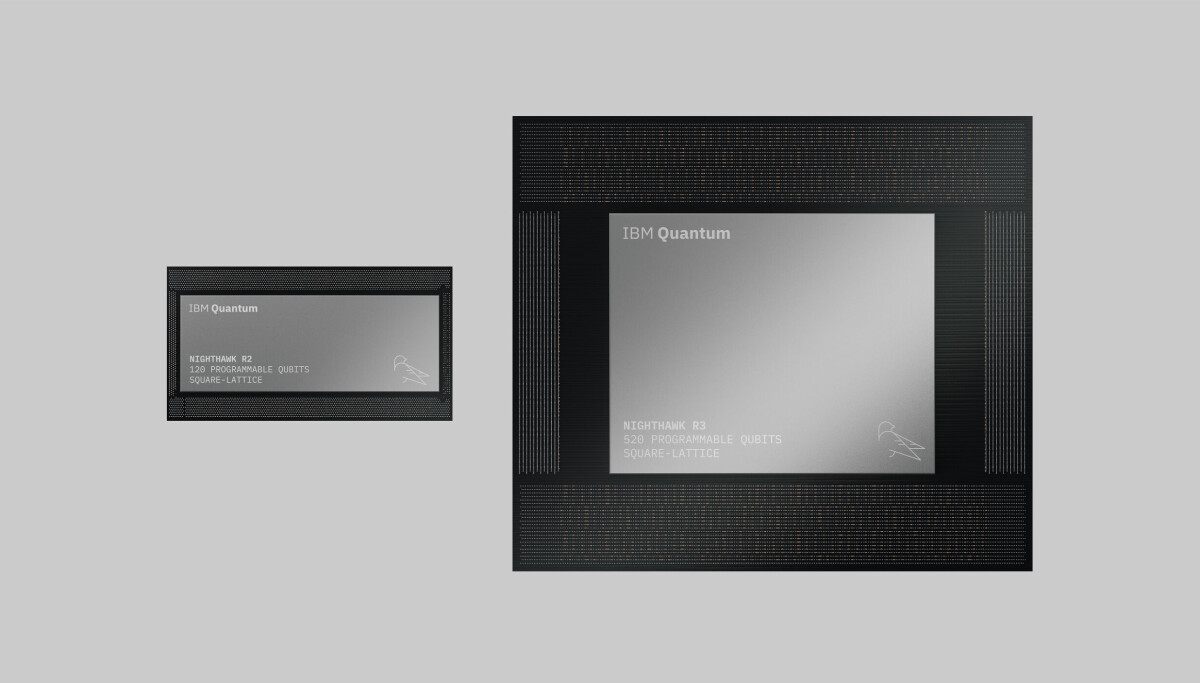
Central to this progress is the evolution of the Nighthawk quantum processing unit (QPU). A year ago, IBM introduced the first Nighthawk, a successor to its Heron processor. Nighthawk marked a pivotal architectural shift, moving away from the earlier "heavy-hex" topology toward a square-lattice architecture. This change was not merely aesthetic; the square-lattice design was engineered to provide superior qubit connectivity, better management of crosstalk, and improved performance in circuit depth. These are all critical factors as researchers move from simple experiments to complex, multi-step algorithms that require qubits to interact frequently and reliably.
The momentum continued through September with the unveiling of Nighthawk r2. While it maintains the 120-qubit count of its predecessor, the r2 iteration introduced a sophisticated on-chip reset system that fundamentally changed the throughput capabilities of the hardware. In the quantum realm, speed is often overshadowed by qubit count, but for practical applications, the ability to run millions or even billions of samples is essential. IBM executives have emphasized that speed is a primary pillar of performance alongside scale and quality. Many emerging quantum applications require circuits capable of executing thousands of operations on 100 or more qubits, necessitating a system that can handle high-volume workloads without becoming a bottleneck.
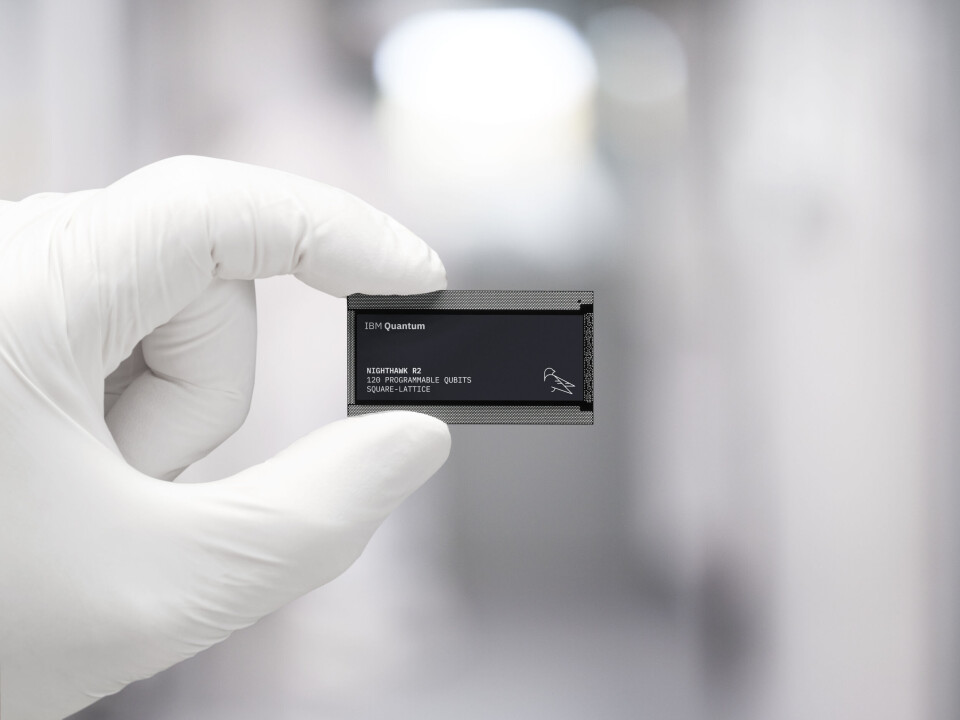
The innovation in Nighthawk r2 addresses this through a physical hardware addition. Oliver Dial, IBM Fellow and senior vice president of quantum systems, explained that each programmable qubit on the r2 chip is paired with an additional physical qubit dedicated to the reset process. This "glue-on" qubit allows the system to rapidly extract energy from a programmable qubit, returning it to its ground state almost instantaneously. This capability has a profound impact on throughput. Since its release in September, Nighthawk r2 has already executed more than 34 billion circuits. Dial noted that during its first three weeks of availability, users ran 8 billion circuits, and the chip has demonstrated the ability to run 7,500 gates at speeds 19 times faster than the original Nighthawk r1. This reset capability allows the system to push throughput toward the threshold of 100,000 circuits per second, a level of performance that significantly lowers the time and cost associated with complex scientific computations.
Looking toward 2027, IBM has already outlined the specifications for Nighthawk r3. This next-generation chip represents a major leap in scale, expected to feature more than 520 qubits while supporting up to 10,000 quantum operations. While r3 will retain the successful square-lattice connectivity, its most significant feature will be the inclusion of 10 chip-to-chip long-range couplers, or l-couplers. These interconnects are the linchpin of IBM’s modular strategy. By using l-couplers to join two Nighthawk r3 processors, IBM aims to create a single, unified 1,040-qubit system. This modular approach allows the company to build larger, more complex systems by interconnecting manageable modules rather than attempting to manufacture a single, monolithic chip of unwieldy size and complexity.
 Enterprise Tech & Infrastructure
Understanding the Architecture of Modern Storage: Distinguishing Flash Technology from Solid-State Drives
In the rapidly evolving landscape of data storage, the terms "flash" and...
 Enterprise Tech & Infrastructure
The Great Storage Divide: Analyzing the Evolution of SSD and HDD Performance in the Enterprise
The landscape of enterprise data storage has undergone a seismic shift over...
 Enterprise Tech & Infrastructure
The Complexity of Cloud Efficiency: Navigating the Multi-Layered Economics of Amazon S3 Storage
In the modern enterprise landscape, the Amazon Simple Storage Service (S3) has...