

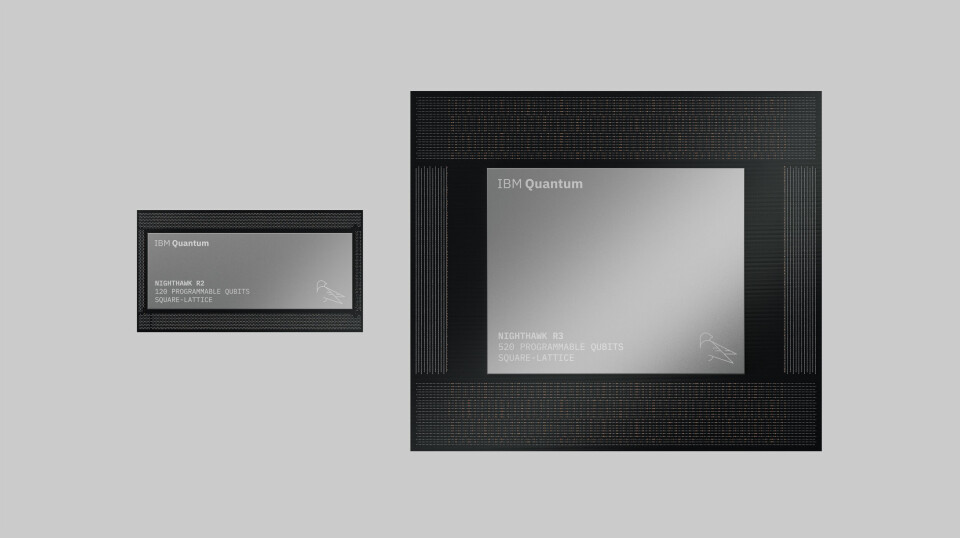
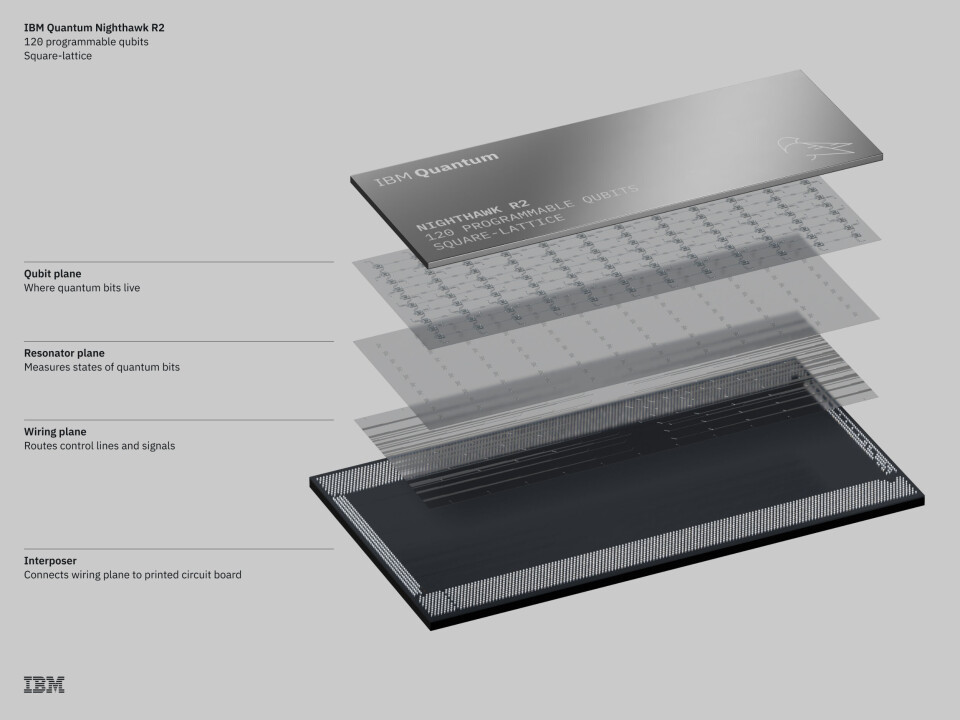
The success of this modular vision depends heavily on the fidelity of these interconnects. IBM has already demonstrated promising results with Nighthawk r1, achieving a 99.3 percent quantum state transfer fidelity using four l-couplers. The goal is to push this figure to 99.9 percent. Currently, at IBM’s Quantum Data Center in Poughkeepsie, New York, engineers are testing a system that joins two Nighthawk r2 processors located in two separate refrigerators using four l-couplers. This experiment is a vital precursor to the multi-module systems of the future, proving that quantum information can be shared across modular boundaries with minimal loss of integrity.
The physical production of these advanced chips is supported by a robust domestic manufacturing ecosystem. Nighthawk r3 will be produced at the Anderon 300-millimeter quantum superconducting wafer foundry in Albany, New York. Anderon, an IBM subsidiary, has significantly expanded its operations following a substantial infusion of capital. In May, the U.S. Commerce Department awarded the facility $1 billion through the federal CHIPS Act, a figure matched by a $1 billion investment from IBM. This $2 billion total investment underscores the strategic importance of quantum manufacturing. Furthermore, the broader ecosystem is seeing similar support, with Global Foundries receiving $375 million from the Commerce Department to bolster its own quantum foundry capabilities.
These hardware milestones are all stepping stones toward "Starling," the fault-tolerant system IBM expects to launch in 2029. Starling is designed to feature 200 logical qubits capable of executing 100 million quantum operations. The distinction between physical and logical qubits is crucial; in a fault-tolerant system, multiple physical qubits work together to form a single logical qubit that can correct its own errors. To make Starling a reality, IBM is leaning on bivariate bicycle codes, a specific class of quantum low-density parity-check (qLDPC) error correction codes. According to Dial, these codes are more than 10 times more efficient than traditional alternatives like surface codes, significantly reducing the number of physical qubits required to sustain a logical qubit.
The path to Starling and its eventual successor, Blue Jay (slated for 2033 or later), relies on a series of technological demonstrations. These include refined device physics for higher connectivity, improved packaging to handle a greater volume of signals, real-time decoders to catch and correct errors as they occur, and modular cryogenic systems that can scale to meet the cooling demands of massive QPU arrays. IBM has already unveiled a modular and scalable cryogenic cooling system, which will be essential for the Starling architecture. Dial noted that the company must eventually scale this cooling technology to a capacity roughly three times greater than what is currently possible.
 Enterprise Tech & Infrastructure
The Architecture of Performance: Assessing the Strategic Role of RAID 10 in Modern Data Centers
In the complex ecosystem of enterprise data storage, the search for an...
 Enterprise Tech & Infrastructure
Decoding the Total Cost of Ownership for Amazon S3: Why Storage Rates Are Only the Beginning
For enterprise IT leaders and cloud architects, the promise of Amazon S3...
 Enterprise Tech & Infrastructure
Mastering Amazon S3 Cost Control: Why the Per-Gigabyte Rate Is Only the Beginning of the Bill
In the landscape of enterprise cloud infrastructure, the Amazon S3 storage bucket...







