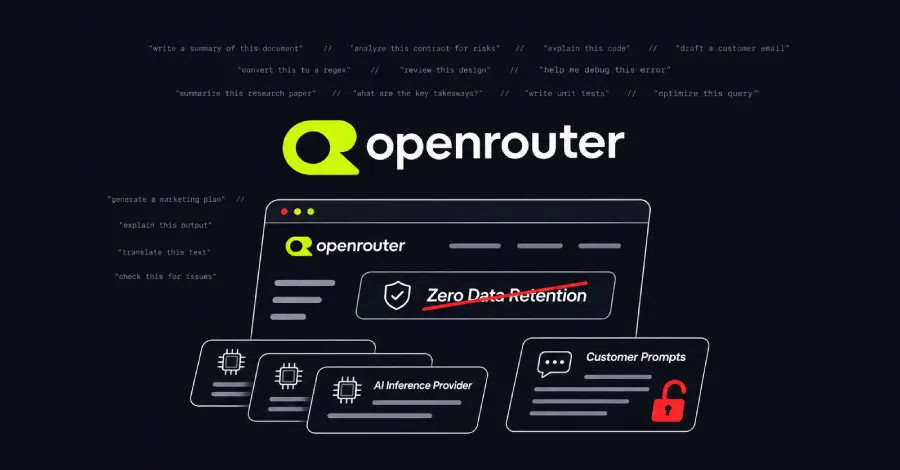
A significant security failure in the artificial intelligence supply chain has been brought to light following a months-long investigation by the industrial cybersecurity firm Dragos. The research reveals that attackers successfully exfiltrated sensitive data from within three separate AI inference providers for several months, with none of the targeted companies aware of the intrusions until they were notified by outside researchers.
The findings are particularly concerning for enterprise users who rely on "Zero Data Retention" (ZDR) settings to protect proprietary information. According to Dragos, a portion of the stolen requests were explicitly flagged as ZDR—a configuration intended to ensure that prompts are processed in volatile memory and never written to permanent storage. The breach demonstrates that such privacy designations offer little protection once an attacker has established a foothold within a provider’s infrastructure.
HD Moore, the Chief Research Officer at Dragos, emphasized the limitations of current privacy protocols in his analysis of the incidents. "A privacy flag doesn’t help when the attacker is already inside," Moore noted, highlighting a systemic vulnerability in how AI requests are handled as they move through various layers of the inference stack.
The Methodology: A Million-Prompt "Tripwire"
The discovery was the result of an extensive "canary token" research project conducted between July and November. During this period, researchers seeded approximately two million AI prompts with unique, trackable web links and credentials. These "canary" secrets were designed to serve as tripwires: because each secret was unique and used only once in a specific prompt sent to a specific provider, any subsequent use of that credential or access to that link served as definitive proof that the original prompt had been read by an unauthorized party.
The experiment revealed a disturbing pattern of data mishandling and active exploitation. While the researchers used these planted prompts as bait, the data was processed alongside legitimate customer requests. Dragos concluded that if the bait prompts were being copied and analyzed by attackers, it is almost certain that real customer data flowing through those same systems was being compromised simultaneously.
The breaches were not uniform in nature, suggesting a variety of threat actors and motivations. In one of the most significant incidents, which began in mid-July, the affected provider initially attributed the data leakage to an internal misconfiguration and later to a partner’s data processing issues. However, a deeper investigation eventually revealed that attackers had compromised the provider’s internal credentials. Despite the severity of this intrusion, the provider had not publicly disclosed the incident as of this week.
Anatomy of an Inference Attack
The largest of the three primary breaches involved the theft of several hundred AWS keys that had been planted as part of the Dragos experiment. Each key was sent in a single, unique request to one provider during specific windows in late October. The researchers found that every request sent during these windows was intercepted.
 Cybersecurity Basics & Security News
The Evolution of the Vulnerability Gap: Defending Against the Rise of Mythos-Class AI Attacks
In the modern cybersecurity landscape, the arrival of a new Common Vulnerabilities...
 Cybersecurity Basics & Security News
Critical Linux Kernel TCP Vulnerability Triggers Urgent Patching Cycle Across Enterprise Distributions
A severe security flaw residing within the Linux kernel’s networking stack has...
 Cybersecurity Basics & Security News
Critical Check Point Flaw Grants Unauthenticated Root Access to Management Servers
A severe security vulnerability has been identified within Check Point’s Security Management...