
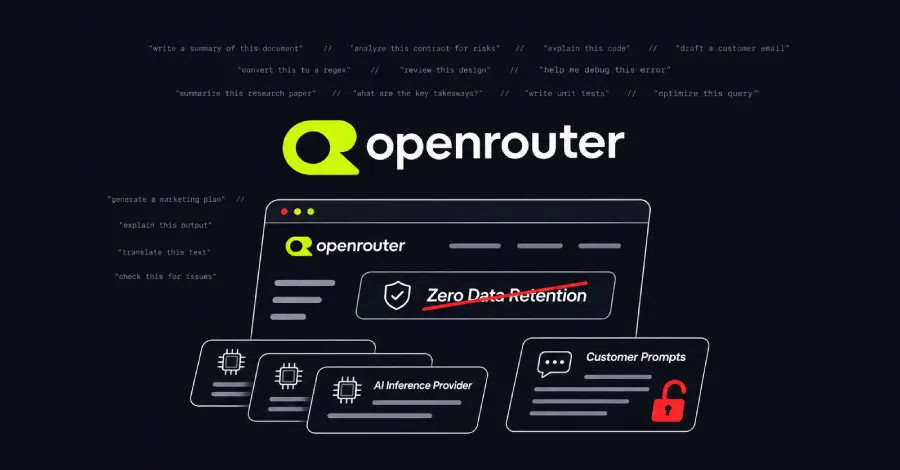
A significant security failure in the artificial intelligence supply chain has been brought to light following a months-long investigation by the industrial cybersecurity firm Dragos. The research reveals that attackers successfully exfiltrated sensitive data from within three separate AI inference providers for several months, with none of the targeted companies aware of the intrusions until they were notified by outside researchers.
The findings are particularly concerning for enterprise users who rely on "Zero Data Retention" (ZDR) settings to protect proprietary information. According to Dragos, a portion of the stolen requests were explicitly flagged as ZDR—a configuration intended to ensure that prompts are processed in volatile memory and never written to permanent storage. The breach demonstrates that such privacy designations offer little protection once an attacker has established a foothold within a provider’s infrastructure.
HD Moore, the Chief Research Officer at Dragos, emphasized the limitations of current privacy protocols in his analysis of the incidents. "A privacy flag doesn’t help when the attacker is already inside," Moore noted, highlighting a systemic vulnerability in how AI requests are handled as they move through various layers of the inference stack.
The Methodology: A Million-Prompt "Tripwire"
The discovery was the result of an extensive "canary token" research project conducted between July and November. During this period, researchers seeded approximately two million AI prompts with unique, trackable web links and credentials. These "canary" secrets were designed to serve as tripwires: because each secret was unique and used only once in a specific prompt sent to a specific provider, any subsequent use of that credential or access to that link served as definitive proof that the original prompt had been read by an unauthorized party.
The experiment revealed a disturbing pattern of data mishandling and active exploitation. While the researchers used these planted prompts as bait, the data was processed alongside legitimate customer requests. Dragos concluded that if the bait prompts were being copied and analyzed by attackers, it is almost certain that real customer data flowing through those same systems was being compromised simultaneously.
The breaches were not uniform in nature, suggesting a variety of threat actors and motivations. In one of the most significant incidents, which began in mid-July, the affected provider initially attributed the data leakage to an internal misconfiguration and later to a partner’s data processing issues. However, a deeper investigation eventually revealed that attackers had compromised the provider’s internal credentials. Despite the severity of this intrusion, the provider had not publicly disclosed the incident as of this week.
Anatomy of an Inference Attack
The largest of the three primary breaches involved the theft of several hundred AWS keys that had been planted as part of the Dragos experiment. Each key was sent in a single, unique request to one provider during specific windows in late October. The researchers found that every request sent during these windows was intercepted.

Crucially, the data theft occurred at the very edge of the provider’s network. Some of the stolen data came from requests that the provider had rejected before an AI model even began to run. This indicates that the attacker was not necessarily targeting the models themselves, but was instead copying traffic at the first point of arrival—the ingress point where data first enters the provider’s environment.
Once the attacker obtained the credentials, they moved with remarkable speed. In several instances, the stolen AWS keys were tested within hours of the initial prompt being sent. The threat actor engaged in extensive reconnaissance and persistence maneuvers, listing S3 buckets, searching through AWS Secrets Manager and the Parameter Store, and attempting to create Bedrock API keys. They also tried to add new Identity and Access Management (IAM) users to maintain long-term access to the compromised environments, driving tens of thousands of AWS API calls in the process.
The investigation also identified the use of ARTEX, an AI-driven penetration testing framework. On November 1, an attacker utilized ARTEX to confirm that the keys they held remained active. Researchers identified specific user agents associated with this activity—"artex-agent" and "artex-judge-r121"—which do not appear on standard public indicator lists. Dragos has recommended that security teams add these agents to their detection systems to identify similar unauthorized activity.
The Rise of "Shadow" Routing and Marketplace Risks
Beyond direct breaches, the research highlighted the inherent risks of the AI inference marketplace, where "gateways" and resellers route requests to various upstream providers to find the lowest cost or best performance.
In one instance, researchers found that some sellers on an AI inference marketplace were deliberately listing models at the lowest possible prices to attract traffic, only to enable request logging and collect the data that flowed through their systems. The actors behind these operations appeared to be individuals using standard home internet connections. One such actor, operating from a Mac on a home broadband connection in France, was observed manually typing root SSH login attempts using passwords harvested from stolen prompts.
The complexity of the AI supply chain further complicates data privacy. The research tracked one canary key that traveled through a router that quietly forwarded a portion of its traffic to a marketplace—a "hop" that the customer was never informed about. Route tracing across approximately 2,000 paths identified several hundred unidentified systems in the chain, including one seller that was found to be injecting approximately 1,000 hidden tokens into every prompt it processed.
International data sovereignty also emerged as a concern. A Chinese AI lab, which remained unnamed in the report, was found to have fetched secret links from more than half of the seeded prompts sent to its models between July and October. This included two-thirds of the requests that had been explicitly marked for "Zero Data Retention." Even prompts sent to U.S.-based hosting providers that resell the lab’s models triggered the same scraping activity, effectively funneling the data back to the lab in China.
The research provided a "smoking gun" regarding human review of this data. Twenty-four days after one prompt was sent, its secret link appeared in a chat on Feishu, the Chinese workplace application known internationally as Lark. The link was accessed within two minutes by six different devices—three desktops and three phones—located in Beijing and Shanghai. Because the link was only available within the full text of the prompt, the access confirmed that someone was reading a cached or stored copy of the supposedly private communication.

OpenRouter and Provider Responses
OpenRouter, a prominent gateway that routes customer AI requests to a variety of third-party providers, has taken aggressive action in response to the findings. The company announced it has removed three providers from its platform and stripped 125 endpoints of their eligibility for "Zero Data Retention" status.
While OpenRouter clarified that its own infrastructure was not breached, it has notified all potentially affected customers. The company stated that any endpoint removed during this review will require rigorous assurances and third-party validation before its ZDR status can be restored. To prevent future incidents, the gateway is adopting the researchers’ canary testing approach to run ongoing, automated checks on its providers and is actively verifying network paths to identify unauthorized third-party forwarding.
Other providers have begun to issue their own disclosures:
- Phala: The provider reported that an attacker gained control of an inference server, allowing them to view request data during processing. The incident was contained on November 8. Phala advised that any requests to the DeepSeek V4 Flash 0731 model between October 21 and November 8 should be considered exposed, and any secrets contained within those prompts should be rotated immediately.
- Together AI: The company issued a security notice regarding a "prompt leakage" event affecting requests from June and July. The leak occurred after an AI coding agent inadvertently committed a credential to the company’s public GitHub repository, allowing an unauthorized party to download stored samples of customer prompts intended for software testing. Five of the credentials tested by the unauthorized party were found to be canary tokens from the Dragos experiment. Together AI has since made zero data retention the default for all new accounts.
- Novita: Another provider on the OpenRouter platform, Novita, confirmed that a routing configuration issue had caused some requests intended for specific models to be inadvertently forwarded to the official API of MiniMax, exceeding the intended scope of the customer’s request.
What Users Should Do
The findings from Dragos and the subsequent disclosures from providers suggest that the current state of AI inference security is highly fragmented. HD Moore warned that a privacy flag is only as strong as the first hop in the network; once data leaves the user’s control, it may pass through multiple resellers and intermediaries, each representing a potential point of failure.
For organizations handling highly sensitive data, the researchers suggest several defensive strategies:
- Prioritize Self-Hosting: Self-hosting models is the only way to guarantee that no third party has access to prompt data. While this requires more infrastructure and management, it eliminates the supply chain risks associated with third-party providers.
- Vet Upstream Providers: When using gateways like OpenRouter, users should manually select their upstream providers rather than relying on a default "lowest price" pool. Organizations should review the privacy policies and security track records of each individual provider in their chain.
- Implement Internal Tripwires: Companies can adopt the researchers’ methodology by seeding their own prompts with canary tokens. If an alert is triggered indicating that a "private" credential has been used or a link has been clicked, the organization can treat it as a confirmed data breach.
- Automated Scrubbing: Utilizing tools that automatically identify and remove common credential formats (like AWS keys or API tokens) from prompts before they are sent to a provider can reduce the impact of a leak, though this does not protect other forms of sensitive proprietary information.
The investigation is ongoing, with researchers currently working with approximately a dozen providers to address vulnerabilities. However, the fact that planted keys were still being accessed as recently as this week suggests that the cleanup of the AI inference ecosystem is far from complete.
 Cybersecurity Basics & Security News
ConnectWise Disables Application Identities Following Targeted Exploitation of Microsoft 365 Environments
ConnectWise, a leading provider of software for managed service providers (MSPs), has...
 Cybersecurity Basics & Security News
OpenSSH "SSHole" Vulnerability and the Persistence of Simple Misconfigurations Lead Weekly Cybersecurity Briefing
The cybersecurity landscape in late 2026 continues to demonstrate a paradoxical truth:...
 Cybersecurity Basics & Security News
Binance Hit by Record-Breaking $6.3 Billion Security Breach Attributed to North Korean Hackers
In what has been characterized as the most significant financial heist in...







