The landscape of software development is undergoing a fundamental transformation, driven by the rapid evolution of generative artificial intelligence. For decades, the ability to build functional, enterprise-grade applications was a privilege reserved for those with deep technical expertise and mastery of complex programming languages. However, a new era of "agentic" coding is dismantling these traditional barriers, shifting the focus from the syntax of code to the clarity of intent. Microsoft is positioning itself at the forefront of this shift by integrating natural language app-building capabilities directly into its flagship productivity and orchestration platforms: Copilot Cowork and Copilot Studio.
The premise is simple but powerful: if a person can describe a business process or an idea in plain English, they should be able to generate a working application to support it. This move represents a significant leap forward in the "citizen developer" movement, empowering information workers who have long understood their business challenges but lacked the tools to build custom solutions. By leveraging agentic AI—systems capable of planning, reasoning, and executing complex tasks—Microsoft is enabling users to move from concept to a functional app scaffold in a matter of minutes.
Yet, as the tech giant acknowledges, the mere generation of an application is only the first step in a much larger journey. For an application to be truly useful within a corporate environment, it cannot exist in a vacuum. It must be able to securely connect to sensitive enterprise data, integrate with existing workflows, and adhere to strict organizational governance. The new capabilities announced for Copilot Studio and Copilot Cowork are designed to bridge the gap between "experimental AI" and "enterprise-ready software," ensuring that as more people become app builders, IT departments maintain the necessary oversight and control.
Build an app by describing what you need
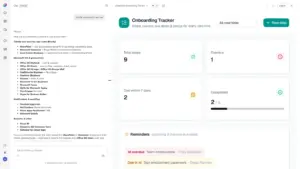
The entry point for this new wave of development is no longer a blank code editor, but a conversational interface. Within Copilot Studio, users are now presented with an "App (Preview)" option, while those working within the collaborative environment of Copilot Cowork can invoke a new "/app" skill. This marks a departure from traditional low-code platforms that, while easier than raw coding, still required an understanding of logic flows and drag-and-drop interfaces. Now, the process begins with a dialogue.

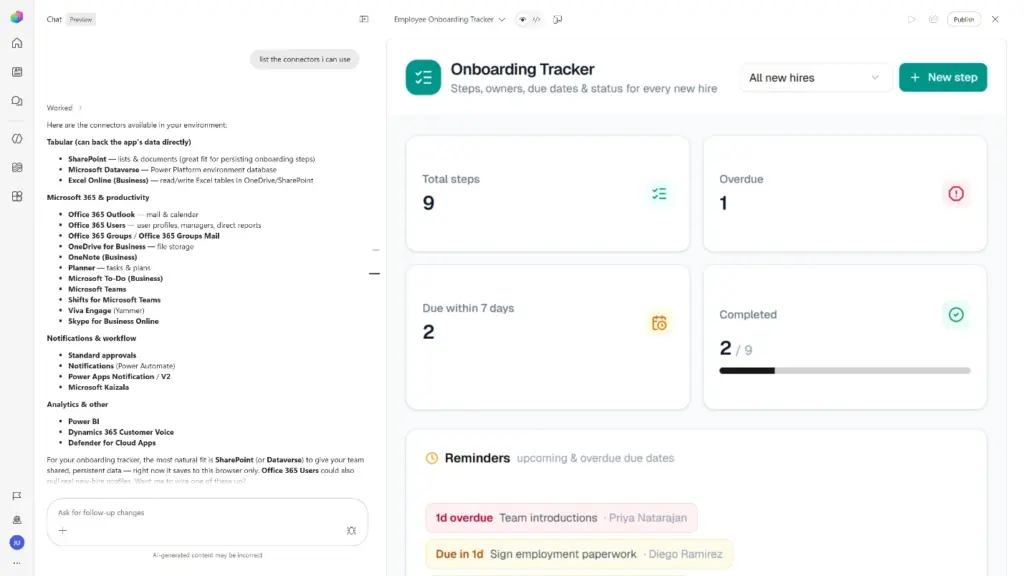
When a user describes a business outcome—such as a tool to track inventory across multiple warehouses or a system to manage internal marketing requests—the underlying AI analyzes the request. It identifies the necessary data structures, user personas, and required actions. Using agentic coding, the system then generates a functional scaffold of the application. This isn’t just a static template; it is a dynamic starting point that reflects the specific intent of the user.
A critical aspect of this experience is its iterative nature. The platform does not expect a perfect prompt on the first try. Instead, users can continue to refine their application through natural language, asking the AI to add new features, change layouts, or modify logic. For the average information worker, this means staying focused on the solution and the business value. However, Microsoft has also ensured that the platform remains "pro-code" friendly. Advanced makers and professional developers can "peek under the hood," inspecting the underlying code and the app’s structure to apply fine-tuned adjustments or complex logic that natural language might not yet capture. This dual-track approach ensures that the platform is accessible to beginners while remaining powerful enough for seasoned engineers.
Connect apps to your business data
 Productivity Software & Office Suites
Microsoft Announces General Availability of Work IQ APIs, Ushering in the Era of Agentic Software
REDMOND, Wash. — In a move that signals a fundamental transformation in...
 Productivity Software & Office Suites
Microsoft Reimagines Copilot: New "Autopilot" and "Code" Features Lead a Major Shift Toward Agentic Work
In a significant pivot toward the next era of enterprise productivity, Microsoft...
 Productivity Software & Office Suites
Microsoft Reimagines Copilot: A New Era of Autonomous Agents, Integrated Office Tools, and Democratized Development
REDMOND, Wash. — Microsoft has announced a comprehensive reimagining of its Copilot...