
The landscape of software development is undergoing a fundamental transformation, driven by the rapid evolution of generative artificial intelligence. For decades, the ability to build functional, enterprise-grade applications was a privilege reserved for those with deep technical expertise and mastery of complex programming languages. However, a new era of "agentic" coding is dismantling these traditional barriers, shifting the focus from the syntax of code to the clarity of intent. Microsoft is positioning itself at the forefront of this shift by integrating natural language app-building capabilities directly into its flagship productivity and orchestration platforms: Copilot Cowork and Copilot Studio.
The premise is simple but powerful: if a person can describe a business process or an idea in plain English, they should be able to generate a working application to support it. This move represents a significant leap forward in the "citizen developer" movement, empowering information workers who have long understood their business challenges but lacked the tools to build custom solutions. By leveraging agentic AI—systems capable of planning, reasoning, and executing complex tasks—Microsoft is enabling users to move from concept to a functional app scaffold in a matter of minutes.
Yet, as the tech giant acknowledges, the mere generation of an application is only the first step in a much larger journey. For an application to be truly useful within a corporate environment, it cannot exist in a vacuum. It must be able to securely connect to sensitive enterprise data, integrate with existing workflows, and adhere to strict organizational governance. The new capabilities announced for Copilot Studio and Copilot Cowork are designed to bridge the gap between "experimental AI" and "enterprise-ready software," ensuring that as more people become app builders, IT departments maintain the necessary oversight and control.
Build an app by describing what you need
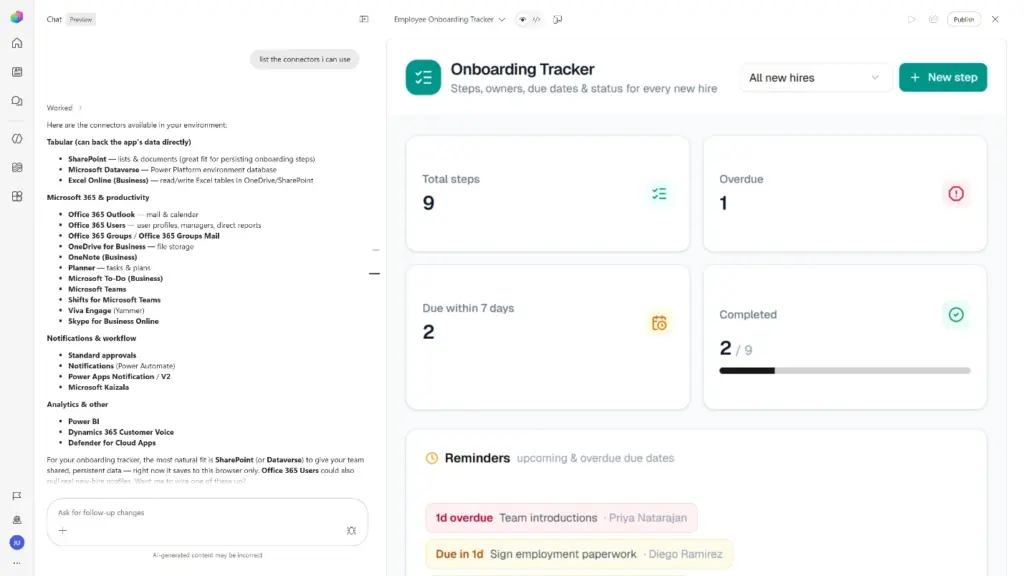
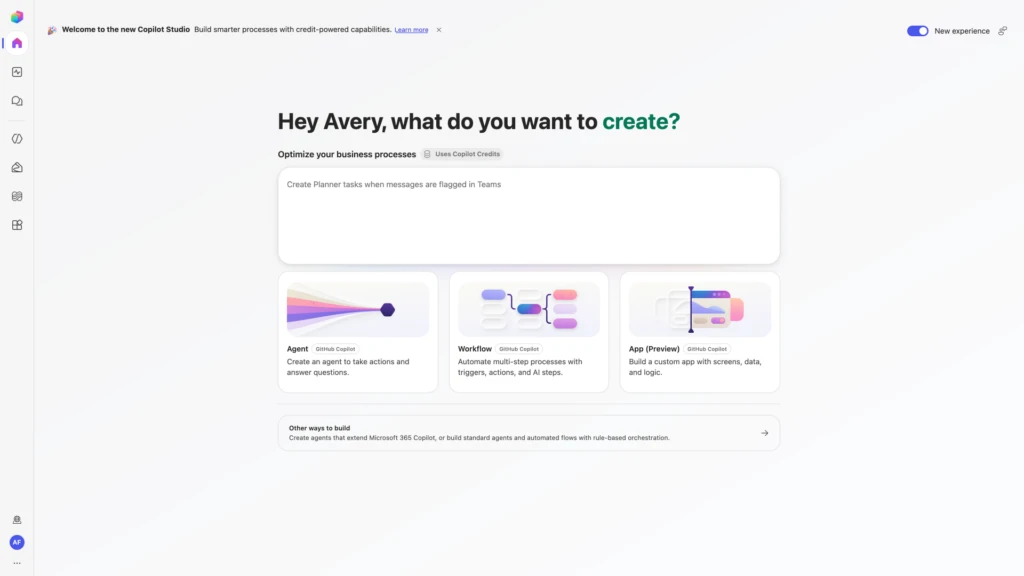
The entry point for this new wave of development is no longer a blank code editor, but a conversational interface. Within Copilot Studio, users are now presented with an "App (Preview)" option, while those working within the collaborative environment of Copilot Cowork can invoke a new "/app" skill. This marks a departure from traditional low-code platforms that, while easier than raw coding, still required an understanding of logic flows and drag-and-drop interfaces. Now, the process begins with a dialogue.

When a user describes a business outcome—such as a tool to track inventory across multiple warehouses or a system to manage internal marketing requests—the underlying AI analyzes the request. It identifies the necessary data structures, user personas, and required actions. Using agentic coding, the system then generates a functional scaffold of the application. This isn’t just a static template; it is a dynamic starting point that reflects the specific intent of the user.
A critical aspect of this experience is its iterative nature. The platform does not expect a perfect prompt on the first try. Instead, users can continue to refine their application through natural language, asking the AI to add new features, change layouts, or modify logic. For the average information worker, this means staying focused on the solution and the business value. However, Microsoft has also ensured that the platform remains "pro-code" friendly. Advanced makers and professional developers can "peek under the hood," inspecting the underlying code and the app’s structure to apply fine-tuned adjustments or complex logic that natural language might not yet capture. This dual-track approach ensures that the platform is accessible to beginners while remaining powerful enough for seasoned engineers.
Connect apps to your business data
The true value of an enterprise application lies in its ability to interact with the data that powers the organization. A standalone app that requires manual data entry is often more of a burden than a benefit. To address this, Microsoft is leaning heavily on its existing ecosystem of connectors and its proprietary "Work IQ" technology. Apps built through Copilot Cowork and Copilot Studio are designed to be "data-aware" from the moment of their creation.
Work IQ allows these AI-generated applications to access organizational context safely and effectively. This means that an app isn’t just surfacing generic information; it understands the specific roles, projects, and data permissions relevant to the user. By utilizing hundreds of pre-built connectors, these applications can reach into the systems where work already happens—whether that is within the Microsoft 365 tenant boundary or third-party platforms.
Consider the practical implications for common business scenarios. In a human resources context, an onboarding app could use connectors to automatically pull a new hire’s profile from a data source, surface specific learning resources based on their department, and then write progress updates back to the central HR system. In a field service scenario, a technician could use a custom-built app to retrieve technical specifications for a specific piece of equipment from a third-party database, follow guided repair steps generated by the AI, and then log the completed work directly into the company’s maintenance records.
By grounding these applications in real-world business data, Microsoft is moving beyond "toy" apps and into the realm of structured, high-utility tools. The AI ensures that the app doesn’t just read data but takes action on it, creating a closed-loop system where information flows seamlessly between the user interface and the back-end infrastructure.
Build enterprise apps with open standards and centralized control
As the democratization of app building accelerates, it often brings a significant challenge for IT departments: "Shadow IT." When employees begin creating their own solutions using unauthorized or ungoverned tools, it creates security risks and data silos. Microsoft’s strategy for Copilot Studio and Copilot Cowork is built specifically to prevent this by ensuring that every app created is a "first-class citizen" within the enterprise IT stack.
Apps built using these new natural language tools are full-stack applications constructed on open standards. This is a crucial distinction for technical teams, as it means these apps are not locked into a proprietary, "black box" environment. They can utilize professional development practices such as Git-backed source control, which allows for versioning and collaboration among multiple developers. Furthermore, the platform supports deployment stages and version isolation. This ensures that a "live" version of an app used by hundreds of employees remains stable while developers or citizen makers work on the next iteration in a safe, isolated environment.
Security and identity management are baked into the foundation. By default, these apps respect the identity policies set in Microsoft Entra (formerly Azure AD). This means that if a user doesn’t have permission to see a certain data set in the broader organization, the app they build—or the app they use—will not grant them that access. IT administrators are given a "birds-eye view" of the entire ecosystem through the Microsoft 365 admin center. From this centralized dashboard, they can see an inventory of every published app, monitor usage, and apply operational controls to manage the app’s lifecycle.
This framework creates a "guardrail" system. It gives employees the freedom to innovate and solve their own problems while giving IT the visibility and tools needed to secure the organization. The maker can focus on the "what" and the "why" of the application, while the platform and IT handle the "how" of security, compliance, and governance.

Start building apps with Copilot Studio
The rollout of these capabilities is already underway, marking a new chapter for the Microsoft 365 ecosystem. Organizations eager to test these features can do so by joining the Microsoft Frontier program, which provides early access to the /app skill within Copilot Cowork. For the broader market, the native app-building experience within Copilot Studio is beginning its rollout in public preview over the coming week.
Microsoft has also clarified the economic model for this new era of development. App building and execution will follow a usage-based billing model, aligning the cost of the technology with the actual value and scale of the solutions being created. Once an app is published, it becomes discoverable for authorized users at a dedicated portal: managedapps.cloud.microsoft.com. This provides a centralized hub where employees can find the tools their colleagues have built, further encouraging a culture of shared innovation.
By bringing app creation into the same space as AI agents and automated workflows, Microsoft is offering a comprehensive platform for business transformation. The goal is to move beyond simple automation and toward the creation of complete, interactive business experiences. As these tools reach the hands of millions of users, the company intends to refine the experience based on real-world feedback, continuing to blur the line between those who use software and those who create it.
The introduction of natural language app building is more than just a new feature; it is a statement on the future of work. In this future, the primary constraint on digital innovation is no longer the availability of technical talent, but the creativity and problem-solving skills of the entire workforce. With the right governance and the power of agentic AI, the next great enterprise application might not come from a specialized development team, but from an employee on the front lines who simply had a better way to get the job done.
 Productivity Software & Office Suites
Microsoft Advances AI for Finance with Specialized Copilot Skills and Enhanced Traceability in Excel
The history of computing has long followed a predictable trajectory: new technology...
 Productivity Software & Office Suites
Microsoft Expands Copilot Ecosystem with Natural Language App Building to Democratize Enterprise Software Development
The landscape of software development is undergoing a fundamental transformation as artificial...
 Productivity Software & Office Suites
Microsoft Shifts Focus to Enterprise AI Utility: A New Strategic Framework for Agents, Economics, and Partnership
In an era defined by a relentless cycle of artificial intelligence breakthroughs,...







