
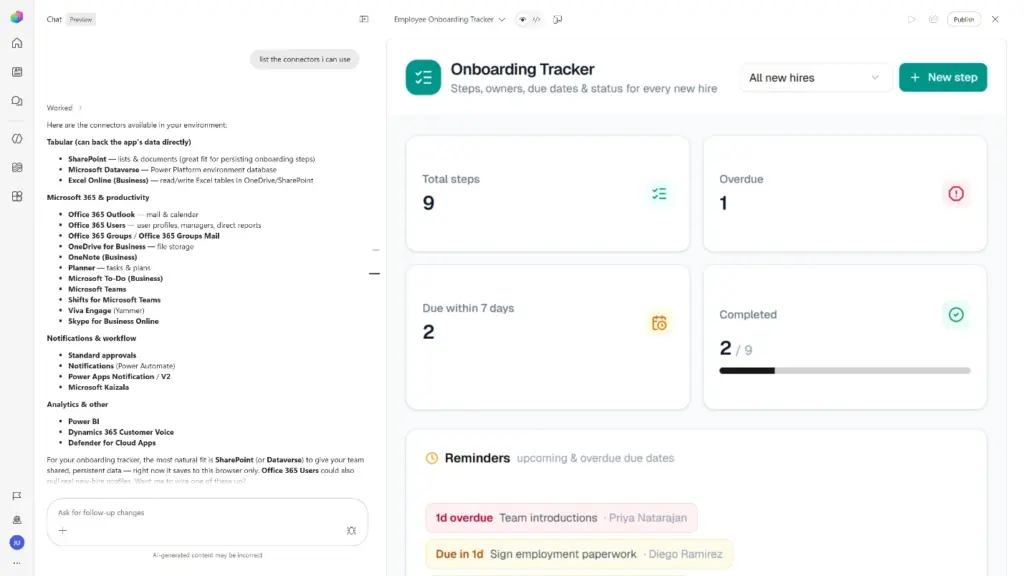
Security and identity management are baked into the foundation. By default, these apps respect the identity policies set in Microsoft Entra (formerly Azure AD). This means that if a user doesn’t have permission to see a certain data set in the broader organization, the app they build—or the app they use—will not grant them that access. IT administrators are given a "birds-eye view" of the entire ecosystem through the Microsoft 365 admin center. From this centralized dashboard, they can see an inventory of every published app, monitor usage, and apply operational controls to manage the app’s lifecycle.
This framework creates a "guardrail" system. It gives employees the freedom to innovate and solve their own problems while giving IT the visibility and tools needed to secure the organization. The maker can focus on the "what" and the "why" of the application, while the platform and IT handle the "how" of security, compliance, and governance.

Start building apps with Copilot Studio
The rollout of these capabilities is already underway, marking a new chapter for the Microsoft 365 ecosystem. Organizations eager to test these features can do so by joining the Microsoft Frontier program, which provides early access to the /app skill within Copilot Cowork. For the broader market, the native app-building experience within Copilot Studio is beginning its rollout in public preview over the coming week.
Microsoft has also clarified the economic model for this new era of development. App building and execution will follow a usage-based billing model, aligning the cost of the technology with the actual value and scale of the solutions being created. Once an app is published, it becomes discoverable for authorized users at a dedicated portal: managedapps.cloud.microsoft.com. This provides a centralized hub where employees can find the tools their colleagues have built, further encouraging a culture of shared innovation.
By bringing app creation into the same space as AI agents and automated workflows, Microsoft is offering a comprehensive platform for business transformation. The goal is to move beyond simple automation and toward the creation of complete, interactive business experiences. As these tools reach the hands of millions of users, the company intends to refine the experience based on real-world feedback, continuing to blur the line between those who use software and those who create it.
The introduction of natural language app building is more than just a new feature; it is a statement on the future of work. In this future, the primary constraint on digital innovation is no longer the availability of technical talent, but the creativity and problem-solving skills of the entire workforce. With the right governance and the power of agentic AI, the next great enterprise application might not come from a specialized development team, but from an employee on the front lines who simply had a better way to get the job done.
 Productivity Software & Office Suites
Microsoft Democratizes Software Development with Natural Language App Building in Copilot Studio
The landscape of software development is undergoing a fundamental transformation as artificial...
 Productivity Software & Office Suites
Microsoft Reimagines Copilot as a Centralized AI Ecosystem for the Modern Enterprise
In a significant move to redefine the landscape of digital productivity, Microsoft...
 Productivity Software & Office Suites
Microsoft Unveils Microsoft 365 G7: A New Frontier for AI-Driven Productivity and Governance in the Public Sector
In a significant move to modernize the digital infrastructure of the United...







