
The landscape of software development is undergoing a fundamental transformation as artificial intelligence shifts the power of creation from professional developers to the broader workforce. In a significant expansion of its AI ecosystem, Microsoft has announced the introduction of natural language application building within Copilot Cowork and Copilot Studio. This move is designed to empower individuals who have never written a single line of code to transform a conceptual idea into a fully functional, enterprise-ready application in a matter of minutes.
For decades, the "citizen developer" movement has sought to lower the barriers to software creation, yet the technical hurdles of syntax, data integration, and security protocols often remained too high for the average business professional. By leveraging "agentic coding" solutions, Microsoft is attempting to bridge this gap, allowing users to simply describe the desired outcome, the intended users, and the necessary data sources to generate a working application scaffold.
However, the tech giant acknowledges that the mere generation of an application is only one piece of a much larger puzzle. For software to be truly useful within a corporate environment, it must be more than a standalone tool; it must integrate seamlessly with existing enterprise data, operate under strict security frameworks, and align with the established workflows that employees use daily. Furthermore, as the number of application builders within an organization increases, IT departments require robust governance and oversight to ensure these new solutions do not compromise the integrity or security of the enterprise.
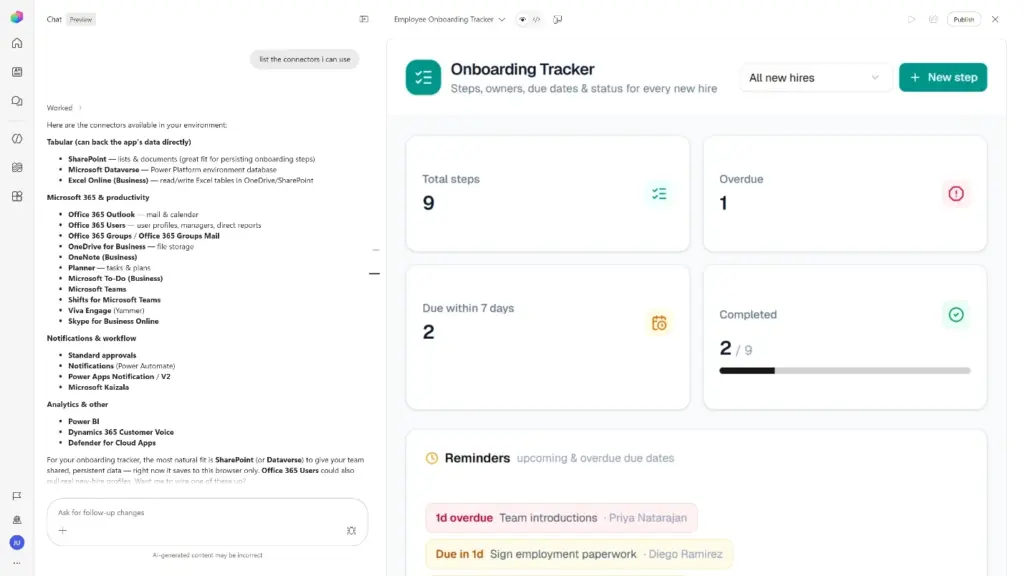
Build an app by describing what you need
The journey from a business problem to a digital solution now begins with a simple conversation. Microsoft has integrated this capability into two primary entry points: Copilot Cowork and Copilot Studio. Within Copilot Cowork, users can invoke the new "/app" skill, while in Copilot Studio, a dedicated "App (Preview)" tile is now available on the home screen.

The process is inherently iterative. Once a user describes their intent, the agentic coding engine translates that natural language into a functional application structure. This is not a static output; builders can continue to refine the application through ongoing dialogue with the AI. They can inspect the application in a preview mode, making real-time adjustments to the user interface or functionality.
Importantly, this experience is tailored to a diverse spectrum of users. For the information worker—the marketing manager or the HR specialist—the focus remains entirely on the business solution and the user experience. For more advanced "makers" or professional developers, the platform provides the ability to dive deeper into the underlying code and structure. This hybrid approach ensures that while the barrier to entry is low, the ceiling for customization remains high, allowing for more granular control when a project demands it.
 Productivity Software & Office Suites
Microsoft Reimagines Copilot as a Comprehensive AI System for Enterprise Automation and Custom Development
In a significant shift that signals the next phase of the generative...
 Productivity Software & Office Suites
Microsoft Shifts Focus to Enterprise AI Utility: A New Strategic Framework for Agents, Economics, and Partnership
In an era defined by a relentless cycle of artificial intelligence breakthroughs,...
 Productivity Software & Office Suites
Microsoft Reimagines Copilot as a Centralized Engine for the Future of AI-Driven Work
In a major strategic shift aimed at redefining the intersection of human...







