
Connect apps to your business data
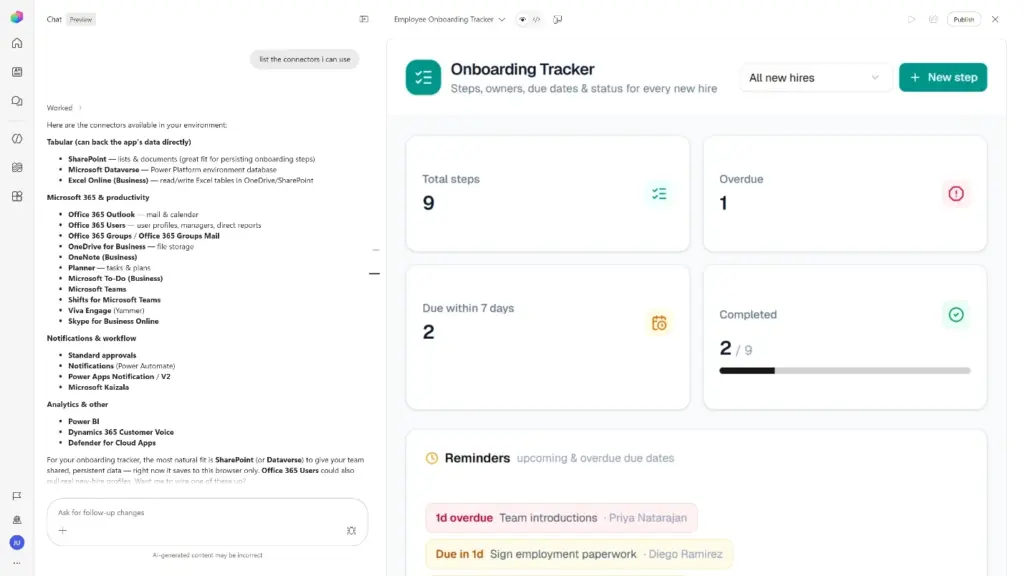
A common criticism of early low-code and no-code tools was their tendency to create "data silos"—applications that worked well in isolation but could not communicate with the broader enterprise ecosystem. Microsoft is addressing this by ensuring that apps built through Copilot Cowork and Copilot Studio are inherently connected.
The platform utilizes an extensive library of connectors to link applications with critical business data. Central to this connectivity is "Work IQ," a feature that allows the AI to access and understand organizational context. This means that a custom-built app is not just a hollow shell; it is grounded in the specific data and services that define a company’s operations.
The functionality extends beyond merely surfacing or displaying information. These applications are designed to take action, such as writing results and updates back into the systems within the Microsoft 365 tenant boundary. Microsoft provided the example of an onboarding application that can track a new hire’s progress, surface relevant learning materials, and update HR records in real-time. Similarly, a field service application could retrieve technical specifications from a third-party database, guide a technician through a repair, and then log the completed work back into the central management system. By grounding the app experience in the actual data and services people use, Microsoft aims to make these AI-generated tools indispensable to the daily flow of work.
Build enterprise apps with open standards and centralized control
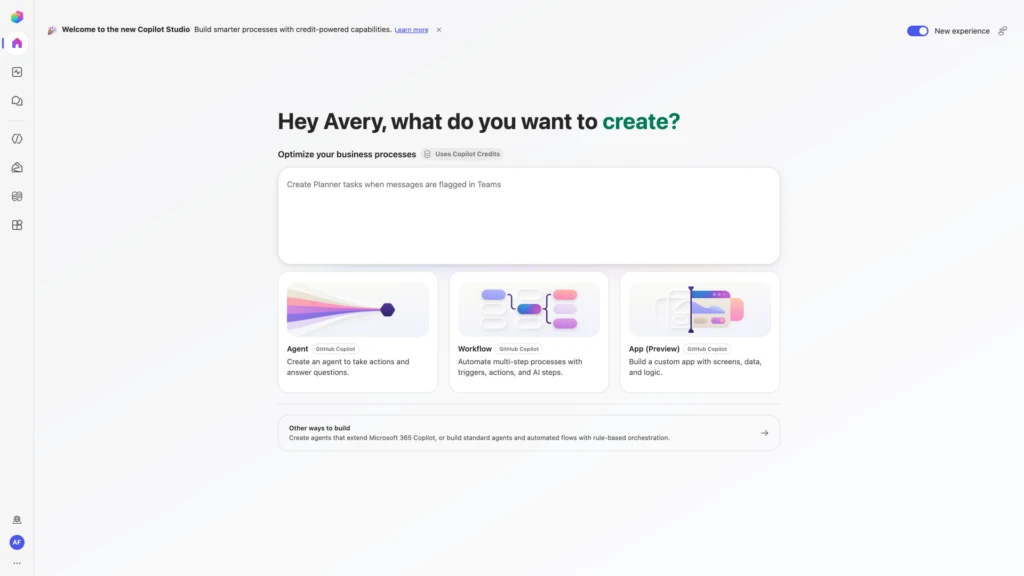
As the democratization of app building accelerates, the primary concern for IT administrators is often "Shadow IT"—the proliferation of unsupported and unmanaged software within the organization. Microsoft has built its new app-building capabilities with a "governance-first" mindset to mitigate these risks.
Despite being initiated through natural language, the resulting products are full-stack applications built on open standards. This technical foundation allows for professional-grade development practices, including Git-backed source control, version isolation, and defined deployment stages. These features ensure that teams can work on improving a second version of an application without the risk of disrupting the version currently in live use.
 Productivity Software & Office Suites
Microsoft Reimagines Copilot as a Central Hub for AI-Driven Work and Autonomous Agents
In a significant shift for the future of digital productivity, Microsoft has...
 Productivity Software & Office Suites
Microsoft Reimagines Copilot: New "Autopilot" and "Code" Features Lead a Major Shift Toward Agentic Work
In a significant pivot toward the next era of enterprise productivity, Microsoft...
 Productivity Software & Office Suites
Microsoft Shifts Focus to Enterprise AI Utility: A New Strategic Framework for Agents, Economics, and Partnership
In an era defined by a relentless cycle of artificial intelligence breakthroughs,...






