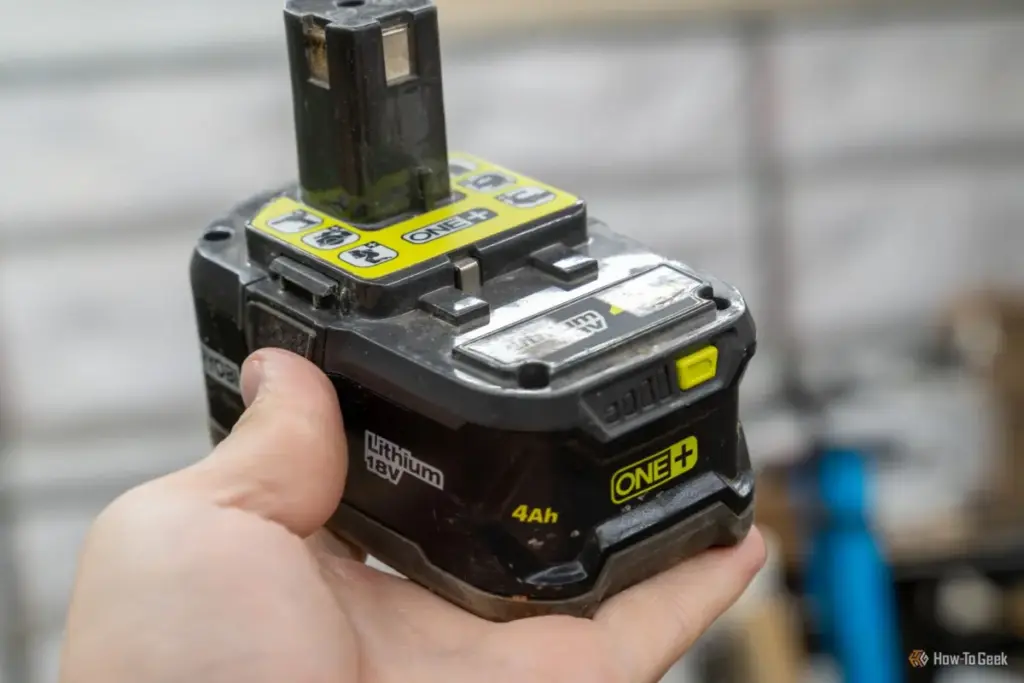
For decades, the world of power tools was defined by proprietary restrictions and bulky, short-lived nickel-cadmium batteries. However, the shift toward high-capacity lithium-ion technology has done more than just improve the runtime of cordless drills and leaf blowers. It has inadvertently created a standardized, portable energy source that has become the darling of the global maker community. Among the various brands on the market, Ryobi’s 18V ONE+ system has emerged as a primary catalyst for independent inventors, engineers, and hobbyists looking to power everything from maritime transport to miniature railways.
The appeal of these lime-green power packs lies in their accessibility and reliability. Unlike specialized industrial batteries, Ryobi units are readily available at big-box retailers and feature a physical form factor—specifically the "stalk" design—that is remarkably easy to adapt for non-tool applications. This ubiquity has sparked a grassroots engineering movement where the battery is no longer just a component of a tool, but the beating heart of diverse, custom-built machines.
Efficiency on the Water: The Rise of the Ryobi-Powered Kayak
One of the most compelling examples of this trend was recently highlighted by an inventor known as Netcamprojects on the engineering platform Hackster.io. While the idea of motorized kayaks is not new, the execution in this project challenges the efficiency of multi-billion-dollar marine corporations. By utilizing a single 6AH Ryobi battery, the maker developed an electric outboard motor system capable of propelling a kayak at 1.7 MPH with a total range of approximately five miles per charge.
The project’s significance extends beyond mere propulsion; it serves as a critique of modern trolling motor design. Most commercial trolling motors available to consumers are surprisingly inefficient, particularly at lower speeds. These traditional motors often rely on resistors to manage speed control, a process that essentially "burns off" excess battery power as wasted heat rather than converting it into mechanical energy. Netcamprojects noted that at low speeds, some commercial units might operate at a dismal 25% efficiency.

To solve this, the DIY build utilizes an Arduino UNO microcontroller and Pulse Width Modulation (PWM) to regulate the motor. By rapidly switching the power on and off rather than resisting the current, the system maintains a claimed 98% efficiency across all speed settings. The result is a lightweight, whisper-quiet vessel that bypasses the need for heavy, expensive lead-acid marine batteries, allowing the operator to simply swap in a fresh power tool battery when the juice runs low.
Engineering a Model Citizen: Powering Garden-Scale Railways
While some makers look toward the open water, others are focusing their engineering talents on the intricate world of model railroading. Specifically, the G-Scale (Garden-scale) community—where trains are large enough to withstand outdoor elements and, occasionally, carry small pets—has found a perfect partner in the Ryobi ecosystem.
 Tech Tutorials & How-To Guides
The Hidden Masterpieces of Netflix: Why Critical Success and Mainstream Popularity Don’t Always Align
In the modern era of the "streaming wars," Netflix has established itself...
 Tech Tutorials & How-To Guides
Beyond PowerToys: How Open-Source Community Tools are Redefining Windows 11 Customization
For decades, the Windows operating system has served as a canvas for...
 Tech Tutorials & How-To Guides
The Evolution of Minimalism: Why Compact Keychain Multi-Tools are Reshaping Modern Everyday Carry
For over a decade, the philosophy of "Everyday Carry," or EDC, was...