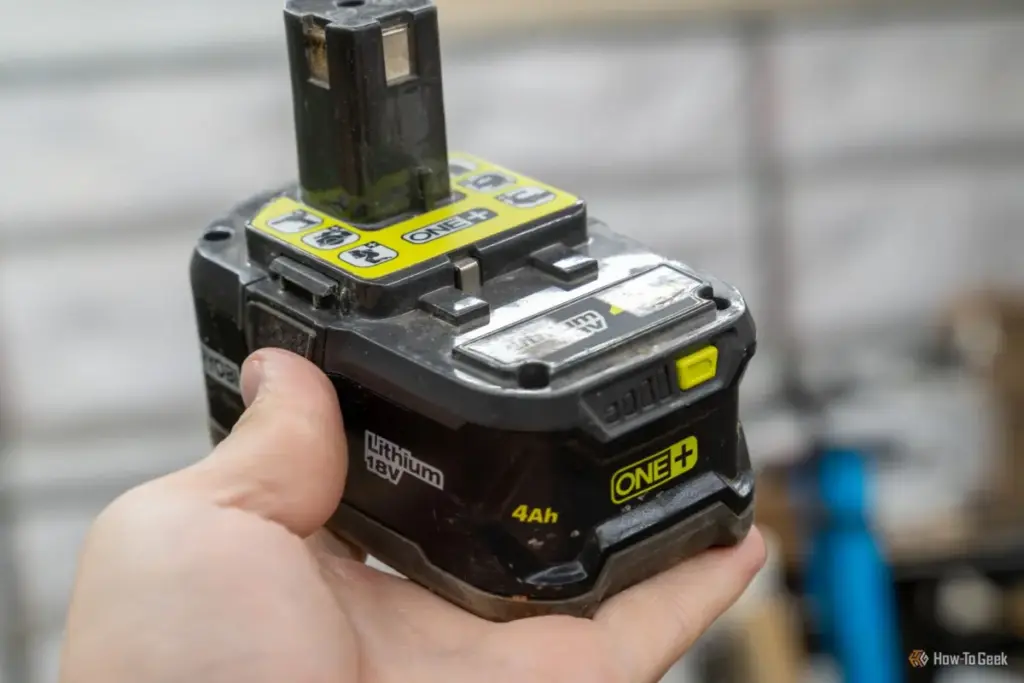
For decades, the world of power tools was defined by proprietary restrictions and bulky, short-lived nickel-cadmium batteries. However, the shift toward high-capacity lithium-ion technology has done more than just improve the runtime of cordless drills and leaf blowers. It has inadvertently created a standardized, portable energy source that has become the darling of the global maker community. Among the various brands on the market, Ryobi’s 18V ONE+ system has emerged as a primary catalyst for independent inventors, engineers, and hobbyists looking to power everything from maritime transport to miniature railways.
The appeal of these lime-green power packs lies in their accessibility and reliability. Unlike specialized industrial batteries, Ryobi units are readily available at big-box retailers and feature a physical form factor—specifically the "stalk" design—that is remarkably easy to adapt for non-tool applications. This ubiquity has sparked a grassroots engineering movement where the battery is no longer just a component of a tool, but the beating heart of diverse, custom-built machines.
Efficiency on the Water: The Rise of the Ryobi-Powered Kayak
One of the most compelling examples of this trend was recently highlighted by an inventor known as Netcamprojects on the engineering platform Hackster.io. While the idea of motorized kayaks is not new, the execution in this project challenges the efficiency of multi-billion-dollar marine corporations. By utilizing a single 6AH Ryobi battery, the maker developed an electric outboard motor system capable of propelling a kayak at 1.7 MPH with a total range of approximately five miles per charge.
The project’s significance extends beyond mere propulsion; it serves as a critique of modern trolling motor design. Most commercial trolling motors available to consumers are surprisingly inefficient, particularly at lower speeds. These traditional motors often rely on resistors to manage speed control, a process that essentially "burns off" excess battery power as wasted heat rather than converting it into mechanical energy. Netcamprojects noted that at low speeds, some commercial units might operate at a dismal 25% efficiency.

To solve this, the DIY build utilizes an Arduino UNO microcontroller and Pulse Width Modulation (PWM) to regulate the motor. By rapidly switching the power on and off rather than resisting the current, the system maintains a claimed 98% efficiency across all speed settings. The result is a lightweight, whisper-quiet vessel that bypasses the need for heavy, expensive lead-acid marine batteries, allowing the operator to simply swap in a fresh power tool battery when the juice runs low.
Engineering a Model Citizen: Powering Garden-Scale Railways
While some makers look toward the open water, others are focusing their engineering talents on the intricate world of model railroading. Specifically, the G-Scale (Garden-scale) community—where trains are large enough to withstand outdoor elements and, occasionally, carry small pets—has found a perfect partner in the Ryobi ecosystem.
In a recent submission to The Garden Whistle, a specialized newsletter for large-scale model train operators, hobbyist Bill Stanley showcased how the 18V battery platform is revolutionizing the way these miniature locomotives traverse backyard landscapes. Historically, garden trains were powered either by electrified tracks, which can be difficult to maintain in the dirt and rain, or by expensive, proprietary onboard battery packs.
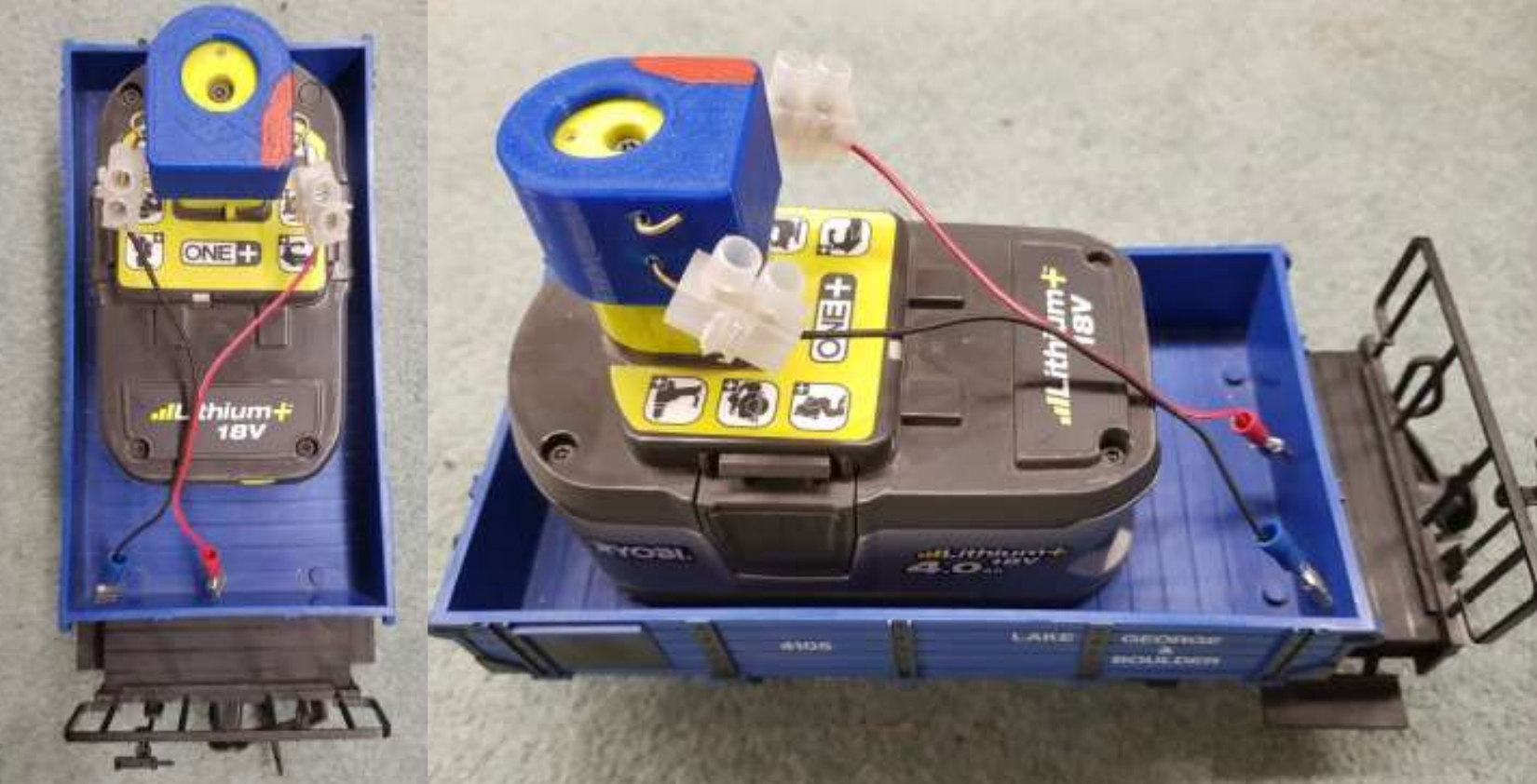
Stanley’s solution involved a custom 3D-printed battery clip designed to hold a standard Ryobi pack. By creating a dedicated "battery car" that trails behind the locomotive, operators can provide a steady stream of power that is independent of track conditions. This approach has gained significant traction within the community; discussions on enthusiast forums indicate that a single Ryobi battery can keep a large-scale train running for up to three hours. For a hobby that prioritizes longevity and mechanical reliability, the transition to high-capacity tool batteries represents a major leap forward in "model citizenship."
High-Speed Upcycling: From Dead Hoverboards to Electric Go-Karts
The DIY movement is also finding creative ways to solve the problem of electronic waste. A few years ago, the market was flooded with "hoverboards"—self-balancing scooters that quickly became notorious for poor battery safety and thermal runaway incidents. While many of these devices ended up in landfills due to faulty internal electronics or degraded batteries, their brushless DC motors remain high-quality pieces of hardware.

Makers like Mario I. Arguello have pioneered a method for upcycling these discarded components into high-performance electric go-karts. As documented on the DIY Go Karts community forums, these builds often utilize simple materials like EMT conduit, steel tubing, and Maker Pipe connectors to form a chassis. The propulsion, however, is pure Ryobi.
By wiring two 18V Ryobi batteries in series, builders can achieve a 36V output, which is the native voltage required by most hoverboard motors. This setup provides a surprising amount of torque and speed, turning a pile of scrap metal and a "dead" scooter into a functional vehicle. The modularity of the Ryobi system allows the driver to carry "spare tanks" in the form of extra battery packs, extending the fun without the need for a long recharging hiatus. This trend has exploded on platforms like YouTube, where builders showcase increasingly sophisticated karts that challenge the performance of entry-level commercial electric vehicles.
The Cyberdeck Aesthetic: Scrappy Computing for the Modern Age
Beyond transportation and hobbies, the Ryobi battery has found a home in the "cyberdeck" subculture. Inspired by the high-tech, low-life aesthetic of 1980s science fiction, cyberdecks are custom-built, portable computers that prioritize personality and modularity over the sleek, sterilized design of modern laptops.
With the advent of affordable 3D printers and single-board computers like the Raspberry Pi, the cyberdeck community has flourished. However, the question of portable power remains a hurdle. While many builders opt for standard USB power banks, a growing faction of "deckers" has turned to power tool batteries. Utilizing a Ryobi pack as the "beating heart" of a computer fits the rugged, industrial spirit of the cyberpunk genre.
From a practical standpoint, the high watt-hour capacity of a large Ryobi pack allows these custom machines to run for extended periods, powering not just the computer itself, but also integrated peripherals like mechanical keyboards, specialized sensors, and high-brightness LCD screens. It is a marriage of utility and aesthetic that exemplifies the "scrappy" nature of the maker movement.
A Note of Caution in the Maker Age
While the ingenuity displayed by these inventors is undeniable, the repurposing of high-energy lithium-ion batteries carries inherent risks. The very "oomph" that makes a Ryobi battery capable of powering a go-kart or a kayak also makes it a potential hazard if handled incorrectly.
An 18V Ryobi battery can store anywhere from 24Wh to 216Wh of energy. If a custom circuit lacks a proper Battery Management System (BMS) or if the battery is over-discharged or short-circuited, the result can be a catastrophic thermal event. The "hoverboard plague" of years past serves as a stark reminder of what happens when high-density energy cells are poorly managed.
The professional consensus among the engineering community is clear: while the potential for innovation is vast, these projects require a deep understanding of electrical safety. The makers who find success are those who respect the power they are wielding, ensuring that their "wacky projects" are built with common sense and technical rigor.
As battery technology continues to evolve, the line between consumer products and raw industrial components will likely continue to blur. For now, the lime-green battery in the garage is no longer just for the weekend handyman; it is a versatile tool for the next generation of inventors, proving that with a little bit of code and some 3D-printed plastic, the possibilities are limited only by one’s imagination.
 Tech Tutorials & How-To Guides
Netflix’s November Documentary Slate Explores Cartel Shadows, Comedy Legends, and Decades-Old Mysteries
As the streaming landscape continues to evolve, documentaries have emerged as one...
 Tech Tutorials & How-To Guides
The Cost of Convenience: Analyzing the Value Proposition of Milwaukee’s M18 Cordless Lineup
In the modern landscape of construction and woodworking, the corded power tool...
 Tech Tutorials & How-To Guides
The Case for a Dedicated YouTube Audio Experience on Apple CarPlay and Android Auto
In the rapidly evolving landscape of automotive technology, Apple CarPlay and Android...