In the relentless pursuit of peak performance, the PC overclocking community has earned a reputation for experimental, often daring, engineering. To the uninitiated, the lengths to which enthusiasts go to shave a few degrees off a processor’s temperature might seem excessive, but history shows that today’s "extreme" measures often become tomorrow’s industry standards. From the early days of DIY liquid cooling—where builders repurposed motorcycle radiators and aquarium pumps to keep their systems stable—to the advent of sophisticated All-In-One (AIO) water coolers, the boundary of what is considered "normal" is constantly shifting.
The latest frontier in this cooling evolution is liquid metal. Once a niche solution reserved for world-record-setting overclockers, liquid metal thermal interface material (TIM) has begun to seep into the mainstream. It is now found in high-end gaming laptops from manufacturers like ASUS and is the primary cooling medium for the PlayStation 5’s custom SoC. However, as more enthusiasts consider making the jump from traditional thermal grease to liquid metal, a critical question remains: is the significant performance gain worth the catastrophic risks associated with a DIY application?
The Temperature Drops Are Real, but There’s a Catch
To understand the appeal of liquid metal, one must first look at the science of heat transfer. Between the top of a processor—the Integrated Heat Spreader (IHS)—and the base of a cooler, there are microscopic imperfections in the metal surfaces. These tiny air gaps act as insulators, trapping heat and forcing the CPU to run hotter. Traditional thermal paste is designed to fill these gaps, but its thermal conductivity is relatively limited compared to actual metal.
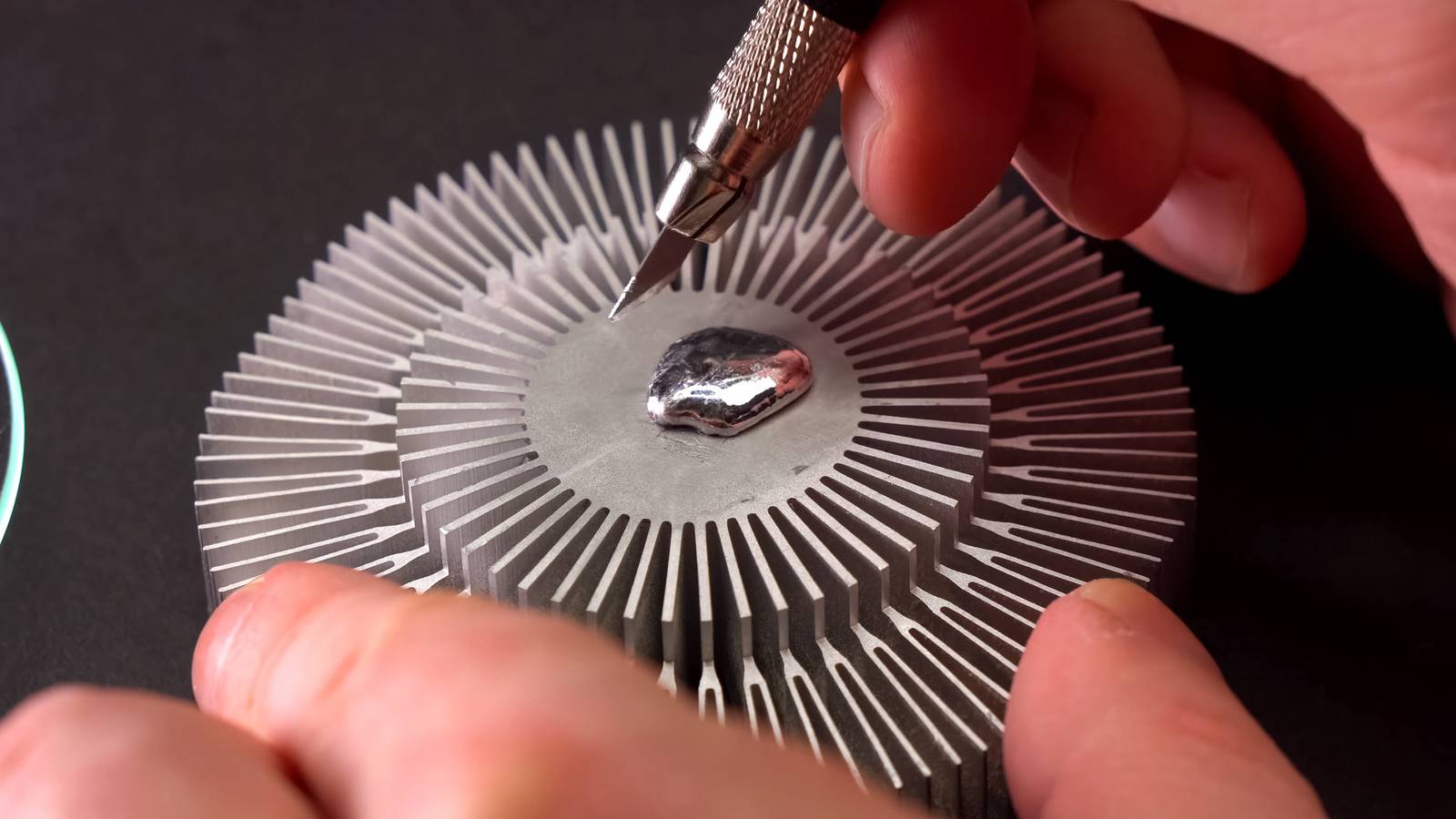
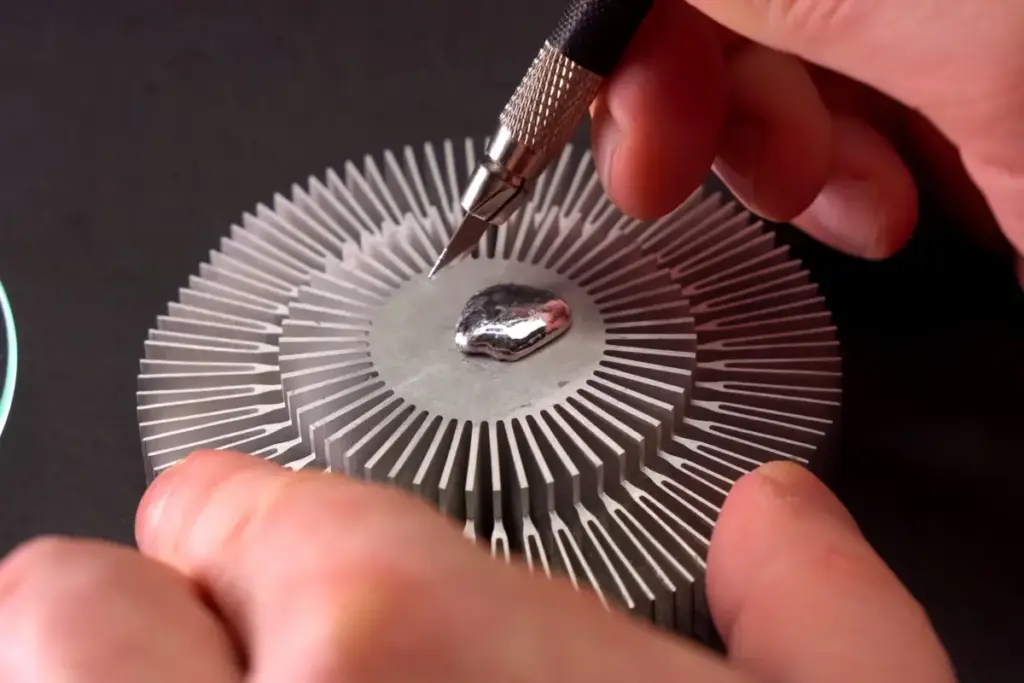
Liquid metal, typically an alloy of gallium, indium, and tin, functions as a much more efficient bridge. It offers significantly higher thermal conductivity than even the best silicone-based thermal greases. When benchmarked by experts such as Gamers Nexus, the results are undeniable. In controlled testing environments, replacing standard internal thermal interface materials with liquid metal resulted in temperature drops of approximately 10 degrees Celsius.
This 10-degree delta is not just a vanity metric; it represents a substantial increase in thermal headroom. For a high-performance CPU or GPU, this can mean the difference between hitting a thermal throttle limit and maintaining a higher boost clock for longer durations. This efficiency is precisely why companies like Sony opted for liquid metal in the PlayStation 5. By using a more efficient thermal conductor, they could design a cooling system that manages a powerful chip without requiring an even more massive or louder heatsink.
However, while the performance benefits are scientifically proven, they come with a set of physical properties that make liquid metal a "high-risk, high-reward" proposition for the average user.
One Stray Drop Can Become an Electrical Problem
The primary danger of liquid metal stems from its dual nature: its high thermal conductivity is matched by its high electrical conductivity. In the world of PC components, where thousands of tiny electrical traces and surface-mounted devices sit in close proximity to the processor, an electrically conductive liquid is a recipe for disaster.
 Tech Tutorials & How-To Guides
Milwaukee Tool’s M12 Series Redefines the Balance of Power and Portability for Professional and Home Applications
In the rapidly evolving landscape of cordless power tools, the long-standing industry...
 Tech Tutorials & How-To Guides
Google Transitions Beyond Chromebooks: A Deep Look at the New Googlebook OS and Its Enhanced Local File Management
The landscape of portable computing has undergone a seismic shift with the...
 Tech Tutorials & How-To Guides
The Persistence of Browser Hijackers: How a Tech Expert Used AI to Reclaim Chrome
In the modern digital landscape, the line between a helpful browser extension...