
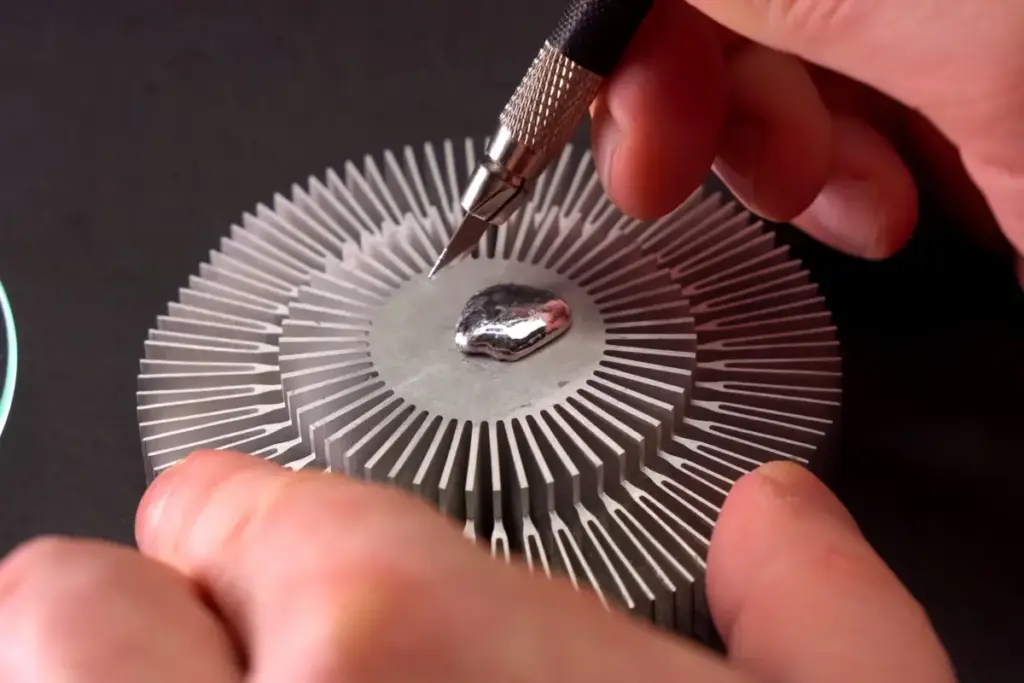

Traditional thermal grease is almost always non-conductive. If a user is a bit heavy-handed and some paste squeezes out the sides of the CPU socket, it is a messy inconvenience that requires some isopropyl alcohol and a few cotton swabs to fix. It will not, however, cause a short circuit. Liquid metal is a different story entirely. Because it is a liquid at room temperature and highly conductive, a single stray droplet landing on a motherboard component or bridging two pins can instantly "release the magic blue smoke," permanently destroying expensive hardware.
This risk necessitates a level of precision that far exceeds standard PC building practices. While enthusiasts might be used to the "pea-sized drop" method for thermal paste, liquid metal requires a meticulous, thin-layer application. Leading manufacturers of the material, such as Thermal Grizzly, provide specific guidance to use only a pinhead-sized amount, which must then be manually spread across the entire surface of the spreader and the heatsink.
To mitigate the risk of leakage, professional integrators have developed specialized barriers. ASUS, for instance, utilizes a patented process for its ROG gaming laptops that involves a custom sponge-like barrier placed around the processor. This barrier is designed to soak up any liquid metal that might migrate due to the pressure of the heatsink or the movement of the laptop, ensuring that the material stays exactly where it belongs. For a DIY builder, replicating this level of safety without professional-grade materials is a daunting task.
The Wrong Cooler Material Can Suffer Permanent Damage
Beyond the electrical risks, liquid metal introduces a chemical hazard that can catch even experienced builders off guard: material incompatibility. The gallium found in liquid metal alloys is notoriously "aggressive" toward certain other metals, particularly aluminum.
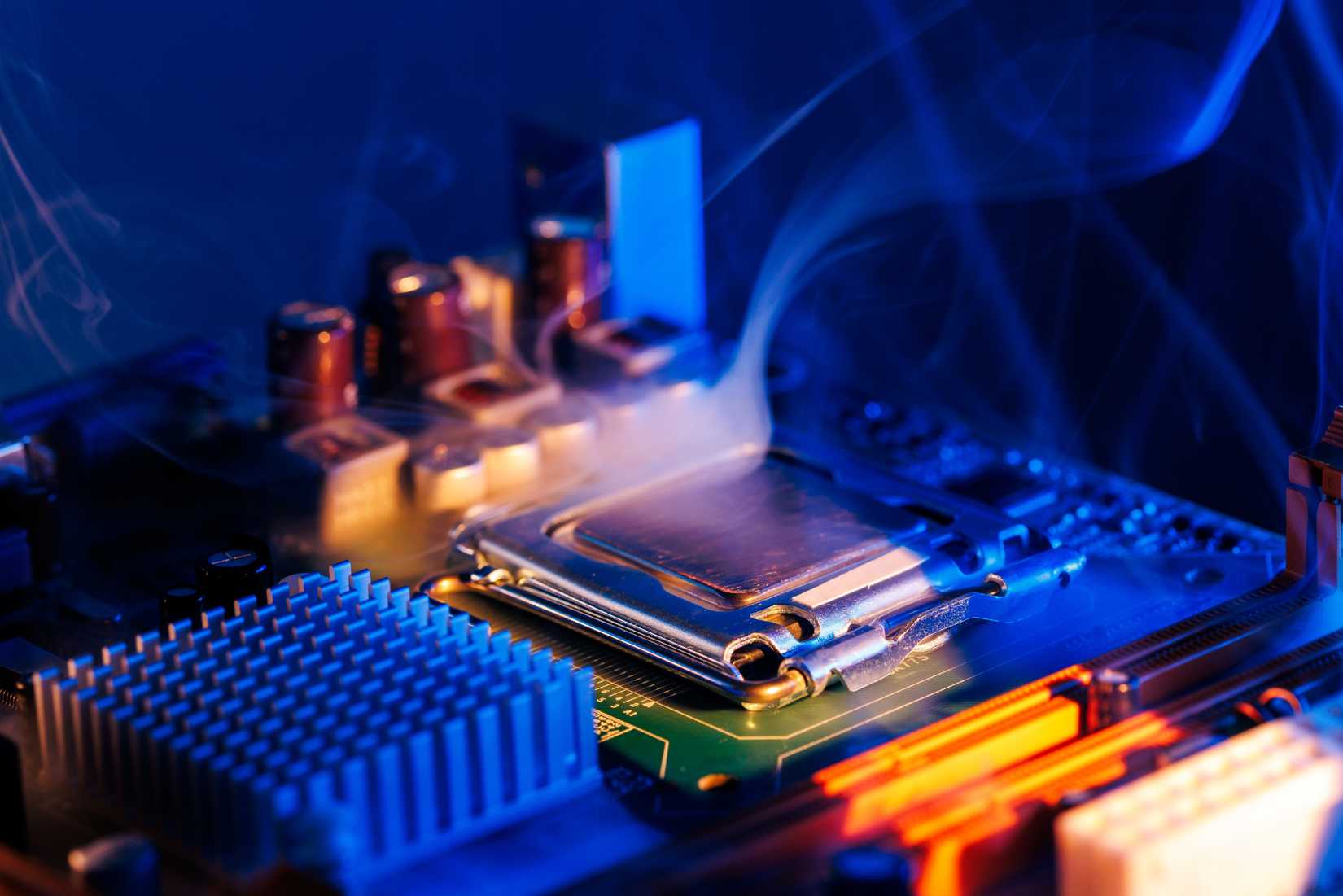
Through a process known as liquid metal embrittlement, gallium can infiltrate the grain boundaries of aluminum, essentially dissolving the metal’s structure from the inside out. This is not a slow process of oxidation; it is a rapid chemical reaction. Tests conducted by Gamers Nexus demonstrated that liquid metal could corrode an aluminum heatsink beyond repair in as little as 24 hours. The once-solid metal becomes brittle and crumbly, losing all structural integrity and thermal efficiency.
This creates a significant hurdle for users of budget or stock cooling solutions, many of which utilize aluminum for their heatsink bases to save on costs. For liquid metal to be used safely, the contact surface of the cooler must be made of copper or nickel-plated copper. While most high-end air coolers and AIOs use copper, a mistake in identifying the material of a heatsink can lead to the total destruction of the cooling unit.
 Tech Tutorials & How-To Guides
A New Titan in Entertainment: Navigating the Skydance Merger and the Future of Streaming
The landscape of global media has undergone a seismic shift as the...
 Tech Tutorials & How-To Guides
The Evolution of Everyday Carry: Innovative Multi-Tool Advancements Defining the 2026 Market
For decades, the multi-tool has served as the cornerstone of the "Everyday...
 Tech Tutorials & How-To Guides
Top Streaming Picks for Late October: From High-Stakes Documentaries to Modern Classics
As the final week of October arrives, the cultural atmosphere undergoes a...







