
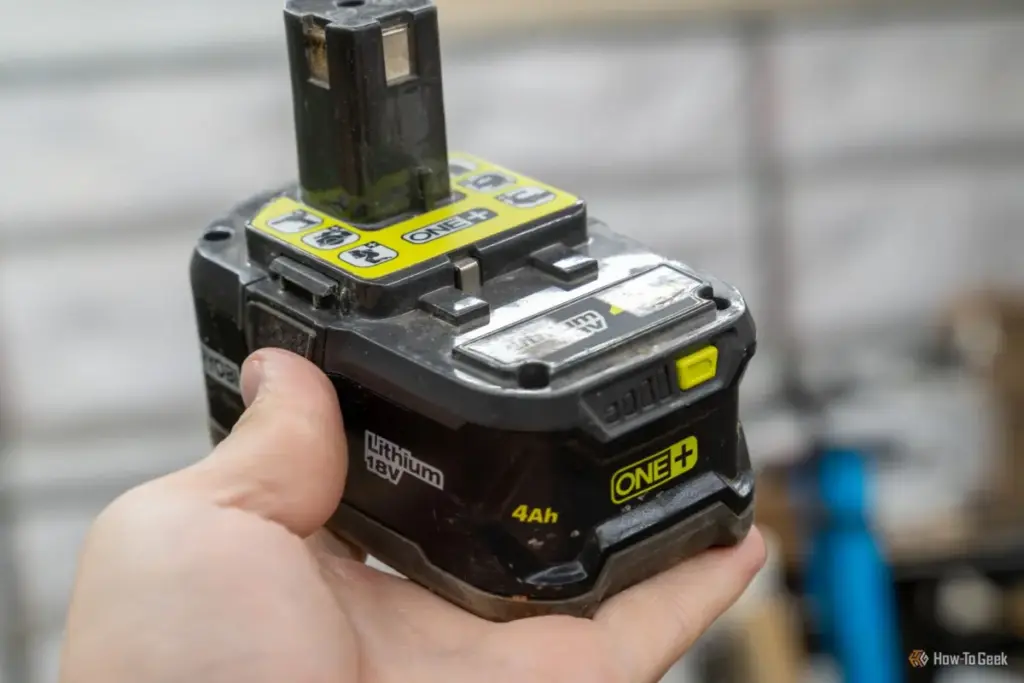
In a recent submission to The Garden Whistle, a specialized newsletter for large-scale model train operators, hobbyist Bill Stanley showcased how the 18V battery platform is revolutionizing the way these miniature locomotives traverse backyard landscapes. Historically, garden trains were powered either by electrified tracks, which can be difficult to maintain in the dirt and rain, or by expensive, proprietary onboard battery packs.
Stanley’s solution involved a custom 3D-printed battery clip designed to hold a standard Ryobi pack. By creating a dedicated "battery car" that trails behind the locomotive, operators can provide a steady stream of power that is independent of track conditions. This approach has gained significant traction within the community; discussions on enthusiast forums indicate that a single Ryobi battery can keep a large-scale train running for up to three hours. For a hobby that prioritizes longevity and mechanical reliability, the transition to high-capacity tool batteries represents a major leap forward in "model citizenship."
High-Speed Upcycling: From Dead Hoverboards to Electric Go-Karts
The DIY movement is also finding creative ways to solve the problem of electronic waste. A few years ago, the market was flooded with "hoverboards"—self-balancing scooters that quickly became notorious for poor battery safety and thermal runaway incidents. While many of these devices ended up in landfills due to faulty internal electronics or degraded batteries, their brushless DC motors remain high-quality pieces of hardware.

Makers like Mario I. Arguello have pioneered a method for upcycling these discarded components into high-performance electric go-karts. As documented on the DIY Go Karts community forums, these builds often utilize simple materials like EMT conduit, steel tubing, and Maker Pipe connectors to form a chassis. The propulsion, however, is pure Ryobi.
By wiring two 18V Ryobi batteries in series, builders can achieve a 36V output, which is the native voltage required by most hoverboard motors. This setup provides a surprising amount of torque and speed, turning a pile of scrap metal and a "dead" scooter into a functional vehicle. The modularity of the Ryobi system allows the driver to carry "spare tanks" in the form of extra battery packs, extending the fun without the need for a long recharging hiatus. This trend has exploded on platforms like YouTube, where builders showcase increasingly sophisticated karts that challenge the performance of entry-level commercial electric vehicles.
The Cyberdeck Aesthetic: Scrappy Computing for the Modern Age
Beyond transportation and hobbies, the Ryobi battery has found a home in the "cyberdeck" subculture. Inspired by the high-tech, low-life aesthetic of 1980s science fiction, cyberdecks are custom-built, portable computers that prioritize personality and modularity over the sleek, sterilized design of modern laptops.
 Tech Tutorials & How-To Guides
Milwaukee’s REDLITHIUM USB Ecosystem: The Essential Jobsite Accessories Redefining Professional Productivity
For decades, Milwaukee Tool has maintained a formidable reputation as a leader...
 Tech Tutorials & How-To Guides
Weekend Maker Project: Exploring the Potential and Limits of DIY Tracking with the ESP32-C3
In the rapidly evolving landscape of the "maker" movement, the accessibility of...
 Tech Tutorials & How-To Guides
The Fedora Paradox: Why the Industry’s Favorite Linux Distribution Still Feels Like an Unfinished Product
Fedora has long occupied a prestigious, if somewhat contradictory, position within the...







