In the modern landscape of personal productivity, the concept of "Every Day Carry"—commonly referred to as EDC—has evolved from a niche hobby into a sophisticated subculture of preparedness. For the DIY-minded individual, the daily ritual often involves reaching for a core set of essential tools: a reliable screwdriver, a sharp blade, a precise measuring device, and perhaps a pair of tweezers for fine tasks. While traditional multi-tools have long filled this gap, a new project by designer and technology writer Joe Fedewa seeks to merge these analog essentials with the one device most people never leave home without: the smartphone.
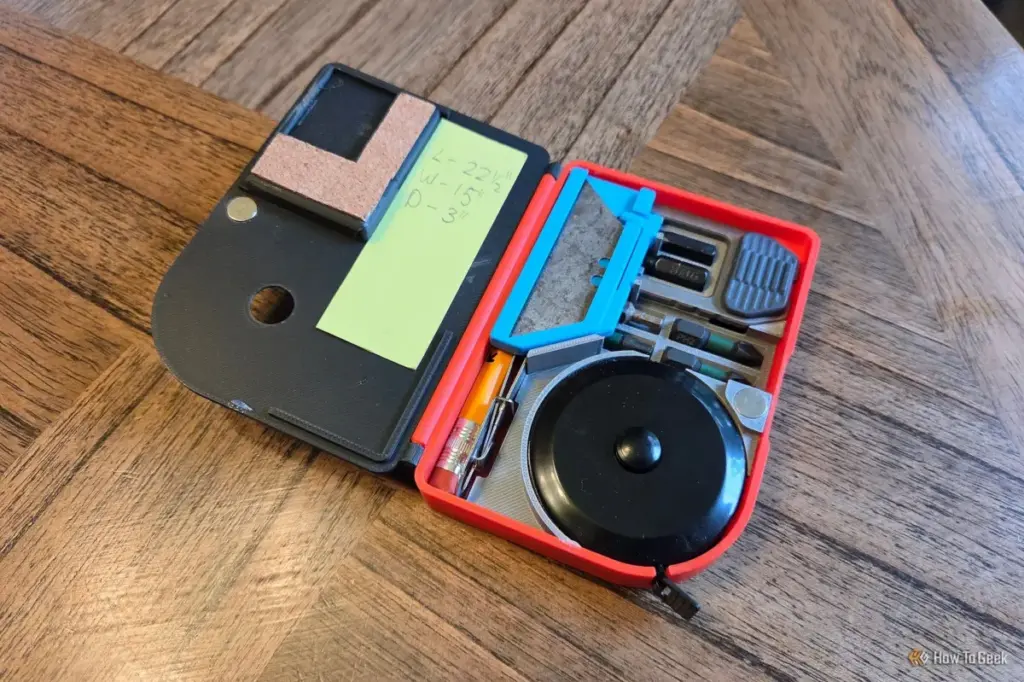
The project, which culminated in the creation of a 3D-printed, MagSafe-compatible pocket toolbox, represents a significant step forward in modular utility design. By utilizing the magnetic mounting system built into modern iPhones and many Android cases, Fedewa has developed a way to keep a functional toolkit literally attached to the user’s primary communication device.
The Evolution of the Pocket Toolbox
The inspiration for this modular toolkit did not emerge in a vacuum. Fedewa credits a viral concept from content creator Maurice Moves, titled "I Fit a Fully Functioning Toolbox into an Altoids Tin," as the primary spark for his design. In that original project, Maurice Moves demonstrated the possibility of cramming an impressive array of supplies—including Band-Aids, soap sheets, a flashlight, a multi-tool, and even SuperGlue—into the 6.5 cubic inches of a standard mint tin.

While the Altoids tin remains a classic staple of the EDC community due to its durability and nostalgic charm, it possesses inherent limitations in the digital age. It is bulky, often rattles in the pocket, and requires a dedicated space in one’s attire. Fedewa’s objective was to take that spirit of comprehensive utility and refine it into a slimmer, more integrated package. The goal was to move the toolkit from the bottom of a pocket to the back of a phone, utilizing the MagSafe standard to ensure the tools were always within reach without adding excessive bulk.
Engineering Within Physical Constraints
One of the primary challenges in designing a phone-mounted accessory is balancing utility with ergonomics. A toolbox that is too large would interfere with the phone’s camera lenses or make the device impossible to hold comfortably. Conversely, a toolbox that is too small would fail to house the very tools that make it useful.
To determine the ideal dimensions, Fedewa conducted extensive research into existing MagSafe accessories. He used the Spigen magnetic pouch as a reference point for what constitutes a "pocketable" and "phone-friendly" size. After producing several size-test prints to gauge how the object felt in the hand and how it sat on the back of various devices, he settled on dimensions that provided a universal fit. The design was intentionally kept generic enough to work across different phone models, rather than being tailored to one specific handset, allowing the 3D-printing community at large to utilize the files.
Selecting the tools to occupy this limited real estate was the next significant hurdle. Fedewa identified four "must-have" categories: a screwdriver with interchangeable bits, a cutting edge, a measuring tool, and a writing utensil. Any additional capacity would be used for secondary tools like tweezers or specialized bit storage.
 Tech Tutorials & How-To Guides
The Profanity Protocol: How One Engineer Used AI and Smart Home Tech to Break a Sedentary Habit
For many remote workers, the transition from a traditional office to a...
 Tech Tutorials & How-To Guides
Navigating the Linux Recovery Landscape: Essential Boot Options for System Restoration and Troubleshooting
The Linux operating system is frequently celebrated for its stability, modularity, and...
 Tech Tutorials & How-To Guides
The Persistence of Browser Hijackers: How a Tech Expert Used AI to Reclaim Chrome
In the modern digital landscape, the line between a helpful browser extension...