
This bandwidth is vital for more than just high-resolution textures. Modern graphics techniques, such as Path Tracing, require constant, high-speed access to massive amounts of data regarding light rays and geometry. By widening the "memory pipe," the RTX 5080 can sustain these heavy workloads without the stuttering or frame-time variances that can plague cards with slower memory subsystems.
Performance Expectations and the Market Gap
One of the most persistent topics of debate in the hardware community is where the RTX 5080 will land on the performance charts relative to the current king, the RTX 4090. If historical trends hold, NVIDIA typically aims for the new "80-class" card to match or slightly exceed the performance of the previous generation’s flagship. However, the gap between the RTX 4080 and the RTX 4090 was notably wide, leading to questions about how NVIDIA will segment the 50-series.
Leaked specifications suggest that the RTX 5080 may feature roughly half the core count of the RTX 5090. If true, this would create a significant performance delta between the two top-tier cards. Nevertheless, the architectural gains of Blackwell mean that the 5080 could still offer a transformative experience for those upgrading from the 30-series or even the standard 4080. The focus for the 5080 appears to be on delivering a "perfect" 4K gaming experience—one where 144Hz or even 240Hz refresh rates are achievable in modern AAA titles with full ray tracing enabled.
Furthermore, the RTX 5080 will likely be the primary showcase for the next iteration of NVIDIA’s Deep Learning Super Sampling (DLSS). While DLSS 3 introduced Frame Generation, there is speculation that Blackwell will usher in a new version of the technology that leverages the improved Tensor cores to further enhance image reconstruction and perhaps even introduce AI-driven physics or animation.
Power Delivery and Thermal Management
With great performance comes the inevitable challenge of power consumption. The RTX 40-series saw the introduction of the 12VHPWR connector, which was met with some controversy due to reports of melting cables when not properly seated. For the RTX 50-series, NVIDIA is expected to utilize the refined 12V-2×6 power connector. This updated standard features shorter sensing pins to ensure that the GPU will not draw full power unless the cable is fully and securely inserted, addressing the safety concerns of the previous design.
Rumors regarding the Total Graphics Power (TGP) of the RTX 5080 suggest a range between 320W and 400W. While this is a substantial amount of power, the efficiency of the Blackwell architecture means that the performance-per-watt ratio should still see a healthy improvement. For consumers, this means that while the card may require a high-wattage power supply (likely 850W or higher), the actual work performed for every watt of electricity consumed will be higher than ever before.
 Hardware Reviews & PC Building
Apple Unveils First Touchscreen MacBook Pro Models with OLED XDR Displays and M5 Series Silicon
In a move that marks one of the most significant architectural and...
 Hardware Reviews & PC Building
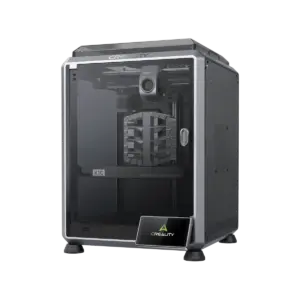
Amazon Prime Day 2026: Final 24 Hours of Big Deal Days Feature Massive Savings on RTX 5070 Systems, Ryzen 9800X3D, and Premium Gaming Peripherals
As the clock winds down on the 2026 iteration of Amazon’s Big...
 Hardware Reviews & PC Building
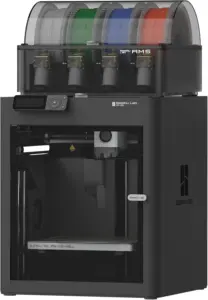
Grab the award-winning Bambu Lab P1S 3D printer with AMS for $70 off — save $70 on one of the best 3D printers for…
The significance of this deal lies not just in the dollar amount...







