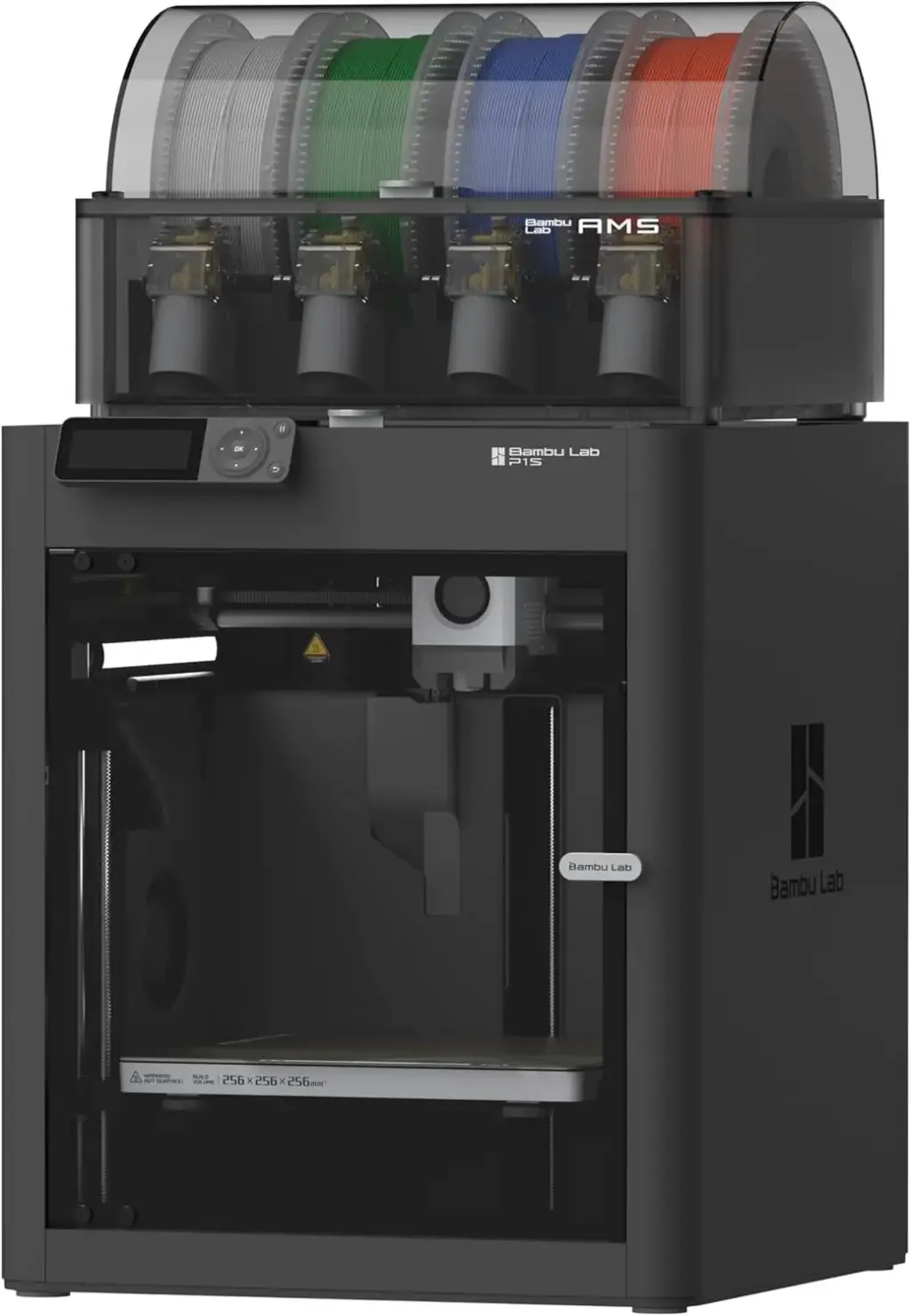
The significance of this deal lies not just in the dollar amount saved, but in the specific hardware being offered. The P1S is often described as the "sweet spot" in the Bambu Lab lineup. It sits strategically between the entry-level, open-frame A1 series and the flagship, high-end X1-Carbon. While the X1-Carbon remains the gold standard for those needing advanced AI-driven spaghetti detection and a high-resolution touch interface, the P1S provides nearly identical printing performance and the same robust CoreXY motion system at a fraction of the cost. The "Combo" designation is particularly important here, as it includes the AMS module. This peripheral sits atop or alongside the printer and allows for the simultaneous loading of four different filament spools. This enables the printer to automatically switch colors or materials during a single print job, a feature that was once the exclusive domain of professional-grade industrial machines or incredibly complex, user-built modifications.
For a beginner, the appeal of the P1S Combo at this price point is multifaceted. Historically, the primary barrier to entry for 3D printing was the steep learning curve associated with bed leveling, nozzle offsets, and filament tensioning. Bambu Lab effectively removed these hurdles by implementing sophisticated auto-leveling routines and vibration compensation. When a user unboxes a P1S, they are met with a machine that is almost entirely pre-assembled. The setup process is designed to be completed in less than an hour, a stark contrast to the kits of yesteryear that could take a full weekend to build. By offering this bundle through a retailer like Best Buy, the accessibility is further enhanced, providing a level of consumer protection and ease of purchase that was rarely available when 3D printers were primarily sold through niche international hobbyist websites.
The P1S itself is a fully enclosed 3D printer, which is a critical feature for anyone looking to print more than just basic PLA plastic. While the open-frame printers common in the sub-$300 category are excellent for simple decorative items, they often struggle with technical materials like ABS or ASA. These materials are prone to warping and shrinking if they cool too quickly or unevenly. The enclosure of the P1S traps the heat generated by the build plate, creating a stable thermal environment that ensures better layer adhesion and structural integrity for functional parts. This enclosure also serves a secondary purpose: it significantly reduces the noise of the printing process and helps contain the fumes and ultra-fine particles that can be generated during the melting of certain plastics.
Under the hood, the P1S utilizes a CoreXY architecture, which is generally considered superior to the "bedslinger" design where the heavy print bed moves back and forth. In a CoreXY system, the bed only moves vertically, while the lightweight print head moves rapidly in the X and Y planes. This allows for much higher print speeds without sacrificing quality. The P1S is rated for speeds up to 500mm/s with an acceleration of 20,000 mm/s². In practical terms, this means a print that might take ten hours on an older machine can often be completed in three or four hours on the P1S. This speed is complemented by an active cooling system that includes a dedicated part-cooling fan, a chamber regulator fan, and a control board fan, all working in tandem to ensure that layers are solidified the moment they are deposited.
 Hardware Reviews & PC Building
Intel Signals Extended Life for LGA 1700 Platform as Raptor Lake Next Driver and Shipping Data Surface
Intel appears to be moving forward with a strategic extension of its...
 Hardware Reviews & PC Building
Tom’s Hardware Expands Digital Reach with Launch of Official Mobile Application for Android and iOS
The landscape of technology journalism has undergone a profound transformation over the...
 Hardware Reviews & PC Building
Cinebench world record that stood for 12 years gets toppled — OC expert scores 10.8cb in Cinebench R11.5 using an…
The achievement is not merely a personal victory for Luumi but a...