
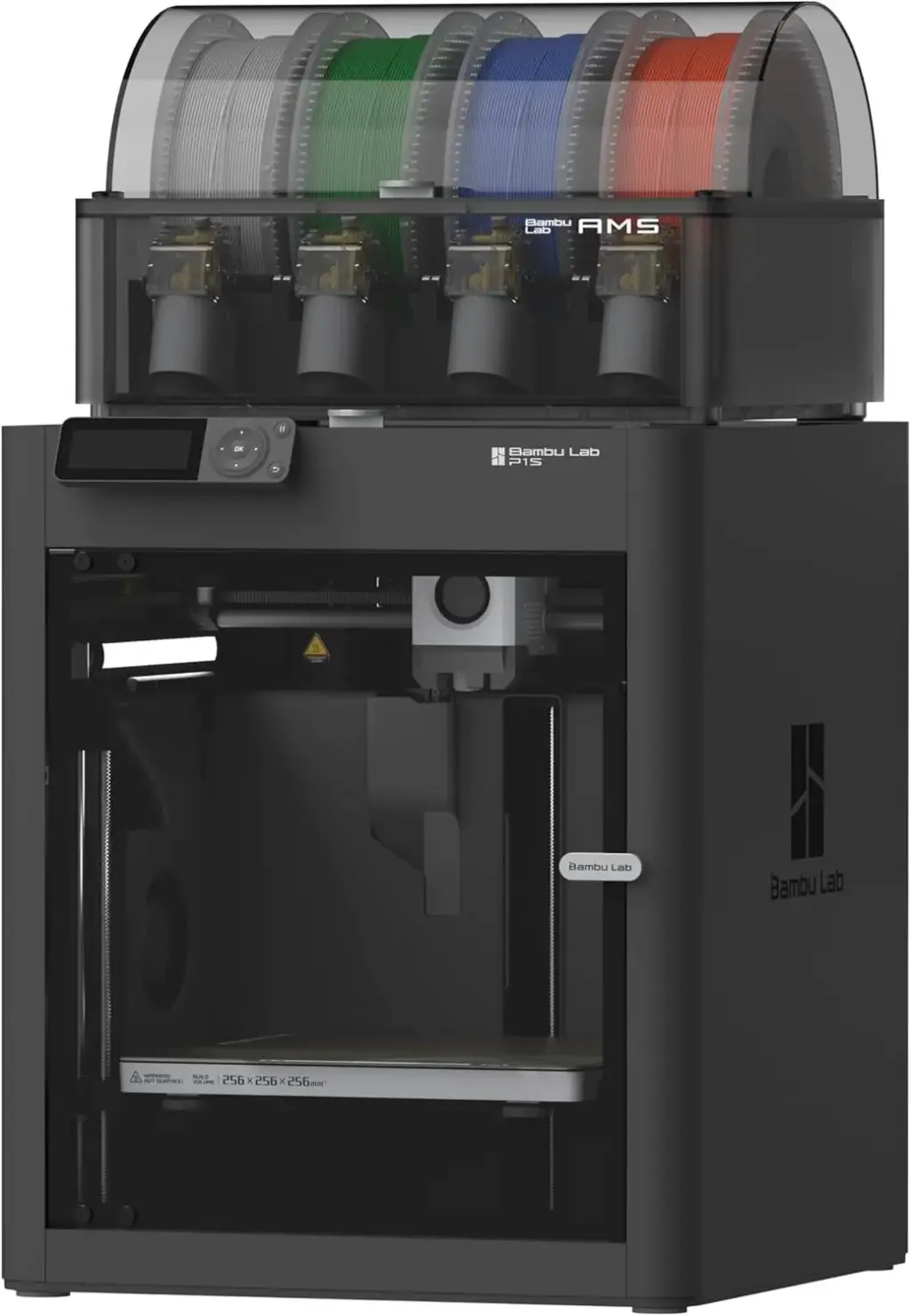
The significance of this deal lies not just in the dollar amount saved, but in the specific hardware being offered. The P1S is often described as the "sweet spot" in the Bambu Lab lineup. It sits strategically between the entry-level, open-frame A1 series and the flagship, high-end X1-Carbon. While the X1-Carbon remains the gold standard for those needing advanced AI-driven spaghetti detection and a high-resolution touch interface, the P1S provides nearly identical printing performance and the same robust CoreXY motion system at a fraction of the cost. The "Combo" designation is particularly important here, as it includes the AMS module. This peripheral sits atop or alongside the printer and allows for the simultaneous loading of four different filament spools. This enables the printer to automatically switch colors or materials during a single print job, a feature that was once the exclusive domain of professional-grade industrial machines or incredibly complex, user-built modifications.
For a beginner, the appeal of the P1S Combo at this price point is multifaceted. Historically, the primary barrier to entry for 3D printing was the steep learning curve associated with bed leveling, nozzle offsets, and filament tensioning. Bambu Lab effectively removed these hurdles by implementing sophisticated auto-leveling routines and vibration compensation. When a user unboxes a P1S, they are met with a machine that is almost entirely pre-assembled. The setup process is designed to be completed in less than an hour, a stark contrast to the kits of yesteryear that could take a full weekend to build. By offering this bundle through a retailer like Best Buy, the accessibility is further enhanced, providing a level of consumer protection and ease of purchase that was rarely available when 3D printers were primarily sold through niche international hobbyist websites.
The P1S itself is a fully enclosed 3D printer, which is a critical feature for anyone looking to print more than just basic PLA plastic. While the open-frame printers common in the sub-$300 category are excellent for simple decorative items, they often struggle with technical materials like ABS or ASA. These materials are prone to warping and shrinking if they cool too quickly or unevenly. The enclosure of the P1S traps the heat generated by the build plate, creating a stable thermal environment that ensures better layer adhesion and structural integrity for functional parts. This enclosure also serves a secondary purpose: it significantly reduces the noise of the printing process and helps contain the fumes and ultra-fine particles that can be generated during the melting of certain plastics.
Under the hood, the P1S utilizes a CoreXY architecture, which is generally considered superior to the "bedslinger" design where the heavy print bed moves back and forth. In a CoreXY system, the bed only moves vertically, while the lightweight print head moves rapidly in the X and Y planes. This allows for much higher print speeds without sacrificing quality. The P1S is rated for speeds up to 500mm/s with an acceleration of 20,000 mm/s². In practical terms, this means a print that might take ten hours on an older machine can often be completed in three or four hours on the P1S. This speed is complemented by an active cooling system that includes a dedicated part-cooling fan, a chamber regulator fan, and a control board fan, all working in tandem to ensure that layers are solidified the moment they are deposited.
The inclusion of the AMS in this Best Buy deal is perhaps the most compelling reason for the current surge in interest. The AMS does more than just enable multi-color "trinket" printing; it serves as a sophisticated filament management system. It is airtight and features slots for desiccant, acting as a dry box to keep moisture-sensitive filaments like PETG or Nylon from degrading. Furthermore, it supports an "auto-refill" feature. If a user is halfway through a large print and a spool of filament runs out, the AMS can automatically detect the empty spool and switch to a second spool of the same material without any manual intervention or pausing of the print. This level of automation is a significant quality-of-life improvement for those running long print jobs or managing a small-scale production setup.
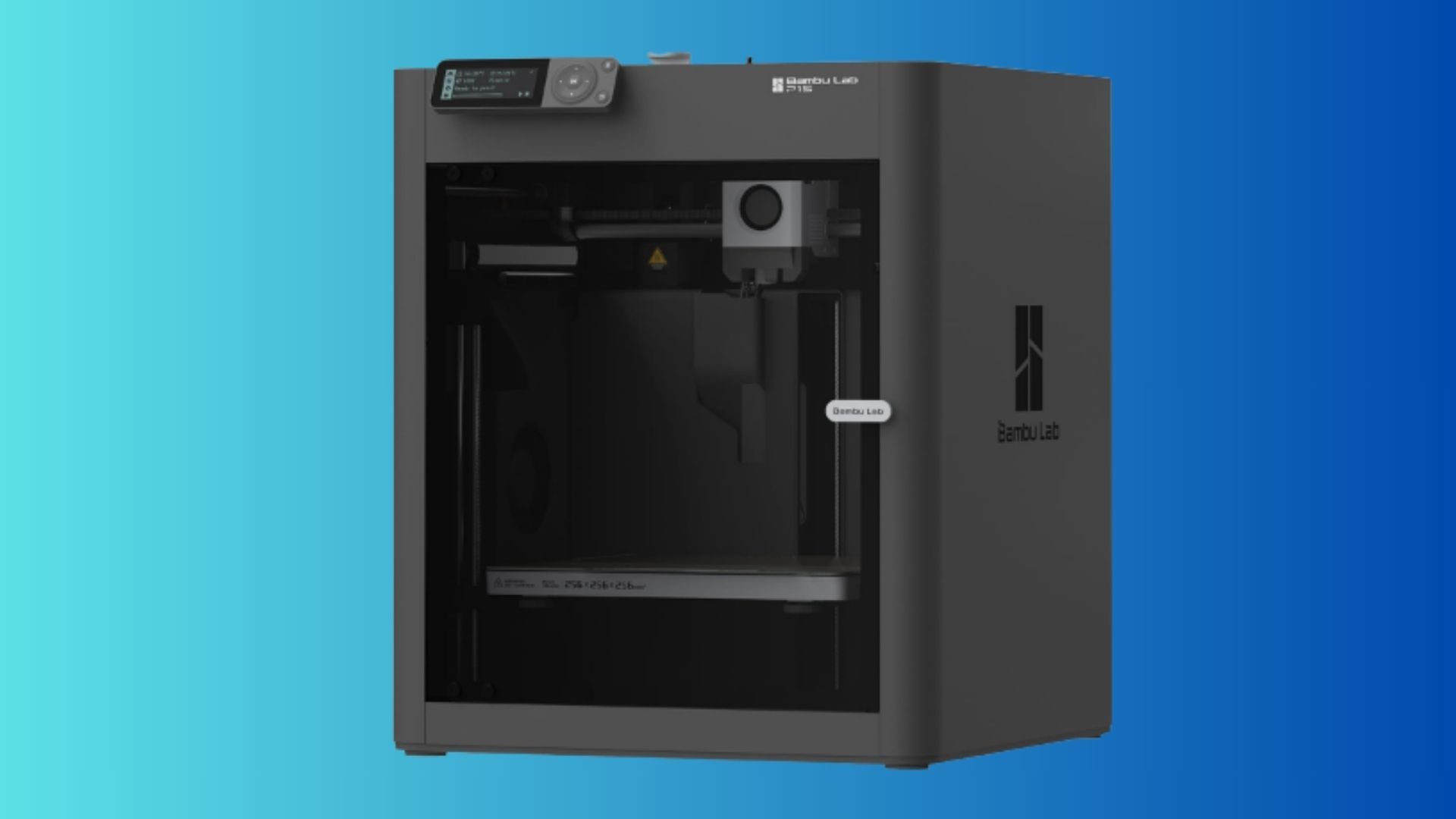
From a software perspective, the P1S integrates seamlessly with Bambu Studio, the company’s proprietary slicing software based on the open-source PrusaSlicer. The software is designed to be intuitive, offering "one-click" printing options for beginners while retaining the deep, granular settings required by advanced users. Additionally, the printer features built-in Wi-Fi and a camera, allowing users to monitor their prints remotely through the Bambu Handy mobile app. While the P1S camera has a lower frame rate than the one found in the X1-Carbon, it is more than sufficient for checking the progress of a job or ensuring that no errors have occurred while the user is away from the machine.
The current market for 3D printers is more competitive than it has ever been, with several manufacturers attempting to replicate the "Bambu experience." However, the P1S remains a benchmark because of the maturity of its ecosystem. The integration between the hardware, the AMS, the slicing software, and the mobile app creates a cohesive experience that is difficult to find elsewhere. At the discounted price of $479.99, the P1S Combo challenges the value proposition of many other machines on the market. It effectively bridges the gap between a "budget" printer and a "professional" tool, making it an attractive option for a wide variety of users, from students and educators to independent inventors and tabletop gaming enthusiasts.
As the technology continues to mature, the price drop at Best Buy serves as a marker of the industry’s direction. High-speed, multi-color, enclosed printing is no longer a luxury reserved for those with four-figure budgets. The $70 discount may seem modest in the context of high-end electronics, but in the 3D printing world, that $70 represents several kilograms of high-quality filament or a collection of spare parts and nozzles, effectively lowering the "total cost of ownership" for a new user.
It is also worth noting the logistical advantage of purchasing through a major retailer. For many, the ability to pick up a unit locally or handle potential returns and exchanges through a physical storefront adds a layer of confidence to the purchase of a complex mechanical device. As Kunal Khullar noted in the original reporting for Tom’s Hardware, the P1S is a proven winner, and this price adjustment makes it an even more formidable contender in the mid-range market. Whether you are looking to create custom organizational tools for your home, prototype mechanical parts for a project, or simply explore the creative possibilities of three-dimensional design, the P1S Combo at this price point represents a significant entry point into a hobby that continues to grow in both capability and popularity.
The deal is currently live and reflects a broader trend of 3D printing technology becoming more accessible to the general public. As the holiday season approaches and retailers look to move inventory, these types of promotions on high-demand hardware like the Bambu Lab P1S suggest that the barrier to entry for high-quality additive manufacturing will only continue to fall. For now, those looking to secure an Editor’s Choice-winning machine with multi-color capabilities will find this Best Buy offer to be one of the most competitive options available in the current market.
 Hardware Reviews & PC Building
Russian Military Targets Ukrainian Data Centers in Widening Campaign Against Digital Infrastructure
The Russian military has initiated a series of targeted strikes against critical...
 Hardware Reviews & PC Building
Nvidia CEO Jensen Huang admits to an affair with a suspected Chinese spy — Jensen apologizes in letter to staff,…
The revelation came to light after a series of reports suggested that...
 Hardware Reviews & PC Building
Brazilian lawyers busted for attempting to manipulate court’s AI with prompt injection hidden in filing —…
The discovery was brought to public attention by Professor Vladimir Aras of...







