
The landscape of software development is undergoing a fundamental transformation, driven by the rapid evolution of generative artificial intelligence. For decades, the ability to build functional software was a skill reserved for those with years of specialized training in programming languages and system architecture. However, a new era of "agentic coding" is emerging, effectively democratizing the creation of digital tools. Microsoft, a long-standing leader in both enterprise software and developer tools, has announced a significant leap forward in this space by introducing natural language app-building capabilities within Copilot Cowork and Copilot Studio.
This latest development signals a shift from AI as a mere assistant to AI as a foundational builder. Under the new framework, individuals who have never written a single line of code can now translate a business concept into a working application in a matter of minutes. By simply describing an idea through a conversational interface, users can trigger complex agentic solutions that handle the underlying logic, structure, and deployment of software. Yet, as Microsoft points out, the mere generation of an application is only the first step in solving modern business challenges. For an app to be truly useful within a corporate environment, it must be more than a standalone tool; it must be integrated, secure, and governed.
The Challenge of Enterprise-Ready Applications
While the market has seen a surge in AI tools capable of generating code snippets or simple prototypes, the enterprise sector requires a much higher standard of reliability. To solve real-world business problems, applications must be able to connect seamlessly to existing enterprise data and legacy systems. They must operate within strict security protocols to protect sensitive information and fit naturally into the established workflows that employees use every day.
Furthermore, as the barrier to entry for app creation drops, IT departments face a growing challenge. The rise of "citizen developers"—non-technical employees building their own solutions—can lead to a fragmented digital ecosystem often referred to as "shadow IT." Without proper oversight, these bespoke applications can create security vulnerabilities or data silos. Microsoft’s new initiative aims to address these concerns by bringing agentic app creation into the same trusted, connected enterprise platform that organizations already utilize for their daily operations.
By integrating these capabilities into Copilot Studio and Copilot Cowork, Microsoft is providing a path for rapid innovation that does not sacrifice institutional control. The goal is to empower the workforce to build the tools they need while giving IT administrators the visibility and governance tools required to manage those solutions confidently at scale.

A Conversational Approach to Software Construction
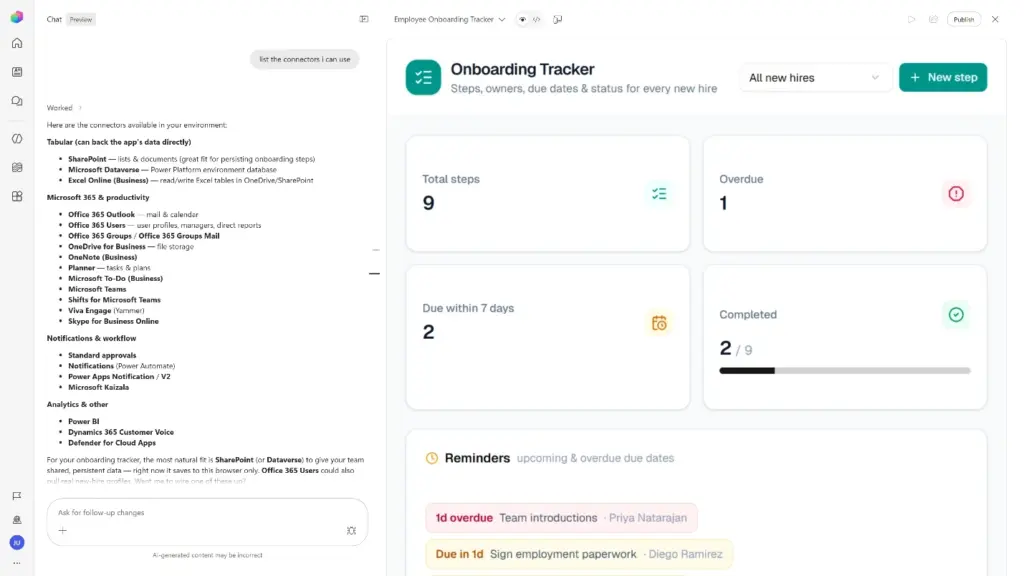
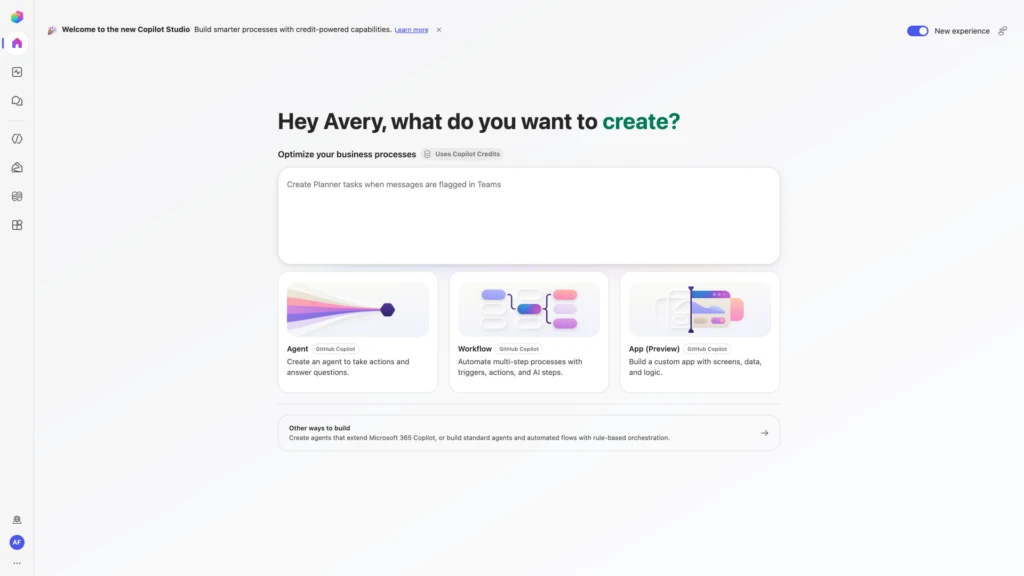
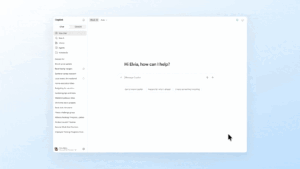
The core of this new experience is the shift toward a conversational interface for development. In Copilot Studio, users can now select an "App (Preview)" option directly from the home screen. In the collaborative environment of Copilot Cowork, the process is even more integrated; users can invoke a new "/app" skill directly within their active chat sessions. This functionality is currently being made available to participants in the Microsoft Frontier program, a group dedicated to exploring the leading edge of Microsoft’s AI capabilities.
The process begins with a simple dialogue. A user might describe a specific business outcome, such as a need to track inventory across multiple warehouses or a desire to streamline the approval process for travel expenses. By defining the intended users, the necessary data points, and the required actions in plain English, the user provides the "intent" that the AI requires. Copilot Studio then employs agentic coding to transform that intent into a working application scaffold.
This experience is designed to be inclusive across the professional spectrum. For information workers and business leads, the focus remains entirely on the solution and the outcome. They can iterate on the design using natural language, asking the AI to "add a button for email notifications" or "include a chart showing monthly trends." Meanwhile, for advanced "makers" and professional developers, the platform offers the ability to go much deeper. These users can inspect the underlying code, adjust the application’s internal structure, and exercise a level of granular control that traditional no-code platforms often lack.
Integrating with the Pulse of the Organization
One of the most significant hurdles for any new business application is data integration. An app that exists in a vacuum is of limited utility. Microsoft is addressing this by ensuring that apps built within the Copilot ecosystem are natively connected to business data through an extensive library of connectors. Central to this is the use of "Work IQ," a feature designed to provide the AI with organizational context.
By leveraging Work IQ, these applications do more than just surface information; they can take active roles in business processes. They are designed to operate within the Microsoft 365 tenant boundary, meaning they can read from and write results back to the systems where work actually happens. This ensures that data remains consistent across the organization and that the new apps are grounded in the actual services people use daily.
Microsoft highlighted several practical use cases to demonstrate the power of this connectivity. For instance, an employee onboarding app could use connectors to pull data from human resources systems, showing a new hire’s progress through various training modules while simultaneously updating their internal records. In a field service scenario, an app could retrieve technical specifications for a product from a third-party database, provide the technician with guided repair steps, and then log the completed work back into the central maintenance system. This level of integration ensures that the resulting applications are structured, data-driven, and highly functional.
Standards, Security, and Centralized Governance
A common criticism of rapid app-development platforms is that they often produce "black box" solutions that are difficult to maintain or audit. Microsoft is countering this by ensuring that apps created in Copilot Cowork and Copilot Studio are full-stack applications built using open standards. This is a crucial distinction for enterprise IT departments, as it allows these apps to fit into professional development lifecycles.
These applications can utilize Git-backed source control, allowing for sophisticated version management. Development teams can use deployment stages and version isolation, ensuring that updates and improvements can be tested in a sandbox environment without disrupting the live experience for end-users. This brings a level of professional rigor to AI-generated software that was previously difficult to achieve.
Security is handled through integration with Microsoft Entra, the company’s identity and access management solution. By default, the apps respect existing organizational data policies and connector restrictions. This means that if an employee does not have permission to access certain data through standard channels, an AI-built app will not grant them a "backdoor" to that information.
To manage this growing inventory of tools, IT administrators are provided with centralized visibility through the Microsoft 365 admin center. From this dashboard, admins can view a complete inventory of published apps and exercise operational controls. This oversight allows them to govern, secure, and manage the entire lifecycle of an application, from its initial creation to its eventual retirement. This balance allows makers to focus on solving problems through innovation while IT maintains the necessary guardrails.
Availability and the Path Forward

The rollout of these features is already underway. Users interested in exploring the conversational app-building experience can join the Microsoft Frontier program to access the /app skill within Copilot Cowork. For those looking to use these tools natively within Copilot Studio, Microsoft has confirmed that the public preview will be rolling out to environments over the coming week.
Once the feature is live in a specific environment, users will find an "apps" tile within Copilot Studio, serving as the gateway to this new building experience. Microsoft also clarified the economic model for these tools, noting that app building and execution will follow a usage-based billing model, aligning costs with actual organizational consumption.
When an application is finalized and published, it becomes discoverable for users at a dedicated portal: managedapps.cloud.microsoft.com. This provides a centralized hub for employees to find and utilize the shared, enterprise-ready applications created by their colleagues.
By bringing together apps, autonomous agents, and automated workflows within a single platform, Microsoft is attempting to provide a comprehensive toolkit for the modern digital enterprise. The company emphasizes that this is an iterative process, and they intend to continue refining the experience based on feedback from the initial wave of enterprise customers. As the line between "using" software and "creating" software continues to blur, the integration of agentic coding into the standard business toolkit marks a significant milestone in how organizations approach digital transformation.
 Productivity Software & Office Suites
Microsoft Reimagines the Future of Productivity with a New Generation of Copilot and Autonomous Agents
Microsoft has announced a significant evolution of its artificial intelligence strategy, unveiling...
 Productivity Software & Office Suites
Microsoft Unveils the "New Copilot" Ecosystem: Integrating Autonomous Agents, Custom Code, and Advanced Office Workflows
REDMOND, Wash. — In a major step toward redefining the intersection of...
 Productivity Software & Office Suites
Microsoft Announces Global Launch of Copilot Cowork, Introducing Agentic AI to the Modern Enterprise
In a move that signals a significant shift in the landscape of...







