
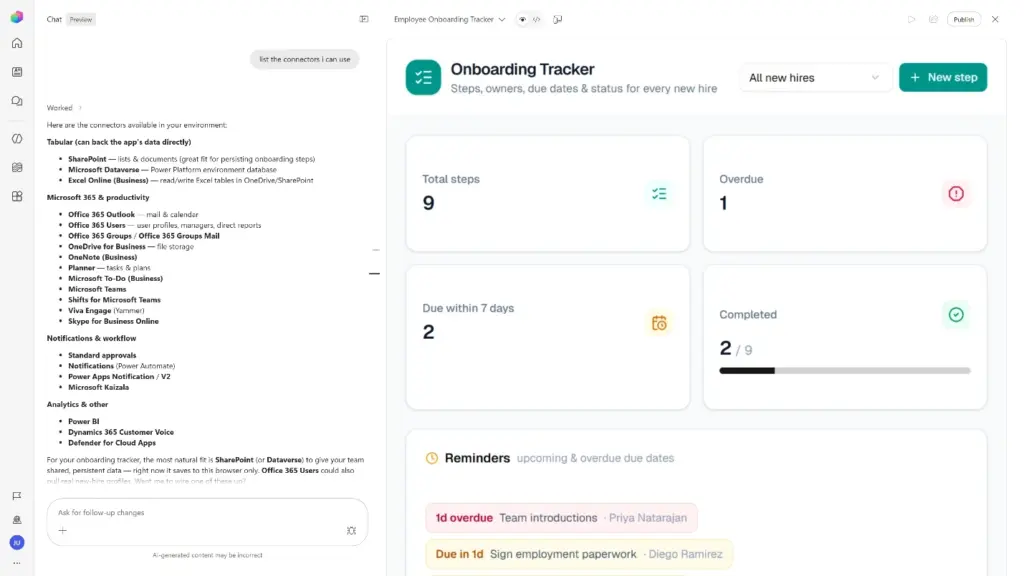
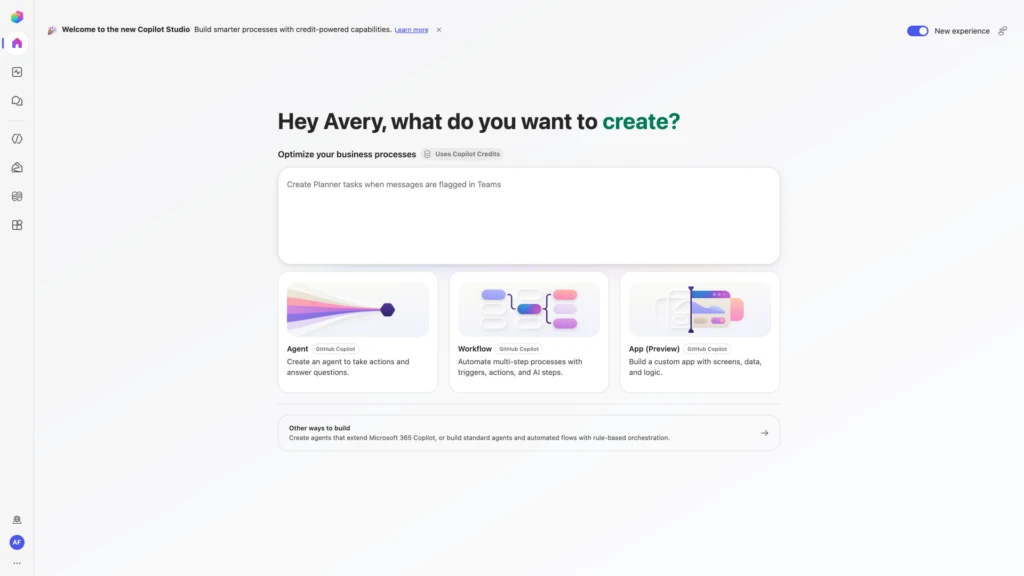
The process begins with a simple dialogue. A user might describe a specific business outcome, such as a need to track inventory across multiple warehouses or a desire to streamline the approval process for travel expenses. By defining the intended users, the necessary data points, and the required actions in plain English, the user provides the "intent" that the AI requires. Copilot Studio then employs agentic coding to transform that intent into a working application scaffold.
This experience is designed to be inclusive across the professional spectrum. For information workers and business leads, the focus remains entirely on the solution and the outcome. They can iterate on the design using natural language, asking the AI to "add a button for email notifications" or "include a chart showing monthly trends." Meanwhile, for advanced "makers" and professional developers, the platform offers the ability to go much deeper. These users can inspect the underlying code, adjust the application’s internal structure, and exercise a level of granular control that traditional no-code platforms often lack.
Integrating with the Pulse of the Organization
One of the most significant hurdles for any new business application is data integration. An app that exists in a vacuum is of limited utility. Microsoft is addressing this by ensuring that apps built within the Copilot ecosystem are natively connected to business data through an extensive library of connectors. Central to this is the use of "Work IQ," a feature designed to provide the AI with organizational context.
By leveraging Work IQ, these applications do more than just surface information; they can take active roles in business processes. They are designed to operate within the Microsoft 365 tenant boundary, meaning they can read from and write results back to the systems where work actually happens. This ensures that data remains consistent across the organization and that the new apps are grounded in the actual services people use daily.
Microsoft highlighted several practical use cases to demonstrate the power of this connectivity. For instance, an employee onboarding app could use connectors to pull data from human resources systems, showing a new hire’s progress through various training modules while simultaneously updating their internal records. In a field service scenario, an app could retrieve technical specifications for a product from a third-party database, provide the technician with guided repair steps, and then log the completed work back into the central maintenance system. This level of integration ensures that the resulting applications are structured, data-driven, and highly functional.
Standards, Security, and Centralized Governance
A common criticism of rapid app-development platforms is that they often produce "black box" solutions that are difficult to maintain or audit. Microsoft is countering this by ensuring that apps created in Copilot Cowork and Copilot Studio are full-stack applications built using open standards. This is a crucial distinction for enterprise IT departments, as it allows these apps to fit into professional development lifecycles.
 Productivity Software & Office Suites
Microsoft Unveils ‘Autopilots’ and Scout: A New Frontier for Autonomous AI Agents in the Enterprise
The nature of professional productivity is undergoing a fundamental shift, moving away...
 Productivity Software & Office Suites
Microsoft Announces Microsoft 365 G7 and Agent 365 to Accelerate AI Adoption and Governance Across U.S. Government Agencies
In an era where the public sector faces the dual challenge of...
 Productivity Software & Office Suites
Microsoft Unveils ‘Autopilots’ and Microsoft Scout: The Next Evolution of Autonomous AI Agents for the Enterprise
The landscape of digital productivity is undergoing a fundamental shift, moving away...






