At its annual Ignite conference this week, Microsoft signaled a significant evolution in its artificial intelligence strategy, moving away from the "single-player" chatbot experience toward a vision of AI as a central, collaborative hub for the modern enterprise. The tech giant unveiled a suite of updates for its Copilot ecosystem, headlined by the introduction of Copilot Workspaces—a new environment designed to facilitate seamless interaction between human employees and autonomous AI agents.
The announcements represent Microsoft’s latest attempt to fortify its dominance in the productivity software market. As emerging AI-native competitors like OpenAI and Anthropic begin to challenge the traditional office suite with their own document and collaboration tools, Microsoft is leaning heavily into its deep integration with the Office stack to maintain its competitive edge.
The Shift to "Multiplayer" AI Collaboration
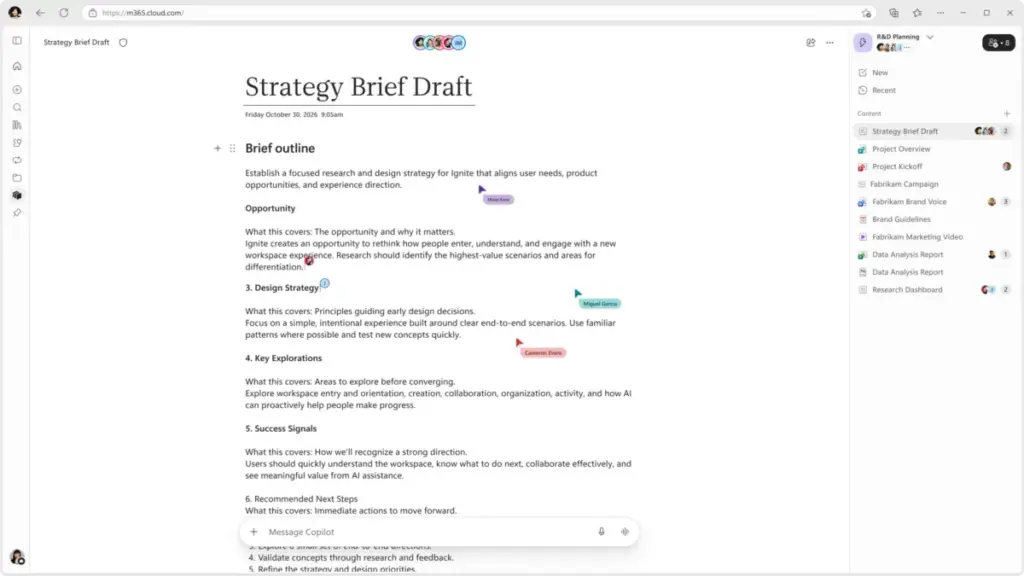
The centerpiece of the Ignite announcements, Copilot Workspaces, marks a fundamental change in how users are expected to interact with generative AI. Workspaces essentially replaces Copilot Notebooks, a feature introduced last year that allowed individuals to gather reference materials and prompt the AI to draft documents or summarize content in isolation.
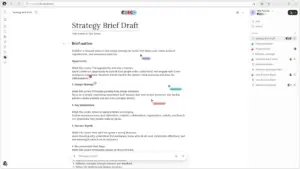
In contrast, Workspaces is built as a "team-first" shared environment. It allows groups of colleagues to collaborate on shared projects in real time, featuring live cursors that indicate where each person is working—a staple of modern cloud collaboration now augmented by AI. Within this space, Copilot acts as a persistent participant rather than a passive tool. Microsoft also teased the upcoming arrival of "Autopilot" agents, which will operate continuously in the background of these workspaces to complete tasks without requiring constant human intervention.
Jared Spataro, Microsoft’s chief marketing officer for Copilot, framed this as a milestone in the evolution of the technology. “Until now, AI interactions have mostly been single player,” Spataro noted in a post-keynote briefing. “Workspaces makes it a truly multiplayer experience, where people and agents drive towards a common goal, with shared context.”
The ambition is to turn Copilot into what analysts call the "front door for work"—a single interface where employees can access people, applications, organizational data, and AI agents simultaneously. However, the transition to such a highly integrated environment is not without its hurdles. Jack Gold, principal analyst at J. Gold Associates, suggested that while cooperative AI is a logical step, it will require a high degree of trust that the industry has yet to fully earn.
“For most organizations, this will be a slow uptake until it’s proven to help productivity,” Gold said. He pointed out that agents must be robust enough to operate without causing security or interference issues. “There is significant risk that something could go wrong relying too heavily on AI capabilities.”
Challenging the AI-Native Disruptors
Microsoft’s aggressive expansion of Copilot comes as the competitive landscape for office productivity tools undergoes its most radical transformation in decades. For years, Microsoft Word, Excel, and PowerPoint have faced little meaningful competition. However, the rise of large language models (LLMs) has allowed AI labs to build productivity features from the ground up.
In recent months, Anthropic has introduced Claude Docs, Slides, and Sheets, while OpenAI has launched ChatGPT "Canvas" and "Pages." These tools allow users to generate and edit content within the same window as the AI, bypassing the need to copy-paste text between a browser and a word processor.
 Small Business IT & Cloud Computing
Maximizing Mobile Productivity: The Hidden Architecture of Google Messages on Android
In the modern mobile landscape, the smartphone has transitioned from a simple...
 Small Business IT & Cloud Computing
Alibaba Unveils Qwen4-Max with Claims of Massive Cost Reductions and Enhanced Cyber Defenses Amid Analyst Skepticism
Alibaba has officially pulled back the curtain on its latest flagship artificial...
 Small Business IT & Cloud Computing
Precision Over Volume: Specialized AI Expertise Commands Premium Salaries in a Shifting Tech Job Market
The landscape of information technology recruitment is undergoing a fundamental transformation. For...