The rapid evolution of artificial intelligence has transitioned from simple text-based chatbots to autonomous agents capable of executing complex workflows. However, as these agents move deeper into the developer’s toolkit—operating within terminals and Integrated Development Environments (IDEs)—a significant bottleneck has emerged: the "Human-in-the-Loop" (HITL) problem. When a headless agent, operating without a graphical user interface, requires human intervention or approval, the current workflow often breaks down into a series of inefficient manual steps.
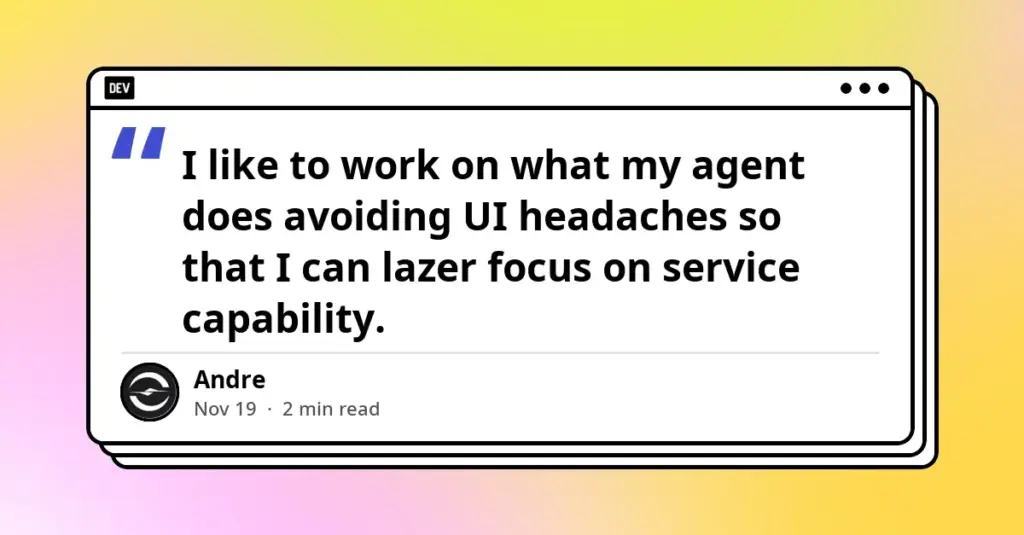
A new solution called Sess is aiming to eliminate this friction by providing a dynamic, on-demand UI layer for headless agents. By allowing agents to generate interactive web pages on the fly, Sess enables developers to maintain their "lazer focus" on core service capabilities rather than losing time to frontend design, hosting, or manual communication hurdles.
The Problem of the "Headless" Bottleneck
In the current landscape of AI development, "headless" agents are the preferred choice for many engineers. These agents run silently in the background, interacting with file systems, executing code, and managing deployments through terminal interfaces or IDE extensions like Cursor. This environment is ideal for productivity until the agent reaches a decision point that requires human judgment.
Traditionally, when a headless agent needs a human to verify a piece of data or approve a high-stakes action, it is confined to the text prompt of the window it is running in. For a solo developer, this might be a minor annoyance. However, in a collaborative environment, this limitation becomes a significant barrier. If a developer needs a stakeholder or a teammate to review an agent’s output, they are often forced to take screenshots of the terminal and relay them via Slack or email. This "UI headache" not only slows down the development cycle but also introduces the risk of miscommunication and a lack of formal audit trails.
The creator of Sess identified this gap as a primary pain point in agentic workflows. The goal was to find a "third option" between a completely headless existence and the burdensome requirement of building a dedicated frontend for every agentic task.
A Dynamic Interface for Autonomous Workflows
Sess introduces a paradigm shift in how agents interact with humans. Instead of being stuck in a text-based loop, the agent is empowered to describe what it needs—be it a title, specific input fields, or action buttons. In response, Sess generates a real, hosted web page and provides the agent with a unique link.
This link serves as the bridge between the digital agent and the human world. A person can open the link on any device—a smartphone, a tablet, or a desktop—provide the necessary information or approval, and the agent receives the response back in real-time. This system effectively removes the need for developers to have a frontend in their repository, eliminating the necessity to design, host, or maintain any UI components for internal agent interactions.
The efficiency of this approach is most evident in high-stakes scenarios. In a recent demonstration, the system was put to the test using a migration script designed to delete over 1,000 accounts and nearly 4,000 orders. Using Cursor integrated with Grok 4.7, the developer instructed the agent to request human approval before executing any destructive changes.
 Software Development & Scripting for IT
CogniRunner Unveils AI-Driven License Management and Workflow Validation for Atlassian Cloud Ecosystem
The landscape of enterprise software management is undergoing a significant shift as...
 Software Development & Scripting for IT
Ensuring Operational Integrity in Data Engineering: A New Framework for Spark Pipeline Monitoring
In the complex ecosystem of modern data engineering, the successful completion of...
 Software Development & Scripting for IT
Afterlight: Bridging the Supernatural and Open-Source AI in a New Browser-Based Storytelling Studio
As the final week of Hacktoberfest 2024 unfolds, the global developer community...