
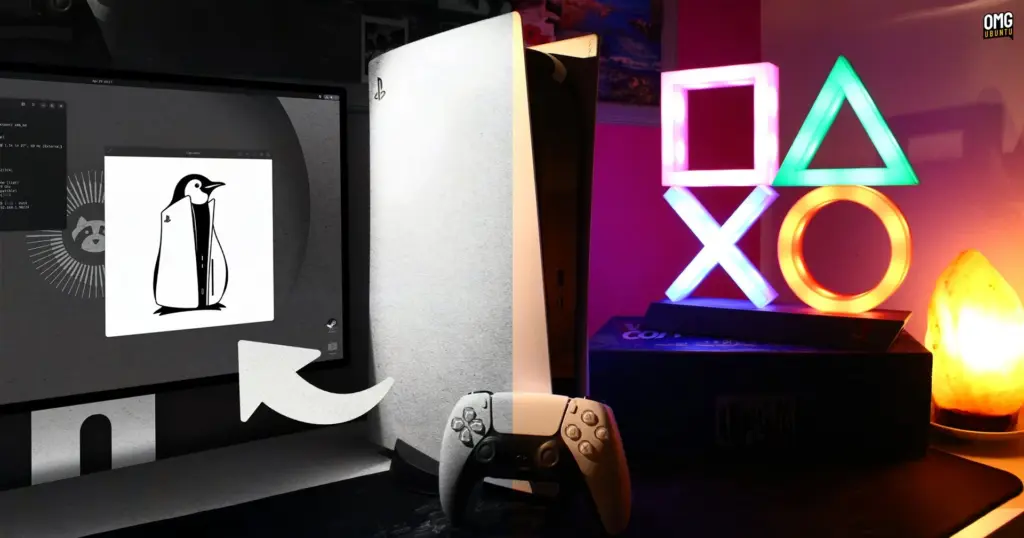
Complicating matters further is Sony’s subsequent release cycle. The manufacturer’s newer 14.x firmware branch addresses and closes the security vulnerabilities that the Relapse and Byepervisor-Reborn tools exploit. Consoles that have accepted these newer updates are entirely insulated from the current implementation of the bootloader, effectively locking out any machine that has been maintained on the current retail update track.
This reality introduces an unavoidable trade-off for any console owner intrigued by the technical novelty of the project. Modern consoles are designed from the ground up as cloud-connected client terminals. Retaining access to the PlayStation Network—alongside the core ecosystem features that depend on it, such as multiplayer matchmaking, digital storefronts, cloud save synchronization, and automated game patching—mandates running the absolute latest system software deployed by the platform holder.
Consequently, anyone wishing to experiment with pLinux5-NG must deliberately freeze their console’s software version at or below firmware 13.20, permanently disconnecting the device from official network infrastructure. For the vast majority of mainstream gamers, trading away active network privileges and the ability to play newly published retail titles in exchange for an experimental bootloader environment is an unappealing proposition. As a result, the practical audience for the exploit remains primarily restricted to dedicated security hobbyists and enthusiasts possessing secondary hardware kept intentionally offline.
Rewarding benchmarks show promise
The driving ambition behind running an alternative operating system on gaming console hardware has evolved over the years. When alternative operating system initiatives first appeared on earlier console platforms, enthusiasts often focused on general-purpose desktop productivity, media playback, or academic cluster computing. Today, general computing demands are easily satisfied by ubiquitous mobile devices, low-cost microcomputers, and inexpensive consumer laptops.
Very few modern users are interested in running the GNU Image Manipulation Program or loading a standard copy of Mozilla Firefox on a console tethered to a living room television. Instead, the ultimate aspiration of the homebrew community is turning the console’s custom, high-performance silicon into a full-fledged Linux gaming machine capable of accessing external PC ecosystems, such as Steam libraries and native personal computer titles.
In this context, the underlying hardware architecture of the console makes the endeavor particularly enticing. Because the hardware is fundamentally built around powerful graphics compute units and unified memory, achieving proper driver initialization under an open-source operating system could theoretically unlock remarkable performance across a wide swath of PC software.
Earlier validation testing conducted on older, heavily exploited firmware branches provided concrete indications of what the underlying silicon can deliver when freed from its native software constraints. In those earlier tests, demanding PC releases like Grand Theft Auto V Enhanced were observed running at resolutions up to 1440p while maintaining frame rates hovering near a consistent 60 frames per second.
Performance metrics of that caliber are significant because they validate the theoretical integrity of the pipeline. They prove that third-party kernels and translation software can successfully interface with the console’s graphics processing pipelines to produce fluid, high-resolution rendering without the support of proprietary platform developer kits.
It is important to emphasize that those specific benchmark results cannot be directly mapped or guaranteed on the newly adapted pLinux5-NG bootloader running on more recent firmware branches like 13.20. Each successive firmware revision introduces alterations to how memory is managed, how device drivers are laid out, and how low-level hypervisor policies function. Translating the success of an exploit chain from an older firmware version to a newer environment frequently requires re-architecting hardware initialization routines, which can introduce temporary performance overhead or system instability.
 Linux & Open Source Solutions
Kagi Halts Development of Orion Browser for Linux and Windows, Plans to Open Source Codebase
Kagi has officially announced that it is ending the internal development of...
 Linux & Open Source Solutions
Orbit Global Menu Brings Pragmatic Global Application Menus Back to the GNOME Shell Desktop
For more than a decade, the global menu bar has remained one...
 Linux & Open Source Solutions
Ubuntu 26.10 Flavour Lineup Arrives with Updated Desktops, Architectural Changes, and the Return of Ubuntu MATE
Following the official launch of the Ubuntu 26.10 operating system, Canonical’s family...







