
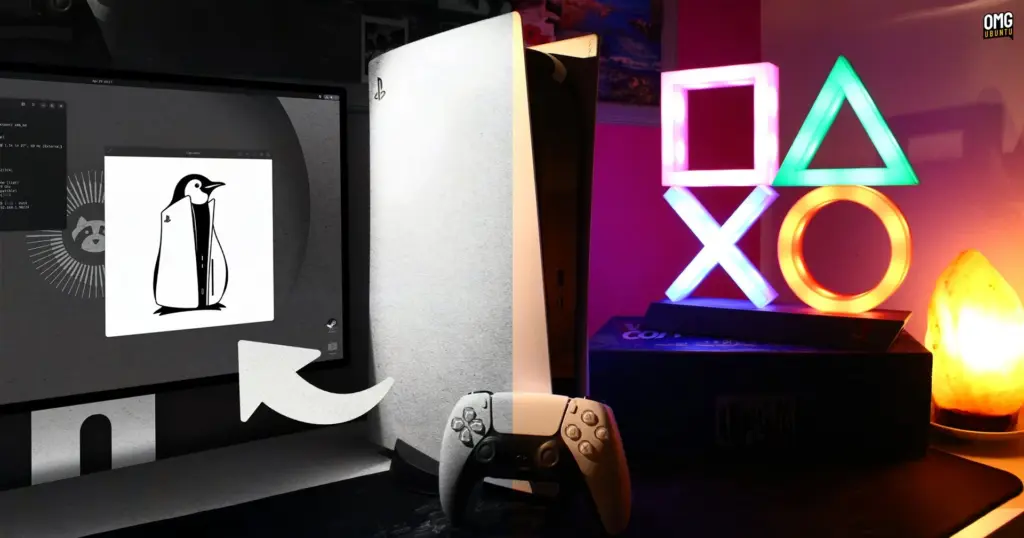
Nevertheless, the historical data points provide a vital proof of concept. They establish that the technical undertaking is grounded in measurable merit rather than mere academic curiosity. If the bootloader can achieve parity with earlier iterations, the hardware possesses the raw computational capability to serve as a formidable platform for interactive PC gaming workloads.
Practical Realities and the Engineering Mindset
Despite the technical triumphs demonstrated by projects like pLinux5-NG, the PlayStation 5 is never destined to become a practical or cost-effective alternative to a conventional Linux gaming desktop. When assessed through an everyday consumer lens, repurposing a console as a general-purpose workstation or open gaming rig involves disproportionate complexity, operational limitations, and financial friction.
Procuring a system that satisfies the rigorous firmware constraints is itself an expensive and cumbersome exercise. Because retail store shelves and official supply chains rapidly cycle forward to incorporate the latest system software, securing a machine that remains capped at firmware version 13.20 requires careful vetting of manufacturing lots or purchasing from secondary markets, where unpatched hardware frequently commands an inflated premium.
Even after acquiring a compatible console, managing a jailbroken system requires navigating an environment defined by maintenance challenges. Unlike a purpose-built desktop personal computer—where hardware configurations are modular, system firmware is user-configurable via open standards, and operating systems can be reinstalled with trivial effort—a jailbroken console exists in a perpetual state of operational fragility. The exploit chain must be reinjected, peripheral and audio driver support may remain incomplete or inconsistent across different display configurations, and any inadvertent software update can permanently eliminate the device’s capabilities.
From an economic and functional standpoint, building an entry-level personal computer, purchasing a prebuilt desktop, or upgrading an existing PC setup remains dramatically less troublesome and far more versatile. A standard PC provides native hardware driver support, full component upgradability, complete freedom from manufacturer-imposed platform lockdowns, and uninterrupted access to the broader gaming software landscape without the lingering threat of system obsolescence.
Yet framing projects like pLinux5-NG purely around consumer utility fundamentally misses the guiding spirit of the homebrew and hardware security scenes. For the independent researchers, software developers, and hobbyists who invest hundreds of hours into analyzing kernel binaries and engineering exploit chains, the primary motivation has never been rooted in consumer practicality. The work is propelled not by an evaluation of commercial necessity, but by the intellectual challenge of answering an open technical question: exploring what the machine can do simply because the silicon exists.
The ethos of hardware hacking is defined by exploring uncharted boundaries, dissecting proprietary computational architectures, and reclaiming absolute administrative ownership over consumer electronics. Every subsequent firmware revision that community developers manage to open up—navigating an increasingly sophisticated labyrinth of architectural defenses, hypervisor constraints, and cryptographic signatures—represents a distinct engineering milestone.
Each version of the system software that yields to an open operating system pushes the overarching concept of running arbitrary PC software on home console silicon closer to an attainable reality. While pLinux5-NG may not convert the PlayStation 5 into an accessible, mass-market desktop alternative, it stands as an impressive demonstration of engineering perseverance, documenting the relentless capability of the security community to analyze, adapt, and assert control over complex computing hardware.
 Linux & Open Source Solutions
The Document Foundation Unveils New Visual Identity to Establish Distinct Institutional Profile Apart from LibreOffice
The Document Foundation, the charitable non-profit entity responsible for overseeing the development...
 Linux & Open Source Solutions
NexPhone Multi-OS Smartphone Delayed to March 2027 as Hardware Challenges and Price Adjustments Emerge
The NexPhone, an ambitious multi-operating system smartphone designed to bridge the divide...
 Linux & Open Source Solutions
ONLYOFFICE Desktop Editors 10.0 Released as Fully Rebuilt App With Decoupled AI Tools and Over 1,000 Bug Fixes
The developers behind ONLYOFFICE have officially released version 10.0 of ONLYOFFICE Desktop...







