
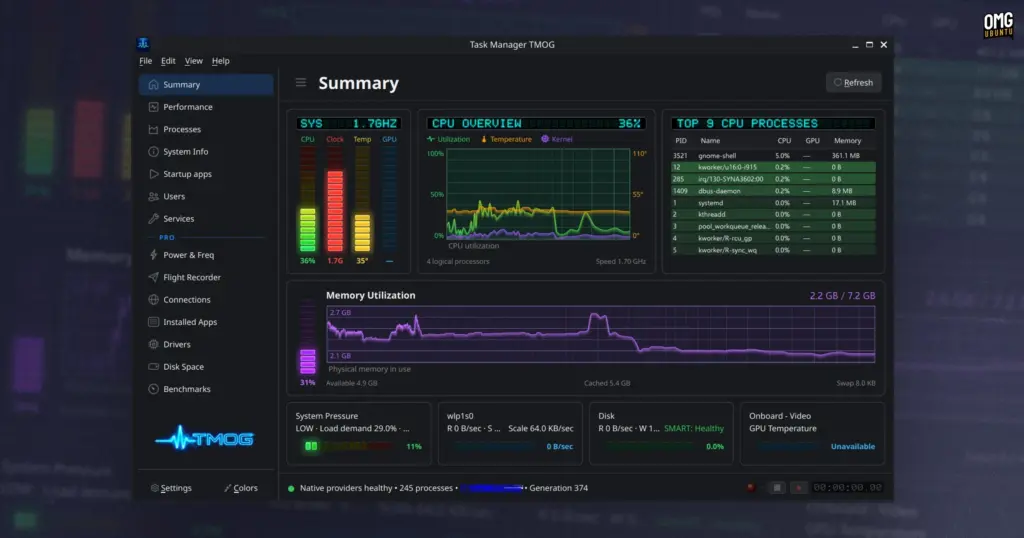
For millions of personal computer users over the past three decades, Plummer’s original utility was the ultimate digital escape hatch. Conceived during the Windows NT era and integrated into the operating system starting with Windows NT 4.0, the classic Windows Task Manager was engineered to be an unyielding, resilient watchdog capable of terminating misbehaving applications even when the rest of the graphical shell was unresponsive. Decades after contributing that critical piece of system plumbing to computing history, Plummer has turned his attention to modern diagnostic requirements, recognizing that while computing hardware has expanded from single-core processors to massively parallel multicore architectures, the fundamental challenge of diagnosing system performance bottlenecks remains as relevant as ever.
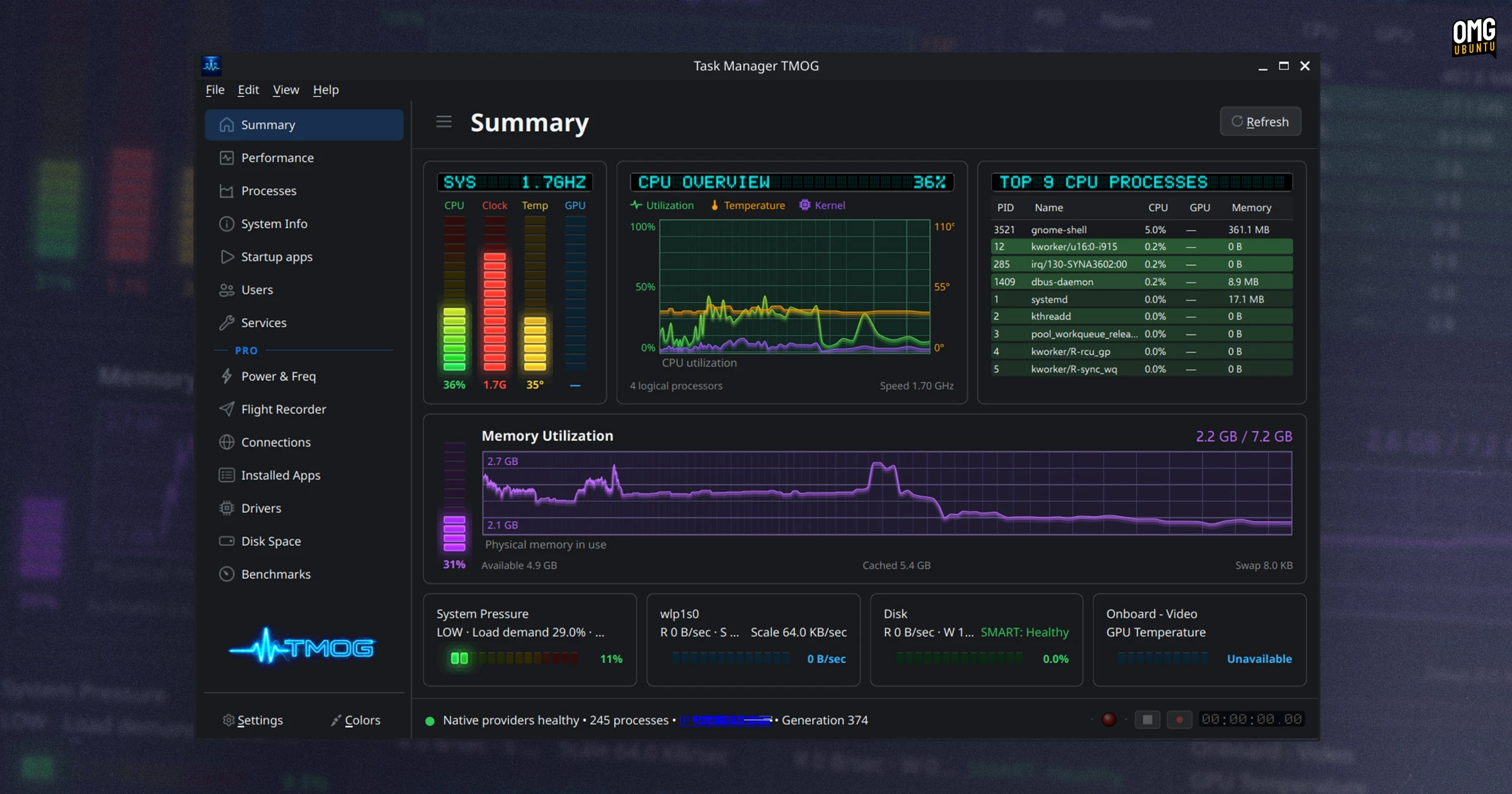
TMOG approaches this challenge with an interface that embraces a distinctive retro-futuristic aesthetic. Visually, the software leans heavily into neon accents, high-contrast diagnostic readouts, and vibrant color themes that evoke the visual style of 1990s television science-fiction interfaces. Despite its stylized graphical presentation, the program is engineered as a robust, professional utility rather than an insubstantial novelty. Beneath its visual personality lies a serious monitoring suite designed to present fine-grained operational metrics without burdening the host operating system with excessive resource overhead.
The production of TMOG has garnered significant attention across the software development industry due to Plummer’s workflow, which relied on Anthropic’s Claude Code tool to translate his technical vision into working software. The process—often colloquially termed vibe-coding—is frequently misunderstood as an effortless exercise where natural language prompts instantly yield fully formed software. Plummer, however, demonstrated that applying machine intelligence to complex systems software demands a rigorous, highly disciplined engineering framework.
To bring TMOG from initial architecture to a functional multi-platform build, Plummer authored an exhaustive specification document spanning more than one hundred pages. This document meticulously delineated the architectural topology, data collection routines, memory management models, platform-specific adaptations, and graphic pipeline specifications needed for the tool. As Plummer candidly observed on social media platform X, treating artificial intelligence as a magic wand by simply commanding a model to write a system monitor without comprehensive structural direction would almost certainly produce unusable hot garbage. By maintaining strict control over system architecture and supplying granular implementation instructions, Plummer was able to use Claude Code to accelerate the manual coding phase while preserving the technical integrity required of low-level diagnostic software.
Architecturally, TMOG achieves cross-platform parity by utilizing a shared C++ core across all supported operating systems. Building a system monitor that spans Linux, macOS, and Windows is notoriously difficult because each operating system interfaces with hardware through fundamentally different kernel architectures, subsystems, and metrics reporting frameworks. A shared C++ engine provides the backbone for data processing, calculations, and internal logic, allowing TMOG to standardize metric evaluation across disparate platforms.
 Linux & Open Source Solutions
NexPhone Multi-OS Smartphone Delayed to March 2027 as Hardware Challenges and Price Adjustments Emerge
The NexPhone, an ambitious multi-operating system smartphone designed to bridge the divide...
 Linux & Open Source Solutions
Ubuntu 26.10 Introduces Top-Screen Layout Picker to Streamline Window Tiling
Ubuntu 26.10 is introducing a new way for users to organize their...
 Linux & Open Source Solutions
Kagi Halts Development of Orion Browser for Linux and Windows, Plans to Open Source Codebase
Kagi has officially announced that it is ending the internal development of...







