
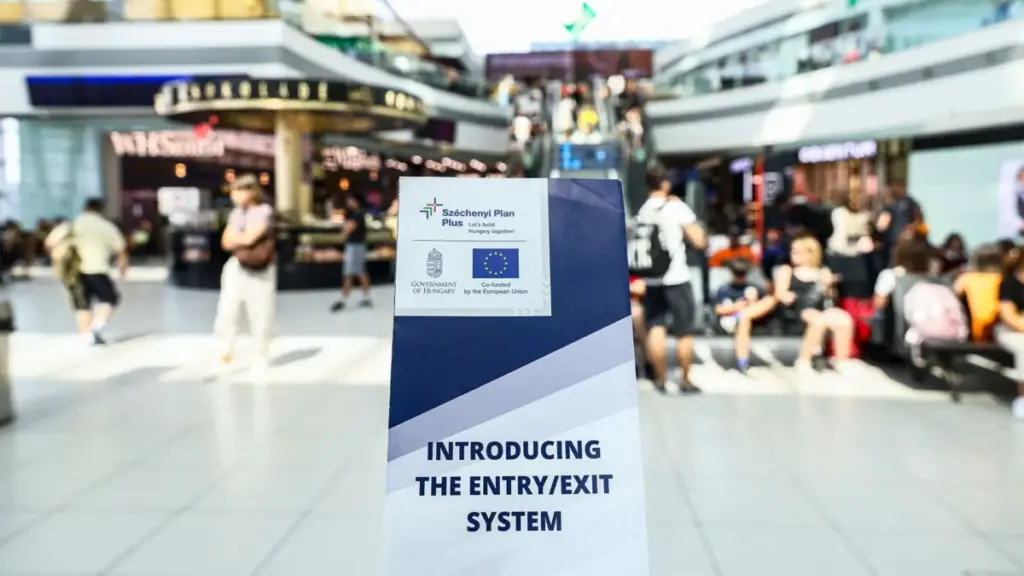
The European Union’s ambitious plan to modernize its border infrastructure has culminated in a high-stakes legal battle, as the bloc’s dedicated IT agency initiates a lawsuit against a consortium of major technology firms. The dispute centers on extensive delays and technical failures surrounding the Entry/Exit System (EES), a multi-million-euro project designed to digitize the monitoring of non-EU citizens crossing into the Schengen Area.
The European Union Agency for the Operational Management of Large-Scale IT Systems, commonly known as eu-LISA, has officially filed a claim in the Estonian courts against IBM Belgium, Atos Belgium, and the Italian aerospace and defense firm Leonardo. The move follows years of friction between the agency and the contractors, characterized by missed deadlines, ballooning costs, and a rollout that has been described by some industry leaders as a logistical disaster.
At the heart of the litigation is the development phase of the EES, a biometric database intended to replace the traditional, manual stamping of passports. While the system was designed to enhance security and streamline border crossings, its implementation has been fraught with difficulties that have reverberated across the European travel sector, leading to significant disruption for passengers and airlines alike.
The Mechanics of the Entry/Exit System
The Entry/Exit System was conceived as a cornerstone of the EU’s digital border strategy. Its primary function is to automatically register travelers from non-EU countries—including, following Brexit, citizens of the United Kingdom—each time they cross an external border of the Schengen Area. By scanning fingerprints and capturing high-resolution facial images, the system is designed to track the duration of a traveler’s stay and identify "overstayers" who exceed the permitted 90 days within a 180-day period.
For decades, this process relied on border guards manually checking and stamping physical passport pages. This method was not only labor-intensive but also prone to human error and difficult to monitor across multiple entry and exit points. The EES promised a future of automated, data-driven border security. However, the transition from paper to pixels has proven to be far more complex than the initial contracts suggested.
The legal action taken by eu-LISA specifically targets the delays encountered during the development of this infrastructure. While the system is now operational, the agency contends that the consortium failed to meet its contractual obligations during the build phase, resulting in a series of postponements that pushed the launch date back several times.
A History of Delays and Technical Friction
The road to the EES rollout has been marked by a series of technical hurdles that have compromised the efficiency of the system. Once the technology was finally deployed at border checkpoints, travelers and airport authorities reported a litany of issues. These ranged from fundamental software glitches to hardware failures that seemed ill-suited for the realities of high-traffic transit hubs.
One of the more notorious issues involved the biometric hardware itself. Reports emerged that fingerprint scanners frequently failed to capture accurate data when sensors were obscured by sweat—a common occurrence in crowded, high-pressure airport environments or during summer travel peaks. Such failures necessitated multiple attempts for a single passenger, causing the time required to process each traveler to skyrocket.
These technical setbacks directly translated into logistical bottlenecks. Instead of the promised "streamlined" experience, the EES became synonymous with long queues. In some instances, the time taken to process a single non-EU passenger increased from seconds to several minutes, creating a cumulative delay that overwhelmed airport terminals.
The Financial Times, which first reported the legal proceedings, noted that correspondence between the tech firms and eu-LISA suggests the dispute has been simmering for several years. The letters reveal a deteriorating relationship, with the tech companies reportedly accusing the EU agency of "ignoring reality" regarding the feasibility of new deadlines. Conversely, eu-LISA’s internal financial reports have consistently highlighted ongoing difficulties with the IBM-Atos-Leonardo consortium, particularly concerning the delivery of milestones and the management of costs.
Financial Escalation and Contractual Disputes
The financial dimension of the project has seen significant growth since its inception. The original contract value for the development of the EES was set at approximately €142 million. However, as delays mounted and technical requirements evolved, the cost of the project surged. By 2021, the contract value had been adjusted to €212 million, representing a nearly 50% increase in the budget allocated to the consortium.
Despite this injection of capital, the relationship between the agency and its primary contractors reached a breaking point. The annual reports from eu-LISA underscore the agency’s frustration, noting that the activation of legal remedies was necessary to protect the financial interests of the European Union.
In its annual report released last year, eu-LISA made its intentions clear. The document stated that following various delays in the delivery of the EES by the contracting consortium, the agency had activated available contractual and legal remedies. This culminated on December 22, 2025, with the submission of a formal claim to the Estonian Court, where eu-LISA is headquartered.
The agency has been careful to distinguish between the development of the system and its current functionality. A spokesperson for eu-LISA confirmed that the legal proceedings concern the development phase and do not impact the current operation of the EES. "eu-LISA confirms that legal proceedings have been initiated against the consortium, in line with the Agency’s responsibility to protect the EU’s financial interests," the spokesperson stated. "As the proceedings are ongoing, we do not comment on the details of the case. The EES is fully operational."
The Transition to New Leadership
The friction between eu-LISA and the original consortium eventually led to a change in the project’s stewardship. The initial contract with IBM Belgium, Atos Belgium, and Leonardo was not renewed last year. Instead, the responsibility for the system’s continued evolution and maintenance was handed over to a new group of firms.
As of this summer, Sword Systems, Netcompany, and Sopra Steria have taken over the contract. This shift in personnel marks a significant attempt by the EU to move past the troubled development phase and stabilize the system’s performance. However, the legacy of the initial delays remains a matter for the courts, as the EU seeks accountability for the resources and time lost during the first several years of the project.
While the new contractors inherit a system that is now "fully operational," they also inherit the challenge of refining a technology that has already damaged the reputation of European border management among international travelers and the aviation industry.
Anger from the Travel Industry
The real-world consequences of the EES’s troubled development have been felt most acutely by the travel industry and the passengers it serves. The implementation of biometric checks has, in many cases, turned routine border crossings into endurance tests.
Earlier this year, the situation reached a breaking point in Portugal. Authorities at Lisbon airport were forced to temporarily suspend EES checks after passengers were subjected to queues lasting up to seven hours. The chaos in Lisbon was not an isolated incident; nine other EU nations were subsequently granted permission to waive the introduction of EES checks until January, or until the technology could be proven to work reliably without causing systemic gridlock.
The impact on the aviation sector has been profound. ACI EUROPE (Airports Council International) and Airlines for Europe (A4E), representing the continent’s major airports and carriers, have been vocal in their criticism. Last month, the organizations noted that waiting times at EES-equipped borders continued to reach five hours during peak periods, with even off-peak wait times frequently exceeding the two-hour mark.
The frustration is perhaps best summarized by the leadership of Europe’s largest budget airline. In September, as the EES was intended to reach full operational capacity, Ryanair’s Chief Operating Officer, Neal McMahon, delivered a scathing assessment of the project. McMahon labeled the EU’s handling of the EES "a shambles from start to finish," arguing that "passengers should not be made to pay the price for the EU’s failed EES rollout."
The sentiment is echoed across the industry, where there is a growing concern that the EES, despite its security goals, is acting as a deterrent to travel. For countries heavily reliant on tourism, the prospect of five-hour queues at the border represents a significant economic threat.
Looking Ahead
As the legal proceedings begin in Estonia, the outcome remains uncertain. In its court filing, eu-LISA acknowledged the early stage of the litigation, noting that "no evaluation of the probability of the outcome can be reliably made at the moment." The tech firms involved—IBM, Atos, and Leonardo—are expected to mount a vigorous defense, likely pointing toward the evolving scope and complexity of the EU’s requirements as a primary factor in the delays.
For the European Union, the lawsuit is more than a simple contract dispute; it is an attempt to recoup losses and signal that the mismanagement of critical infrastructure projects will carry legal consequences. For the traveling public, the hope remains that the transition to new contractors and the resolution of these legal battles will finally lead to a border system that delivers on its promise of security without sacrificing the basic efficiency of international travel.
The EES stands as a cautionary tale of the challenges inherent in digitizing large-scale public systems. While the vision of a paperless border is modern and secure, the path to achieving it has proven that even the world’s largest technology firms can struggle when faced with the messy, high-stakes reality of global migration and transport. As the case moves through the Estonian court system, the tech and travel industries alike will be watching closely to see how the responsibility for one of Europe’s most difficult IT projects is ultimately assigned.
 Helpdesk & IT Service Management (ITSM)
Lakeside Software Appoints Mark Benson as EMEA Channel Director to Accelerate Regional Growth and Partner Strategy
Lakeside Software, a prominent leader in the digital employee experience (DEX) sector,...
 Helpdesk & IT Service Management (ITSM)
Elon Musk Warns of Impending ‘Shakeout’ in the Neocloud Market as Debt Access Tightens for AI Infrastructure Providers
The burgeoning sector of specialized artificial intelligence cloud providers, frequently referred to...
 Helpdesk & IT Service Management (ITSM)
Justice Department Charges Trio in Sophisticated $129 Million Deepfake Fraud Syndicate
In one of the most significant crackdowns on AI-enabled financial crime to...







