The burgeoning sector of specialized artificial intelligence cloud providers, frequently referred to as "neoclouds," is facing a precarious financial future that could result in the collapse or forced consolidation of the vast majority of players in the space. Elon Musk, the billionaire CEO of Tesla and SpaceX, recently issued a stark warning regarding the stability of these companies, suggesting that the era of easy capital for AI infrastructure startups is rapidly drawing to a close. According to Musk, the current market, which is saturated with approximately 200 different entities vying for a piece of the AI compute pie, is headed for a "massive shakeout" as traditional debt markets become increasingly wary of firms that lack diversified revenue streams.
The core of the issue, as Musk outlined in a series of posts on the social media platform X, lies in the shifting appetite of lenders. For much of the past two years, the explosion of interest in generative AI led to a gold rush for high-end semiconductors, specifically Nvidia’s H100 and Blackwell GPUs. This demand birthed a new class of "neocloud" providers—companies that raised billions of dollars to build specialized data centers designed specifically to run massive AI workloads. However, Musk argues that the financial foundation of these companies is fundamentally flawed because many of them rely entirely on the leasing of AI compute power to sustain their operations.
Musk noted that within the past few weeks, debt markets have essentially "shut off" access to capital for any organization that does not possess a substantial, independent source of revenue outside of AI data centers. This liquidity crunch is expected to have a devastating impact on the smaller, less-capitalized players in the industry. Musk characterized the coming wave of failures as "guppy-level death and consolidation," predicting that while a few well-positioned firms might survive the transition, the majority are unlikely to make it through the current fiscal tightening.
The implications of this financial retreat extend beyond mere corporate bankruptcies. Musk expressed concern that the industry will soon see a significant amount of "stranded compute"—a term referring to high-end processing hardware housed within partially completed or abandoned data centers. If a company cannot secure the final tranches of debt needed to finish a facility or cover its operational overhead, the expensive GPUs inside become effectively useless, stuck in limbo while creditors and stakeholders attempt to recoup their losses. This scenario represents a massive waste of capital and resources in a sector that was, until recently, defined by its perceived scarcity of hardware.
To illustrate the difference between a vulnerable neocloud and a resilient enterprise, Musk pointed to the recent financial activities of SpaceX. The aerospace giant has reportedly been in advanced discussions to secure approximately $40 billion in funding, a move that would significantly bolster its ability to acquire and deploy Nvidia GPUs for its own internal needs and its Starlink satellite internet constellation. Musk highlighted that SpaceX remains "investment grade" in the eyes of lenders because it is not a pure-play AI infrastructure firm. Instead, it boasts a diverse portfolio of revenue-generating operations, including its dominant rocket launch business and the rapidly expanding Starlink global internet service.
 Helpdesk & IT Service Management (ITSM)
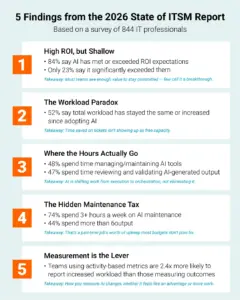
The Hidden Complexity of Efficiency: SolarWinds Report Reveals the Dual Nature of AI in the Modern Service Desk
The promise of artificial intelligence within Information Technology Service Management (ITSM) has...
 Helpdesk & IT Service Management (ITSM)
The AI Productivity Paradox: Why Faster Coding is Failing to Accelerate the Software Development Lifecycle
The integration of artificial intelligence into the software development process was heralded...
 Helpdesk & IT Service Management (ITSM)
Keeper Security Hits Major Milestone with 100,000 Enterprise Customers Amid Rapid Growth in Identity Security Market
In a significant validation of the growing demand for unified identity and...