
Anger from the Travel Industry
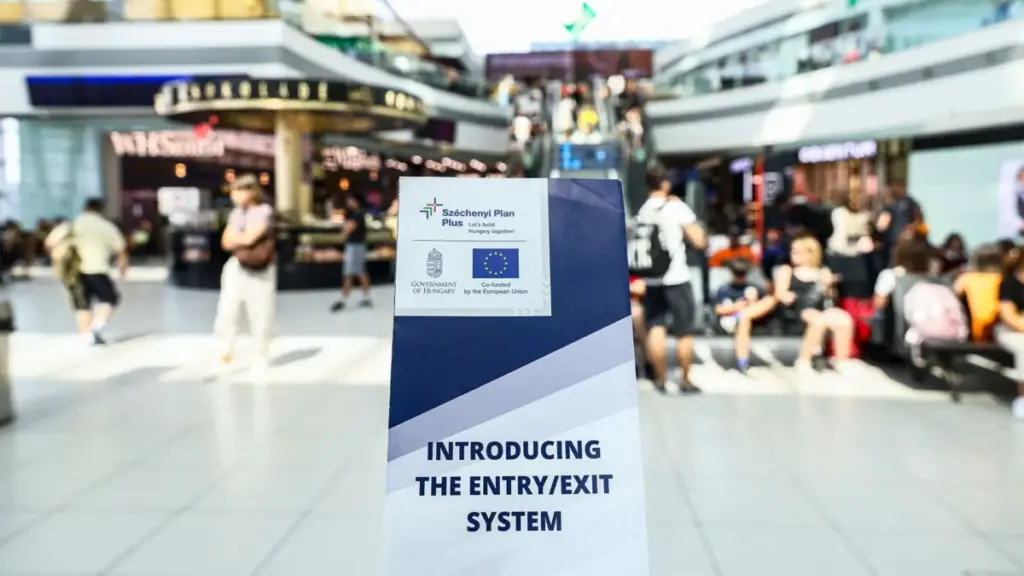
The real-world consequences of the EES’s troubled development have been felt most acutely by the travel industry and the passengers it serves. The implementation of biometric checks has, in many cases, turned routine border crossings into endurance tests.
Earlier this year, the situation reached a breaking point in Portugal. Authorities at Lisbon airport were forced to temporarily suspend EES checks after passengers were subjected to queues lasting up to seven hours. The chaos in Lisbon was not an isolated incident; nine other EU nations were subsequently granted permission to waive the introduction of EES checks until January, or until the technology could be proven to work reliably without causing systemic gridlock.
The impact on the aviation sector has been profound. ACI EUROPE (Airports Council International) and Airlines for Europe (A4E), representing the continent’s major airports and carriers, have been vocal in their criticism. Last month, the organizations noted that waiting times at EES-equipped borders continued to reach five hours during peak periods, with even off-peak wait times frequently exceeding the two-hour mark.
The frustration is perhaps best summarized by the leadership of Europe’s largest budget airline. In September, as the EES was intended to reach full operational capacity, Ryanair’s Chief Operating Officer, Neal McMahon, delivered a scathing assessment of the project. McMahon labeled the EU’s handling of the EES "a shambles from start to finish," arguing that "passengers should not be made to pay the price for the EU’s failed EES rollout."
The sentiment is echoed across the industry, where there is a growing concern that the EES, despite its security goals, is acting as a deterrent to travel. For countries heavily reliant on tourism, the prospect of five-hour queues at the border represents a significant economic threat.
Looking Ahead
As the legal proceedings begin in Estonia, the outcome remains uncertain. In its court filing, eu-LISA acknowledged the early stage of the litigation, noting that "no evaluation of the probability of the outcome can be reliably made at the moment." The tech firms involved—IBM, Atos, and Leonardo—are expected to mount a vigorous defense, likely pointing toward the evolving scope and complexity of the EU’s requirements as a primary factor in the delays.
For the European Union, the lawsuit is more than a simple contract dispute; it is an attempt to recoup losses and signal that the mismanagement of critical infrastructure projects will carry legal consequences. For the traveling public, the hope remains that the transition to new contractors and the resolution of these legal battles will finally lead to a border system that delivers on its promise of security without sacrificing the basic efficiency of international travel.
The EES stands as a cautionary tale of the challenges inherent in digitizing large-scale public systems. While the vision of a paperless border is modern and secure, the path to achieving it has proven that even the world’s largest technology firms can struggle when faced with the messy, high-stakes reality of global migration and transport. As the case moves through the Estonian court system, the tech and travel industries alike will be watching closely to see how the responsibility for one of Europe’s most difficult IT projects is ultimately assigned.
 Helpdesk & IT Service Management (ITSM)
The Resilience Mandate: Why Organizations are Shifting Focus from Prevention to Recovery in an Era of Persistent Threats
Cybersecurity has remained a primary concern for the global business community since...
 Helpdesk & IT Service Management (ITSM)
US Government Intervenes to Limit UK Access to Latest OpenAI and Anthropic Models
The United Kingdom’s ambitions to remain at the vanguard of global artificial...
 Helpdesk & IT Service Management (ITSM)
Nvidia Donates OpenShell to CNCF as Leadership Crisis Overshadows Strategic Open Source Pivot
The global technology landscape was recently jolted by the sudden and dramatic...







