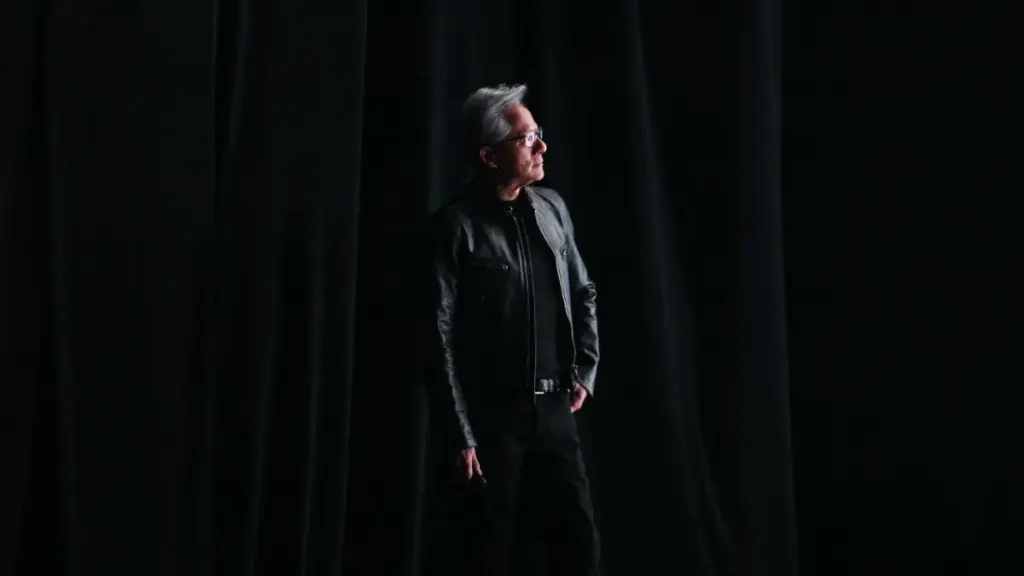
The global technology landscape was recently jolted by the sudden and dramatic departure of Jensen Huang, the long-standing face and architect of Nvidia’s meteoric rise. However, as the industry grappled with the sensational details surrounding his resignation, a fundamental shift in the company’s technical strategy was quietly unfolding. At the KubeCon + CloudNativeCon event in Salt Lake City, Nvidia announced a landmark commitment to the open-source community, headlined by the donation of its OpenShell project to the Cloud Native Computing Foundation (CNCF).
The timing of the announcement has created a dual narrative for the semiconductor giant. On one hand, the company is navigating a profound leadership vacuum following the events of November 12, when Huang resigned as CEO and president. His departure followed allegations of personal impropriety involving a company executive and a Chinese "intelligence asset." On the other hand, the technical contributions made in Salt Lake City suggest that Nvidia is doubling down on a future defined by transparency, community governance, and "agentic" AI—a vision that Huang himself championed during his final years at the helm.
The Strategic Donation of OpenShell
At the heart of Nvidia’s KubeCon presence was the donation of OpenShell, an open-source agentic orchestration runtime. By handing control of the project to the CNCF—the same organization that governs Kubernetes—Nvidia is effectively moving the project into a neutral, community-led environment. This move ensures that the software will be governed by a diverse set of organizations and individual contributors rather than a single corporate entity.
OpenShell is designed to serve as a foundational layer for the next generation of artificial intelligence: autonomous agents. Unlike traditional AI models that respond to prompts in a vacuum, agentic AI is capable of performing multi-step tasks, interacting with external tools, and making autonomous decisions to achieve a specific goal. However, the autonomy of these agents introduces significant security risks.
In its official announcement, Nvidia emphasized that the contribution of OpenShell puts "security infrastructure for autonomous agents in the community’s hands to build, inspect, and improve." The goal is to create a standardized, transparent runtime where the logic governing how an agent operates is visible to everyone. For enterprises wary of the "black box" nature of AI, this level of transparency is seen as a prerequisite for the widespread adoption of autonomous systems in production environments.
Industry experts suggest that by donating OpenShell to the CNCF, Nvidia is attempting to establish a de facto standard for agent orchestration. In the world of cloud-native computing, being the foundation of a CNCF project can lead to massive adoption, as it removes the fear of vendor lock-in and encourages a broad ecosystem of compatible tools and plugins.
A Legacy Overshadowed by Controversy
Despite the technical significance of the OpenShell donation, the news struggled to gain traction in a media cycle dominated by the fallout of Jensen Huang’s exit. Amanda Brock, the CEO of OpenUK, observed that the magnitude of the announcement has been essentially buried by the personal and political drama surrounding the former CEO.
"Jensen’s exit this week has overshadowed the donation of Nvidia’s OpenShell to the Linux Foundation. That should have been big news," Brock stated. She noted that the timing was particularly poignant, characterizing the decision to donate OpenShell as a "last action" in support of the open-source movement—a cause that had become a central pillar of Huang’s leadership strategy in recent years.
 Helpdesk & IT Service Management (ITSM)
The Battle of the High-End Workstations: Apple M5 MacBook Pro vs. Microsoft Surface Laptop Ultra
The perennial rivalry between Apple and Microsoft has entered a sophisticated new...
 Helpdesk & IT Service Management (ITSM)
Former Sophos Chief Security Officer Simon Reed Joins Overe to Strengthen MSP Cybersecurity Strategy
The cybersecurity landscape for managed service providers (MSPs) and small-to-medium enterprises (SMEs)...
 Helpdesk & IT Service Management (ITSM)
Strategic Espionage Campaign Linked to Chinese Threat Actor Targets Global AI Policy Experts
In a sophisticated display of targeted cyber espionage, a threat actor aligned...