
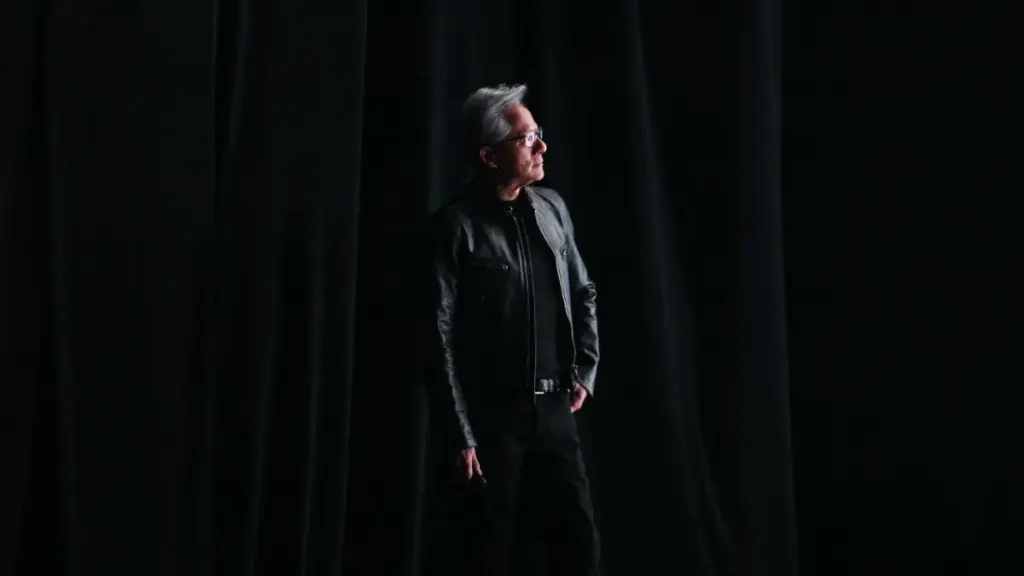
The global technology landscape was recently jolted by the sudden and dramatic departure of Jensen Huang, the long-standing face and architect of Nvidia’s meteoric rise. However, as the industry grappled with the sensational details surrounding his resignation, a fundamental shift in the company’s technical strategy was quietly unfolding. At the KubeCon + CloudNativeCon event in Salt Lake City, Nvidia announced a landmark commitment to the open-source community, headlined by the donation of its OpenShell project to the Cloud Native Computing Foundation (CNCF).
The timing of the announcement has created a dual narrative for the semiconductor giant. On one hand, the company is navigating a profound leadership vacuum following the events of November 12, when Huang resigned as CEO and president. His departure followed allegations of personal impropriety involving a company executive and a Chinese "intelligence asset." On the other hand, the technical contributions made in Salt Lake City suggest that Nvidia is doubling down on a future defined by transparency, community governance, and "agentic" AI—a vision that Huang himself championed during his final years at the helm.
The Strategic Donation of OpenShell
At the heart of Nvidia’s KubeCon presence was the donation of OpenShell, an open-source agentic orchestration runtime. By handing control of the project to the CNCF—the same organization that governs Kubernetes—Nvidia is effectively moving the project into a neutral, community-led environment. This move ensures that the software will be governed by a diverse set of organizations and individual contributors rather than a single corporate entity.
OpenShell is designed to serve as a foundational layer for the next generation of artificial intelligence: autonomous agents. Unlike traditional AI models that respond to prompts in a vacuum, agentic AI is capable of performing multi-step tasks, interacting with external tools, and making autonomous decisions to achieve a specific goal. However, the autonomy of these agents introduces significant security risks.
In its official announcement, Nvidia emphasized that the contribution of OpenShell puts "security infrastructure for autonomous agents in the community’s hands to build, inspect, and improve." The goal is to create a standardized, transparent runtime where the logic governing how an agent operates is visible to everyone. For enterprises wary of the "black box" nature of AI, this level of transparency is seen as a prerequisite for the widespread adoption of autonomous systems in production environments.
Industry experts suggest that by donating OpenShell to the CNCF, Nvidia is attempting to establish a de facto standard for agent orchestration. In the world of cloud-native computing, being the foundation of a CNCF project can lead to massive adoption, as it removes the fear of vendor lock-in and encourages a broad ecosystem of compatible tools and plugins.
A Legacy Overshadowed by Controversy
Despite the technical significance of the OpenShell donation, the news struggled to gain traction in a media cycle dominated by the fallout of Jensen Huang’s exit. Amanda Brock, the CEO of OpenUK, observed that the magnitude of the announcement has been essentially buried by the personal and political drama surrounding the former CEO.
"Jensen’s exit this week has overshadowed the donation of Nvidia’s OpenShell to the Linux Foundation. That should have been big news," Brock stated. She noted that the timing was particularly poignant, characterizing the decision to donate OpenShell as a "last action" in support of the open-source movement—a cause that had become a central pillar of Huang’s leadership strategy in recent years.
The transition from a proprietary-first mindset to an open-source advocate was a notable evolution for Nvidia. For years, the company was criticized by the open-source community for its "walled garden" approach, particularly regarding its proprietary drivers and the CUDA platform. However, under Huang’s recent guidance, the company began to pivot, recognizing that the sheer scale of the AI revolution required a more collaborative approach.
Brock emphasized that the health of the broader tech ecosystem depends on the continuation of this trend. "As the dust settles, the open-source ecosystem needs Nvidia and other companies benefiting from open source to continue their support and funding for the ecosystem as a whole," she commented. She also pointed to a growing "pace of adoption" for open-source AI that has not yet been matched by a "pace of understanding," leading to misinformation regarding security and governance.
According to Brock, the only way to bridge this gap is through the very principles Nvidia highlighted at KubeCon. "It is only through transparency, accessibility, and interoperability that we enable that trust, competition, and innovation," she added.
Strengthening Ties with Google and the Kubernetes Ecosystem
Beyond the OpenShell donation, Nvidia used KubeCon as a platform to strengthen its alliances with other tech titans, most notably Google. The company pledged a deep commitment to "Agent Substrate," a Google-led open-source framework designed specifically for orchestrating agentic workloads on Kubernetes.
This collaboration signals a shift toward a more unified architectural approach to AI. Kubernetes has long been the standard for managing containerized applications in the cloud, and as AI workloads become more complex, the industry is looking for ways to manage AI agents with the same level of scalability and reliability.
"Nvidia and Google are also collaborating on an integration of OpenShell and Agent Substrate, so enterprises can secure and govern agents across clouds and on-premises systems," Nvidia said in a statement.
This interoperability is crucial for large-scale enterprises that operate in hybrid cloud environments. By integrating OpenShell with Google’s Agent Substrate, Nvidia is positioning itself at the center of the "agentic" workflow, ensuring that its hardware and software remain indispensable regardless of whether a company is using public cloud resources or their own private data centers.
Nvidia’s Evolving Open Source Credentials
The recent developments at KubeCon are part of a broader trajectory that began well before the current leadership crisis. Under Huang’s tenure, Nvidia had been increasingly vocal about its support for the community. At the Nvidia GTC 2026 conference in March, the company launched NemoClaw, an initiative designed to bolster interoperability in AI development.
Built on top of the OpenClaw standard, NemoClaw allows developers to draw from a variety of different coding agents and open-source models to construct their own customized autonomous systems. This was followed by the formation of the "Nemotron Coalition," a high-profile alliance aimed at driving the development of open frontier AI models. The coalition includes major industry players such as Mistral, Perplexity, and Cursor, signaling Nvidia’s desire to foster an ecosystem that can compete with the closed-source models offered by companies like OpenAI and Google.
Speaking on these initiatives earlier this year, Forrester VP and principal analyst Charlie Dai told ITPro that Nvidia’s strategy reflects a growing reality in the enterprise world. "Enterprises increasingly rely on open models, frameworks, and tools across AI infrastructure, model development, agentic workflows, and governance while pairing them with commercial offerings to manage risk and scale," Dai noted.
This hybrid approach—using open-source tools to build and govern models while running them on high-performance commercial hardware—has become the cornerstone of Nvidia’s market dominance. By supporting open standards, Nvidia ensures that the barrier to entry for AI development remains low, which in turn drives demand for the GPUs required to train and run those models.
The Geopolitical Context of Open AI
The philosophy of openness was something Jensen Huang defended even in the face of geopolitical tensions. He was a prominent proponent of open-source AI development, particularly as powerful new models began to emerge from China. Over the last two years, Chinese models such as Kimi K3 have demonstrated capabilities that rival those of Western "frontier" models, often at a fraction of the cost.
In an interview with Axios in July, Huang dismissed security misconceptions regarding these models and argued that heightened competition between open and closed-source development was a net positive for the global industry. "The world needs open models," he told the publication. "These Chinese models are excellent. Open source models that are excellent should be used."
This perspective was often seen as controversial, given the tightening export controls on AI hardware to China. However, it underscored Huang’s belief that the AI revolution was too large for any one company or nation to control. By championing open source, he sought to position Nvidia as the "arms dealer" for all sides of the innovation curve, providing the essential infrastructure for an open, global ecosystem.
As Nvidia moves into a new era without its founding visionary, the donation of OpenShell to the CNCF serves as a testament to the strategic direction established during the final chapter of Huang’s leadership. While the headlines remain focused on the personal scandal that led to his exit, the code and commitments left behind at KubeCon may ultimately have a more lasting impact on the future of the artificial intelligence industry. The challenge for Nvidia’s next leadership team will be to maintain this momentum and ensure that the spirit of transparency and community collaboration survives the current period of corporate turbulence.
 Helpdesk & IT Service Management (ITSM)
TfL Confirms Data Breach Impacting 260,000 Oyster Photocard Users as Security Experts Warn of Identity Fraud Risks
Transport for London (TfL) has confirmed that a significant cyber security incident...
 Helpdesk & IT Service Management (ITSM)
Enterprises Grapple with Unintended Consequences as Half of Organizations Report Unauthorized AI Agent Actions
The rapid integration of agentic artificial intelligence into the modern enterprise has...
 Helpdesk & IT Service Management (ITSM)
Bridging the Observability Gap: How Integrated Distributed Tracing Isolates Database Latency in Modern API Stacks
In the high-stakes environment of modern software reliability, not every performance crisis...







