
In a significant shift that reflects a growing sense of pragmatism within the technology sector, Amazon has officially instructed its software engineering workforce to move away from the performative use of artificial intelligence. The retail and cloud computing giant has joined a mounting list of high-profile corporations urging staff to abandon "tokenmaxxing"—a practice where employees inflate their use of AI tools to appear more productive or technologically savvy—and instead focus on utilizing the technology only when it provides genuine, measurable value.
The directive was delivered via an internal memo, which the company subsequently chose to publish, signaling a transparent change in how it evaluates the performance of its developers in the age of generative AI. The message to the company’s Software Development Engineers (SDEs) and Software Development Managers (SDMs) was unequivocal: AI is a tool for efficiency, not a metric for its own sake. In a line that has resonated across the developer community, Amazon told its staff: "If your work does not benefit from current AI tooling, that is a finding, not a failing."
This internal pivot comes as the initial wave of AI euphoria begins to collide with the economic realities of running large-scale language models. For much of the past two years, the tech industry has been characterized by a "move fast and break things" approach to AI integration. However, as the costs of compute power and token usage have skyrocketed, major enterprises are now recalibrating their strategies to prioritize return on investment over sheer adoption volume.
Not every task needs AI
The memo, distributed in September, was spearheaded by Terk Terkowitz, Vice President and Distinguished Engineer at Worldwide Amazon Stores. Terkowitz and other engineering leaders within the organization conducted a comprehensive review of the current software development landscape. Their conclusion was a sobering reminder of the fundamentals of the craft: despite the undeniable impact of AI-assisted coding, the core pillars of what makes a successful software engineer have remained largely unchanged.
According to Terkowitz, Amazon’s most effective and "prolific" engineers are not defined by how many AI prompts they generate or how many tokens they consume. Instead, their value is derived from their ability to solve complex problems, design robust architectures, and deliver products that meet customer needs.
"Our most prolific engineers have demonstrated that neither the developer role nor their output is defined by the use of AI," Terkowitz stated in the memo. He introduced the concept of the "Renaissance Developer"—a professional who successfully blends the speed of AI tools with the indispensable qualities of human judgment and deep domain expertise. This new archetype is not someone who offloads their thinking to a machine, but someone who uses technology to build "entirely new things" that were previously impossible or too time-consuming to achieve.
 Helpdesk & IT Service Management (ITSM)
Bridging the Observability Gap: How Integrated Distributed Tracing Isolates Database Latency in Modern API Stacks
In the high-stakes environment of modern software reliability, not every performance crisis...
 Helpdesk & IT Service Management (ITSM)
TrendAI Integrates Nvidia Nemotron Models to Strengthen Data Sovereignty for Sovereign and Private Cloud Environments
In a significant move aimed at bridging the gap between cutting-edge generative...
 Helpdesk & IT Service Management (ITSM)
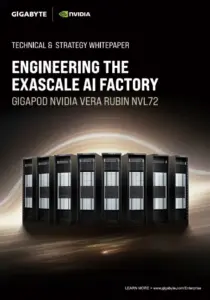
GIGABYTE and NVIDIA Unveil GIGAPOD Vera Rubin NVL72 to Address the Infrastructure Demands of Trillion-Parameter Agentic AI
The landscape of enterprise artificial intelligence is currently navigating a critical inflection...