
Installing a complete graphical Ubuntu desktop on 64-bit RISC-V hardware is poised to become significantly more straightforward. In an important milestone for the open-standard instruction set architecture, Canonical has begun generating official desktop installation media for the riscv64 architecture, targeting the upcoming Ubuntu 26.10 release cycle.
The initiative marks a decisive shift in how desktop Linux is distributed and consumed across the expanding RISC-V ecosystem. Until now, running a functional Ubuntu desktop environment on modern RISC-V development hardware frequently required developers and hardware enthusiasts to piece together installations manually, starting from headless server base systems or relying on specialized, third-party board-support images created by device vendors. With the introduction of official ISO images built directly on Canonical’s centralized distribution infrastructure, RISC-V is moving closer to the first-class desktop status long enjoyed by x86-64 and 64-bit ARM architectures.
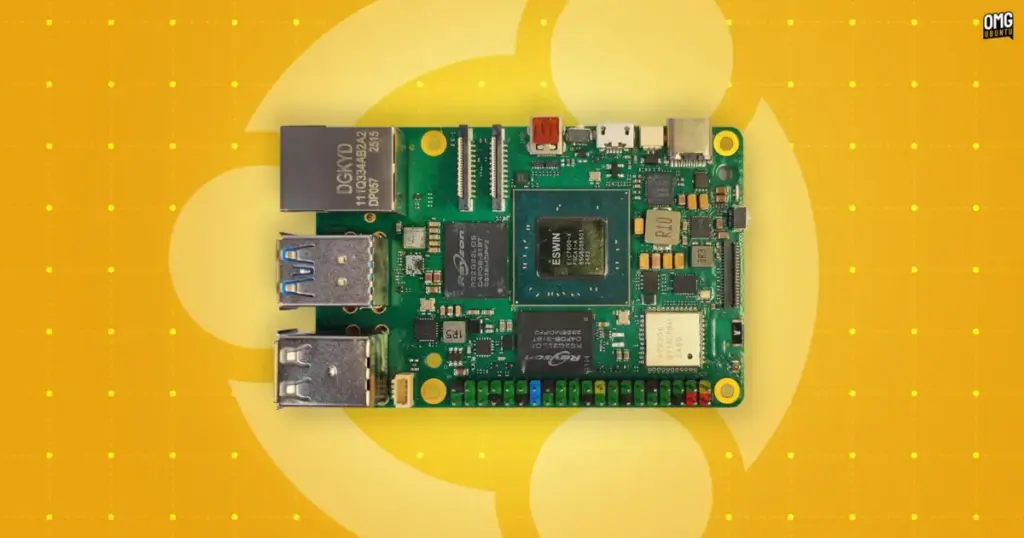
Experimental installation images have been published for early public testing, with primary evaluation focused on the SpacemiT K3—a development board Canonical has been actively collaborating on with chipmaker SpacemiT. Canonical is currently offering two distinct installation options: a flagship ISO featuring the default GNOME desktop environment and a lightweight alternative built around Xubuntu minimal.
Announcing the milestone on the official Ubuntu community discourse, Canonical engineer Valentin Haudiquet emphasized that both desktop ISOs remain strictly experimental and do not yet carry official enterprise or commercial support. The images represent early development milestones, meaning early adopters should expect software defects, incomplete feature implementations, and packaging gaps. Canonical intends to address these issues in the lead-up to the final general availability release scheduled for October 15, 2026.
Why are there two images?
The decision to deliver two separate installer images—one running the resource-heavy GNOME shell and another packaged with the lightweight Xfce-based Xubuntu minimal environment—stems directly from the unique realities of modern RISC-V software development and hardware availability.
Hardware implementations adhering to the modern RVA23 profile baseline remain relatively recent arrivals on the commercial market. Consequently, a substantial proportion of developers working within the RISC-V software ecosystem do not yet possess physical, high-performance silicon on their desks. Instead, many engineers rely on software emulation through platforms like QEMU to compile, test, and debug their applications for the riscv64 architecture.
Software emulation introduces substantial performance overhead. Running a modern, composited desktop environment like GNOME inside an emulated RISC-V environment can be an exercise in patience; booting the GNOME desktop shell to an interactive state inside QEMU can take upwards of 30 minutes. By offering an official Xubuntu minimal image alongside the standard release, Canonical provides an essential tool for developers. The lightweight footprint of Xfce allows developers using virtual machines and software emulators to boot rapidly, verify core system functionality, test software packages, and inspect operating system components without enduring the prolonged startup overhead imposed by heavier desktop environments.
 Linux & Open Source Solutions
Ex-Microsoft dev builds a new task manager for Linux
For millions of personal computer users over the past three decades, Plummer’s...
 Linux & Open Source Solutions
Kagi Halts Development of Orion Browser for Linux and Windows, Plans to Open Source Codebase
Kagi has officially announced that it is ending the internal development of...
 Linux & Open Source Solutions
The Document Foundation Unveils New Visual Identity to Establish Distinct Institutional Profile Apart from LibreOffice
The Document Foundation, the charitable non-profit entity responsible for overseeing the development...







