
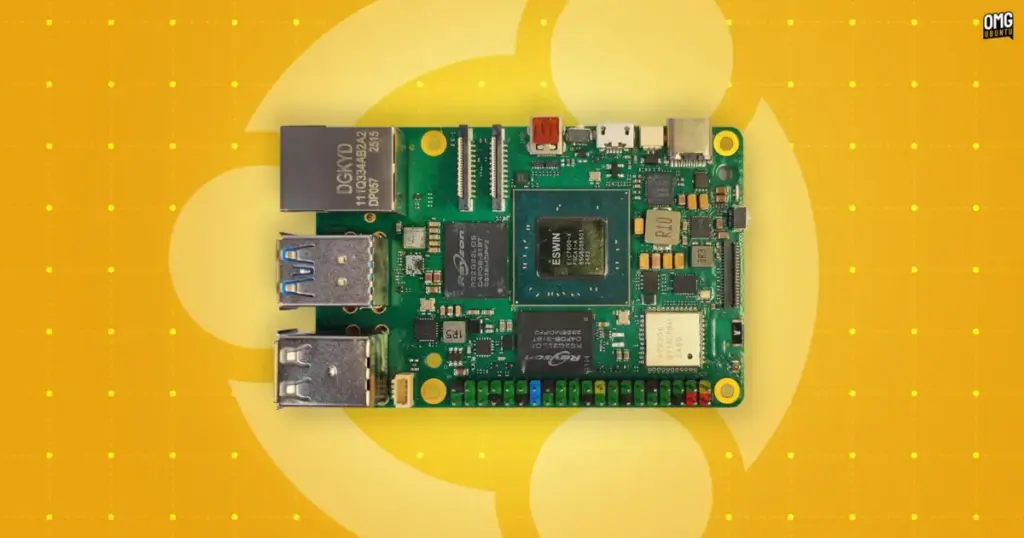
Installing a complete graphical Ubuntu desktop on 64-bit RISC-V hardware is poised to become significantly more straightforward. In an important milestone for the open-standard instruction set architecture, Canonical has begun generating official desktop installation media for the riscv64 architecture, targeting the upcoming Ubuntu 26.10 release cycle.
The initiative marks a decisive shift in how desktop Linux is distributed and consumed across the expanding RISC-V ecosystem. Until now, running a functional Ubuntu desktop environment on modern RISC-V development hardware frequently required developers and hardware enthusiasts to piece together installations manually, starting from headless server base systems or relying on specialized, third-party board-support images created by device vendors. With the introduction of official ISO images built directly on Canonical’s centralized distribution infrastructure, RISC-V is moving closer to the first-class desktop status long enjoyed by x86-64 and 64-bit ARM architectures.
Experimental installation images have been published for early public testing, with primary evaluation focused on the SpacemiT K3—a development board Canonical has been actively collaborating on with chipmaker SpacemiT. Canonical is currently offering two distinct installation options: a flagship ISO featuring the default GNOME desktop environment and a lightweight alternative built around Xubuntu minimal.
Announcing the milestone on the official Ubuntu community discourse, Canonical engineer Valentin Haudiquet emphasized that both desktop ISOs remain strictly experimental and do not yet carry official enterprise or commercial support. The images represent early development milestones, meaning early adopters should expect software defects, incomplete feature implementations, and packaging gaps. Canonical intends to address these issues in the lead-up to the final general availability release scheduled for October 15, 2026.
Why are there two images?
The decision to deliver two separate installer images—one running the resource-heavy GNOME shell and another packaged with the lightweight Xfce-based Xubuntu minimal environment—stems directly from the unique realities of modern RISC-V software development and hardware availability.
Hardware implementations adhering to the modern RVA23 profile baseline remain relatively recent arrivals on the commercial market. Consequently, a substantial proportion of developers working within the RISC-V software ecosystem do not yet possess physical, high-performance silicon on their desks. Instead, many engineers rely on software emulation through platforms like QEMU to compile, test, and debug their applications for the riscv64 architecture.
Software emulation introduces substantial performance overhead. Running a modern, composited desktop environment like GNOME inside an emulated RISC-V environment can be an exercise in patience; booting the GNOME desktop shell to an interactive state inside QEMU can take upwards of 30 minutes. By offering an official Xubuntu minimal image alongside the standard release, Canonical provides an essential tool for developers. The lightweight footprint of Xfce allows developers using virtual machines and software emulators to boot rapidly, verify core system functionality, test software packages, and inspect operating system components without enduring the prolonged startup overhead imposed by heavier desktop environments.
On physical hardware, however, the computing landscape is very different. On bare-metal silicon designed to modern specifications, Haudiquet noted that the full GNOME image delivers a pleasant and performant desktop experience. The noticeable difference in performance underscores the substantial leaps forward that RISC-V processor designers and board manufacturers have achieved in recent hardware generations.
Achieving this functional desktop experience required extensive foundational engineering across multiple layers of the Ubuntu software stack. A pivotal component of this work was Canonical’s effort to bring RISC-V support to Google’s Flutter framework. In modern Ubuntu releases, several key user-facing components—most notably the system’s primary subiquity-driven desktop installer—are constructed using Flutter. Without a fully ported, optimized, and stable Flutter engine for the riscv64 target, building an authentic, out-of-the-box Ubuntu desktop installation experience simply was not possible.
Despite this milestone, Canonical’s desktop software ecosystem on RISC-V is not yet completely populated. While foundational graphical applications and the core shell operate as intended, several popular desktop Snaps have not yet been successfully built or optimized for the riscv64 target. Most visibly, the graphical Ubuntu App Center snap is not yet ready for the architecture, meaning testers must rely on traditional command-line package management utilities like apt to discover and manage their software installations.

Significant engineering effort was also required at the operating system plumbing level. Canonical’s engineering team had to introduce modifications to livecd-rootfs, the core set of tools responsible for assembling live environment root filesystems. Because RISC-V platforms rely heavily on device trees to convey board-level hardware topologies to the Linux kernel during early boot, the live media creation scripts had to be updated to manage device trees properly during the generation of the bootable media. Furthermore, Canonical’s overarching build and continuous integration pipelines required modernization to reliably churn out daily, bootable riscv64 desktop ISOs alongside traditional architecture builds.
But weren’t RISC-V tablets sold with Ubuntu on?
The release of official desktop images naturally prompts questions regarding earlier RISC-V commercial hardware. In recent years, several hardware makers have brought RISC-V tablets, development laptops, and single-board computers to market with Ubuntu advertised as the primary operating system, including high-profile devices such as the DC-ROMA Pad II.
However, the operating system deployments on those devices were the product of custom downstream engineering rather than standard, upstream Canonical desktop distribution channels. Canonical has provided official Ubuntu Server images for the riscv64 architecture for several years. Historically, experienced users and hardware manufacturers could flash an official server image to an SD card or eMMC storage module, boot the machine, and manually install graphical desktop metapackages using the package manager. While technically feasible, this multi-step approach fell far short of providing a polished, automated installer with live desktop sessions suitable for general computing.
Because Canonical did not produce official, unified installation ISOs containing a preconfigured desktop environment, hardware manufacturers shipping commercial RISC-V devices were left to bridge the gap independently. Companies partnering with Canonical to enable their hardware frequently had to assemble, host, and maintain custom system images and proprietary recovery media on their own independent web servers. If an end user wished to reinstall the operating system or recover a corrupted installation, they had to download proprietary vendor images rather than standard installation media from Canonical’s official domain.
This fragmented distribution workflow is precisely what the latest daily images resolve. Canonical is working to normalize RISC-V desktop computing by delivering centralized, officially hosted desktop installer ISOs aimed at modern, 64-bit hardware adhering to the RVA23 baseline or higher. Users and developers can now fetch an installer directly from Canonical’s official servers, flash it to bootable media, and install a desktop environment through the exact same workflow utilized on Intel, AMD, and ARM-powered machines.
The transition also builds upon Canonical’s decision to elevate the baseline architecture profile to RVA23. By establishing RVA23 as the architectural foundation for modern Ubuntu releases on RISC-V, Canonical has ensured that the distribution targets newer, more capable silicon equipped with the hardware extensions necessary to run modern system software efficiently, rather than spending limited engineering resources catering to legacy, underpowered embedded chips.
Testing the Builds and Looking Toward LTS
For users whose deployments prioritize long-term stability over the rapid-iteration test cycle of interim development branches, work is also underway on the Long Term Support front. An Ubuntu 26.04.1 LTS riscv64 desktop ISO has also been made available for testing. However, early adopters should be aware that support for the SpacemiT K3 board is not yet integrated into the 26.04.1 point release ISO. Haudiquet indicated that hardware enablement for the K3 will be backported to the LTS branch in the near future.
In the interim, developers and enthusiasts eager to explore the bleeding edge of RISC-V desktop computing can inspect and evaluate the experimental daily builds directly from Canonical’s mirrors. The test ISO for the standard Ubuntu 26.10 desktop is hosted in the daily-live tree on cdimage.ubuntu.com, while the Xubuntu 26.10 minimal testing image can be fetched through the corresponding Xubuntu daily-minimal distribution directory.
As Canonical refines its build automation, expands Snap package availability, and improves device-tree handling over the coming development months, the availability of these initial ISOs marks a critical step forward. With the official target date of October 15, 2026 approaching for the general availability of Ubuntu 26.10, the RISC-V architecture is steadily transitioning from a specialized, deeply embedded silicon landscape into a viable foundation for general-purpose desktop operating systems.
 Linux & Open Source Solutions
Canonical Hardens Ubuntu 26.10 Boot Security by Stripping Advanced Filesystem Parsers from Signed GRUB
Canonical has implemented a significant architectural shift in how Ubuntu 26.10 boots...
 Linux & Open Source Solutions
Canonical Releases Official Ubuntu Desktop Images for RISC-V Hardware Ahead of Ubuntu 26.10
Installing Ubuntu on RISC-V hardware is poised to become significantly more straightforward...
 Linux & Open Source Solutions
NexPhone Multi-OS Smartphone Delayed to March 2027 as Hardware Challenges and Price Adjustments Emerge
The NexPhone, an ambitious multi-operating system smartphone designed to bridge the divide...







