
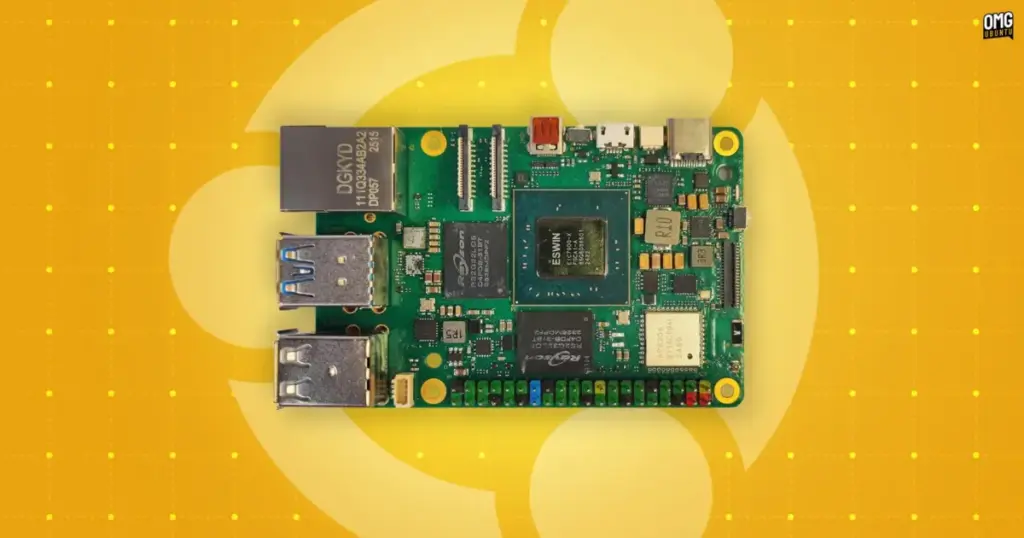
Installing Ubuntu on RISC-V hardware is poised to become significantly more straightforward with the arrival of Ubuntu 26.10, as Canonical has begun producing official 64-bit RISC-V (riscv64) desktop installation media. The initiative represents an important milestone for the open-source instruction set architecture, bridging the gap between specialized developer boards and mainstream desktop computing.
Experimental versions of the desktop images for the upcoming Ubuntu 26.10 release have been published for public testing on the SpacemiT K3, a development board that Canonical has been working closely on alongside hardware designer SpacemiT. Rather than offering a single catch-all installer, Canonical has produced two distinct ISO options: one shipping with the flagship Ubuntu desktop powered by the GNOME desktop environment, and another built around a minimal Xubuntu profile utilizing Xfce.
Announcing the initiative on the Ubuntu Discourse community platform, Canonical software engineer Valentin Haudiquet emphasized that the desktop media currently sits in an early phase of its lifecycle. Haudiquet explained that both of the published ISOs are firmly categorized as experimental and carry no official enterprise support at this stage.
Because of their testing status, early adopters and community developers should not expect an entirely seamless, bug-free experience. The software exhibits several known issues and functional limitations that Canonical’s desktop and foundation teams intend to address before the platform reaches general availability. The final release of Ubuntu 26.10 is currently scheduled to arrive on October 15, 2026.
Why are there two images?
The decision to deliver two divergent desktop images—one based on GNOME and the other on the lightweight Xubuntu environment—is rooted directly in the current state of RISC-V hardware availability, software emulation, and computing constraints.
Silicon that adheres to the contemporary RISC-V RVA23 baseline profile remains relatively fresh on the market. Consequently, a broad segment of software engineers, package maintainers, and open-source enthusiasts who want to test the RISC-V software ecosystem lack physical access to bare-metal boards. To circumvent this lack of physical silicon, developers rely heavily on virtualized environments using QEMU to emulate the instruction set on x86 or Arm host workstations.
While software emulation allows code execution without specialized hardware, it introduces substantial performance overhead. In an emulated QEMU environment running without hardware virtualization acceleration, a resource-intensive modern desktop environment like standard GNOME can take up to 30 minutes just to complete its boot sequence and present a responsive graphical session. For developers attempting to quickly test package updates, evaluate user-space applications, or diagnose installer scripts, such delays render continuous iteration impractical.
 Linux & Open Source Solutions
Canonical Hardens Ubuntu 26.10 Boot Security by Stripping Advanced Filesystem Parsers from Signed GRUB
Canonical has implemented a significant architectural shift in how Ubuntu 26.10 boots...
 Linux & Open Source Solutions
GNOME Shell Weather Extensions Bring Dynamic Visuals to the Desktop Panel
While dedicated desktop applications for checking the weather have long enjoyed a...
 Linux & Open Source Solutions
Ubuntu 26.10 Arrives with Rust Coreutils, Passkey Authentication, and Smarter Window Snapping
Canonical has officially announced the release of Ubuntu 26.10, codenamed "Stonking Stingray."...







