
The minimal Xubuntu image was engineered precisely to alleviate this development friction. By pairing an efficient Xfce-derived framework with a stripped-down minimal system package set, virtualized instances boot in a fraction of the time, providing a practical, nimble workbench for software testing.
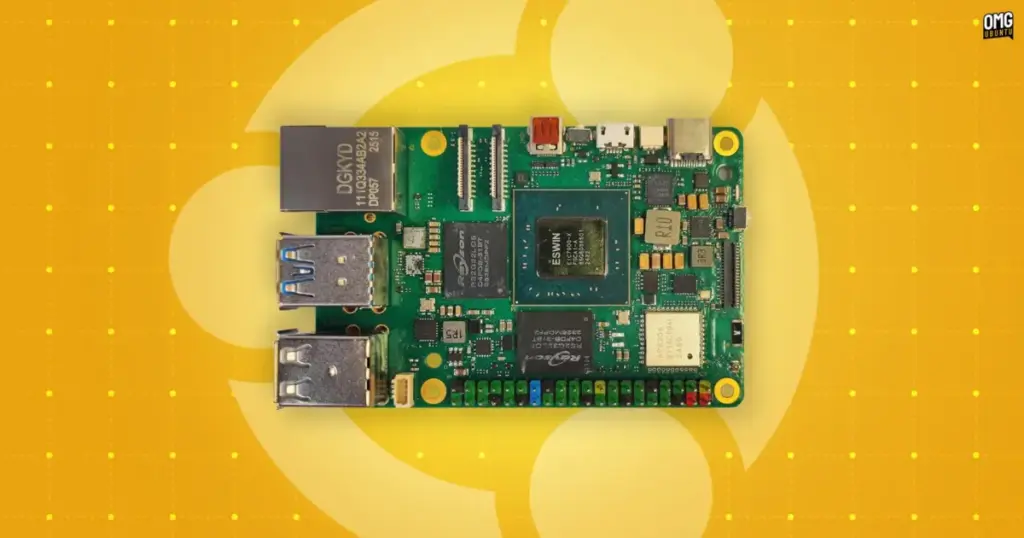
When deployed directly to compatible physical hardware, the situation is noticeably different. On real silicon, the standard GNOME installation image is reported to deliver a pleasant and performant desktop experience. With recent advances in hardware design closing the performance gap across modern RISC-V boards, running the standard, visually rich GNOME desktop shell has transitioned from an unworkable novelty into a practical reality on modern boards.
Achieving this level of desktop parity has required systematic foundational engineering across Canonical’s software stack. One major technical milestone was Canonical’s project to implement RISC-V architecture support within the Flutter framework. Flutter has become an integral pillar of the contemporary Ubuntu desktop experience, serving as the programming foundation for critical first-party applications, including the modern Ubuntu desktop installation wizard. Without a native Flutter engine capable of compiling and rendering properly on riscv64, delivering the standard Ubuntu installation workflow would have been virtually impossible.

Even with these milestones reached, the desktop ecosystem is not entirely complete on the architecture. Canonical has noted that a number of its standard desktop snap packages are not yet fully ported and validated for RISC-V. Most notably, the modern Ubuntu App Center remains among the software components that are still awaiting full riscv64 readiness.
Beyond application-level frameworks, building the newly minted desktop images required foundational revisions to core Ubuntu operating system tooling. Canonical’s engineers had to implement targeted changes to livecd-rootfs—the suite of tools responsible for generating official live media and system roots—specifically to ensure proper parsing, storage, and application of hardware-specific device trees. Furthermore, Canonical had to reconfigure its automated build pipelines and release machinery to continuously generate, package, and test bootable riscv64 ISOs alongside long-established architecture targets.
But weren’t RISC-V tablets sold with Ubuntu on?
The debut of desktop-specific ISOs might seem unexpected to observers who recall that commercial RISC-V computing hardware running Ubuntu has already surfaced in consumer and developer markets over the past several years.
 Linux & Open Source Solutions
Canonical Publishes Official Ubuntu Desktop Images for RISC-V Hardware Ahead of Ubuntu 26.10
Installing an official Ubuntu desktop operating system on 64-bit RISC-V hardware is...
 Linux & Open Source Solutions
Ubuntu 26.10 Beta Rescheduled to October 1 Following Unforeseen Infrastructure Issues
Canonical has officially postponed the public beta release of its upcoming operating...
 Linux & Open Source Solutions
NexPhone Multi-OS Smartphone Delayed to March 2027 as Hardware Challenges and Price Adjustments Emerge
The NexPhone, an ambitious multi-operating system smartphone designed to bridge the divide...







