
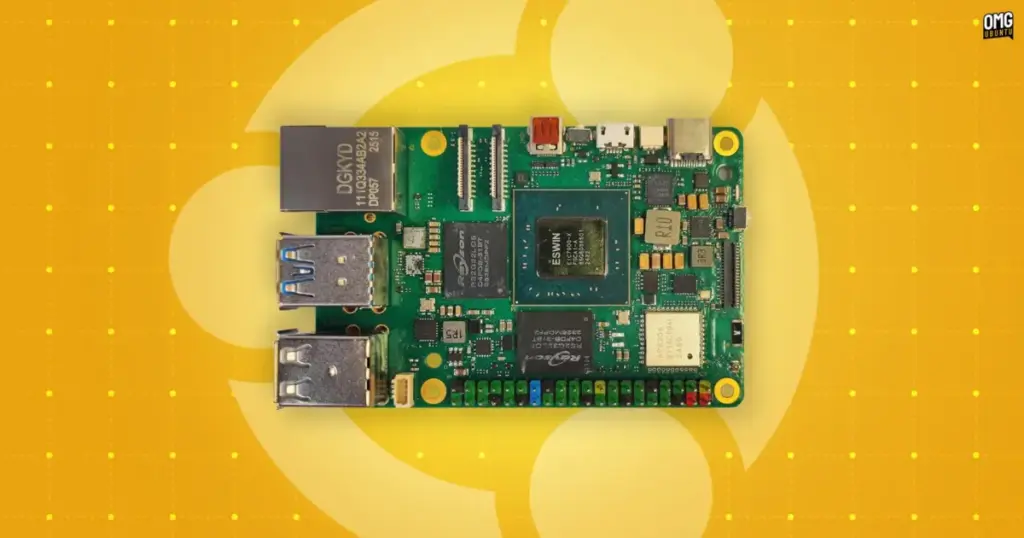
Ubuntu has supported the architecture for an extended period through headless server installations. Historically, users seeking a graphical interface were required to install a base RISC-V server image and manually assemble a window manager, display manager, and graphical desktop environment through post-installation terminal commands. This workflow predated Canonical’s formal decision to raise the platform’s architectural baseline profile to RVA23, a standard established to focus active distribution support on more powerful, modern board designs.
While hardware vendors have managed to bring commercial devices to market—including pre-assembled RISC-V tablets, laptops, and developer-oriented single-board computers running Ubuntu—those deployments did not rely on standard, official desktop ISOs directly published by Canonical.
Instead, equipment manufacturers and hardware vendors collaborating with Canonical on early platform enablement were routinely tasked with engineering, maintaining, and distributing their own bespoke recovery images and operating system builds. Because Canonical did not build unified, pre-configured desktop installation media for the architecture, vendors had to bridge the gap independently if they wished to ship devices with an out-of-the-box graphical desktop environment.
The new experimental release fundamentally resolves this fragmentation. By integrating riscv64 desktop media directly into Canonical’s core infrastructure, 64-bit RISC-V hardware built to the RVA23 standard (or higher) is now treated as a first-class citizen alongside mainstream Intel/AMD (amd64) and Arm64 architectures. Users and original equipment manufacturers can obtain clean, standardized desktop installation media straight from the same distribution servers that host Ubuntu’s mainstream editions.
For users who prefer an operating system release governed by Canonical’s Long Term Support cycle rather than an interim release, an Ubuntu 26.04.1 LTS riscv64 desktop ISO is also available. While that specific LTS desktop image currently lacks out-of-the-box hardware enablement for the SpacemiT K3 development board, Haudiquet indicated that support for the K3 platform will be brought to the LTS release track in the near future.
Early adopters, testing engineers, and developers interested in evaluating the state of desktop computing on open hardware can inspect and download the preliminary test files directly. The experimental Ubuntu 26.10 desktop RISC-V build is accessible through the daily live build directory on Canonical’s primary image server at cdimage.ubuntu.com, while the corresponding lightweight Xubuntu 26.10 RISC-V build has been made available via the official Xubuntu daily minimal build directory.
 Linux & Open Source Solutions
Kagi Halts Development of Orion Browser for Linux and Windows, Plans to Open Source Codebase
Kagi has officially announced that it is ending the internal development of...
 Linux & Open Source Solutions
Ubuntu 26.10 Arrives with Rust Coreutils, Passkey Authentication, and Smarter Window Snapping
Canonical has officially announced the release of Ubuntu 26.10, codenamed "Stonking Stingray."...
 Linux & Open Source Solutions
Canonical Publishes Official Ubuntu Desktop Images for RISC-V Hardware Ahead of Ubuntu 26.10
Installing an official Ubuntu desktop operating system on 64-bit RISC-V hardware is...







