
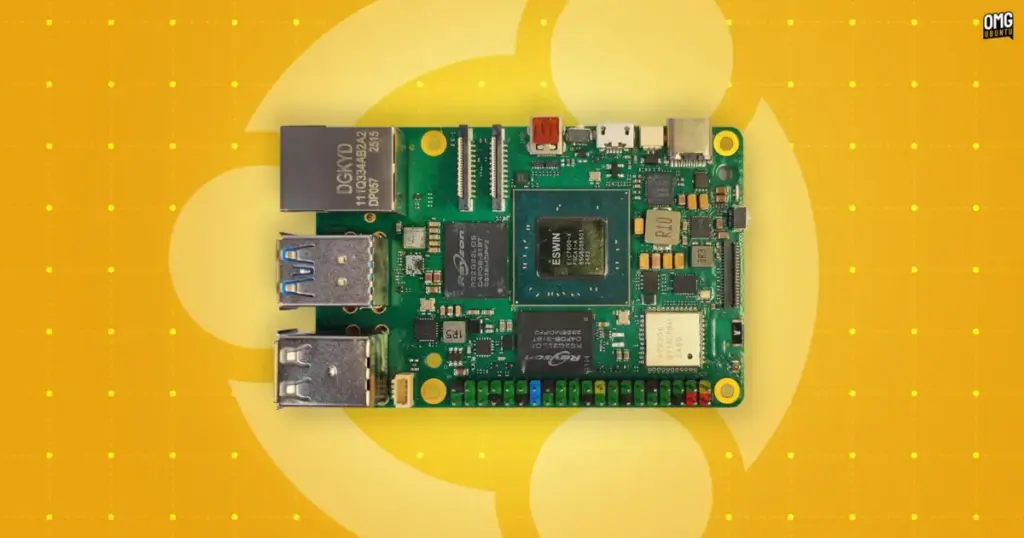
Because Canonical did not produce official, unified installation ISOs containing a preconfigured desktop environment, hardware manufacturers shipping commercial RISC-V devices were left to bridge the gap independently. Companies partnering with Canonical to enable their hardware frequently had to assemble, host, and maintain custom system images and proprietary recovery media on their own independent web servers. If an end user wished to reinstall the operating system or recover a corrupted installation, they had to download proprietary vendor images rather than standard installation media from Canonical’s official domain.
This fragmented distribution workflow is precisely what the latest daily images resolve. Canonical is working to normalize RISC-V desktop computing by delivering centralized, officially hosted desktop installer ISOs aimed at modern, 64-bit hardware adhering to the RVA23 baseline or higher. Users and developers can now fetch an installer directly from Canonical’s official servers, flash it to bootable media, and install a desktop environment through the exact same workflow utilized on Intel, AMD, and ARM-powered machines.
The transition also builds upon Canonical’s decision to elevate the baseline architecture profile to RVA23. By establishing RVA23 as the architectural foundation for modern Ubuntu releases on RISC-V, Canonical has ensured that the distribution targets newer, more capable silicon equipped with the hardware extensions necessary to run modern system software efficiently, rather than spending limited engineering resources catering to legacy, underpowered embedded chips.
Testing the Builds and Looking Toward LTS
For users whose deployments prioritize long-term stability over the rapid-iteration test cycle of interim development branches, work is also underway on the Long Term Support front. An Ubuntu 26.04.1 LTS riscv64 desktop ISO has also been made available for testing. However, early adopters should be aware that support for the SpacemiT K3 board is not yet integrated into the 26.04.1 point release ISO. Haudiquet indicated that hardware enablement for the K3 will be backported to the LTS branch in the near future.
In the interim, developers and enthusiasts eager to explore the bleeding edge of RISC-V desktop computing can inspect and evaluate the experimental daily builds directly from Canonical’s mirrors. The test ISO for the standard Ubuntu 26.10 desktop is hosted in the daily-live tree on cdimage.ubuntu.com, while the Xubuntu 26.10 minimal testing image can be fetched through the corresponding Xubuntu daily-minimal distribution directory.
As Canonical refines its build automation, expands Snap package availability, and improves device-tree handling over the coming development months, the availability of these initial ISOs marks a critical step forward. With the official target date of October 15, 2026 approaching for the general availability of Ubuntu 26.10, the RISC-V architecture is steadily transitioning from a specialized, deeply embedded silicon landscape into a viable foundation for general-purpose desktop operating systems.
 Linux & Open Source Solutions
Ubuntu 26.10 Arrives with Rust Coreutils, Passkey Authentication, and Smarter Window Snapping
Canonical has officially announced the release of Ubuntu 26.10, codenamed "Stonking Stingray."...
 Linux & Open Source Solutions
NexPhone Multi-OS Smartphone Delayed to March 2027 as Hardware Challenges and Price Adjustments Emerge
The NexPhone, an ambitious multi-operating system smartphone designed to bridge the divide...
 Linux & Open Source Solutions
Ex-Microsoft dev builds a new task manager for Linux
For millions of personal computer users over the past three decades, Plummer’s...







