
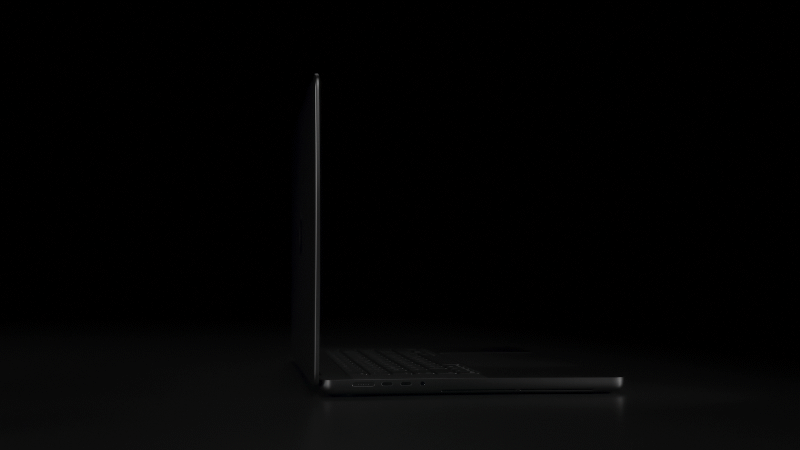
The storage options are also noteworthy. By offering up to 16TB of onboard SSD storage, Apple is addressing a specific pain point for field-based professionals who deal with massive file sizes and cannot always rely on external drives or cloud connectivity. This level of internal capacity is virtually unprecedented in the consumer and prosumer laptop market, further cementing the MacBook Pro’s position as a mobile studio for high-end production.
The shift to a touchscreen interface also raises questions about the evolution of macOS. While the company did not announce a fundamental redesign of the operating system’s UI at the Los Angeles event, the integration of touch suggests that future updates to macOS will likely become increasingly touch-friendly. For now, the touch capability is expected to act as a secondary input method, complementing the Force Touch trackpad and the physical keyboard rather than replacing them. This "additive" approach allows users to scroll through timelines, pinch-to-zoom on high-resolution images, or tap on-screen buttons without requiring a total overhaul of the desktop experience they are accustomed to.
Historically, Apple’s attempts to bridge the gap between touch and the Mac were limited to the Touch Bar—a thin OLED strip above the keyboard that replaced the function keys. While the Touch Bar offered contextual shortcuts, it never quite achieved the level of adoption or utility that Apple had hoped for, eventually leading to its removal in recent design iterations. The leap to a full-screen touch interface suggests that the company has finally found a way to implement the technology that meets its internal standards for quality and user experience.
The competition in the high-end laptop space has featured touchscreen options for years. Windows-based rivals like the Microsoft Surface line, the Dell XPS series, and Lenovo’s ThinkPad X1 Carbon have long offered touch and stylus support as standard or optional features. Apple’s late entry into this segment follows a familiar pattern for the company: waiting until a technology is mature enough—and until their own custom silicon can support it without compromising battery life or thermal performance—before bringing it to market.
The professional community’s reaction to the pricing will likely be a topic of discussion in the coming weeks. At $2,899 and $3,399 for the base models, these are among the most expensive entry prices for the MacBook Pro line in recent memory. However, the inclusion of OLED technology and the significant jump in base performance metrics may justify the cost for those whose livelihoods depend on cutting-edge hardware.
 Hardware Reviews & PC Building
US Video Game Hardware Sales Experience Historic Decline as PlayStation and Xbox Reach Multi-Year Lows
The United States video game industry is currently grappling with a significant...
 Hardware Reviews & PC Building
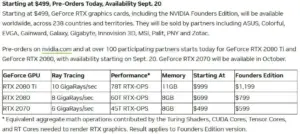
The PC gaming ray tracing obsession began with the first RTX 20 graphics cards released on this day in 2018 — the…
The debut of the GeForce 20 series was spearheaded by the release...
 Hardware Reviews & PC Building
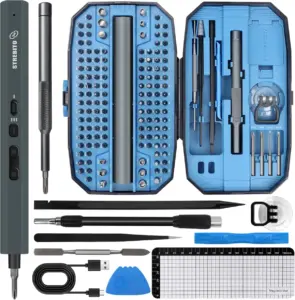
30 must-have PC tool gifts for hobbyists and makers — essential bench upgrades for enthusiasts with a project,…
The AI boom has created an insatiable demand for high-performance silicon, particularly...







