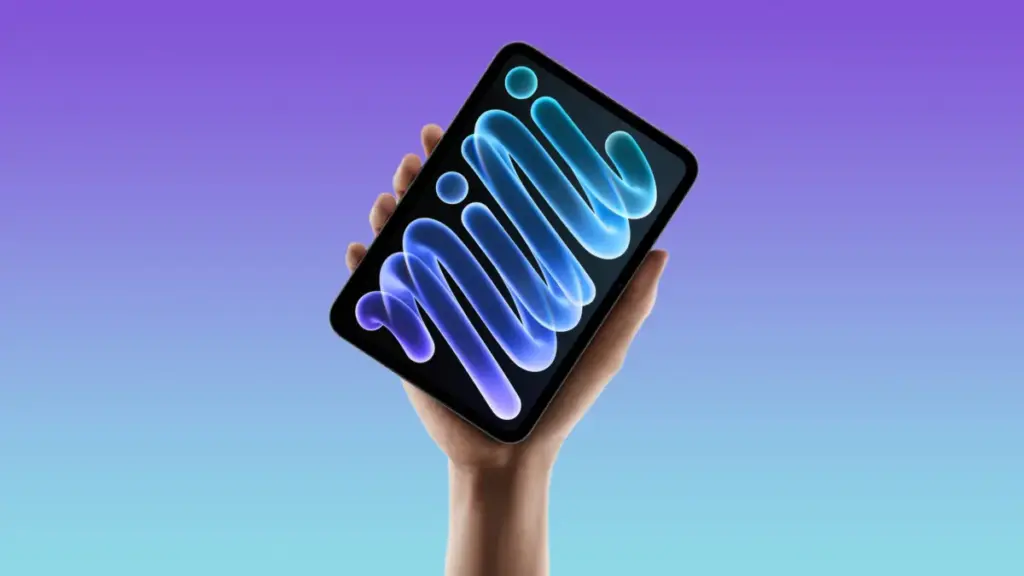
Apple has officially unveiled its long-awaited new iPad mini, featuring a landmark transition to an OLED display panel along with a host of hardware upgrades. However, the introduction of OLED technology to Apple’s smallest tablet has been accompanied by a detail that sparked immediate conversation among tech enthusiasts and prospective buyers: despite the shift away from liquid crystal display technology, the new iPad mini does not support Apple’s high-refresh-rate ProMotion feature. As a result, the device’s display remains capped at a standard 60Hz refresh rate, rather than offering the fluid 120Hz capabilities found on Apple’s high-end tablet offerings.
The absence of ProMotion has drawn significant scrutiny, as many users anticipated that a major redesign incorporating OLED technology would also bring variable refresh rates to the compact tablet family. In Apple’s broader display lineup, ProMotion technology allows a screen to dynamically scale its refresh rate based on the specific content being viewed on screen. This dynamic adjustment allows the panel to drop down as low as 10Hz when viewing static content to preserve battery power, or ramp up to a maximum of 120Hz to deliver exceptionally fluid animations, seamless user interface scrolling, and near-instantaneous stylus tracking when using an Apple Pencil. For now, however, Apple has chosen to keep ProMotion exclusivity tied strictly to the iPad Pro within its tablet portfolio, maintaining a distinct feature division between its standard consumer devices and its top-tier professional line.
Addressing the community’s reaction and clarifying the company’s design decisions, Apple’s vice president of hardware design, David Pakula, provided detailed insight into the tablet’s display architecture during a recent interview with YouTuber and podcaster Christopher Lawley. In the discussion, Pakula argued that evaluating a screen based solely on its raw refresh rate number overlooks critical performance factors, emphasizing that the new OLED display fundamentally transforms the visual experience of the iPad mini regardless of its 60Hz ceiling.
Pakula emphasized that the visual quality and smoothness of a display are shaped by multiple interacting hardware characteristics rather than a single metric. In particular, he highlighted the intrinsic hardware advantages that organic light-emitting diode technology holds over traditional liquid crystal display panels, specifically pointing to the dramatic acceleration in pixel response time.
"Display experience is about more than just a single spec," Pakula explained during the interview. "One of the things that’s really cool about OLED is it actually has this really fast pixel response time. So it’s like more than an order of magnitude faster than the pixel response time for an LCD display. And what that does is it makes everything really smooth. Motion blur is significantly reduced compared to LCD. When you pair that with the other things that I mentioned, the contrast, the brightness, and the color, this is just a killer display."
 macOS & Apple IT Support
Apple Preparing Major Smart Home Push With New AI-Powered Display Hub and homeOS Platform
Apple is readying a major expansion of its smart home strategy centered...
 macOS & Apple IT Support
Supposed M6 Pro Geekbench Result Flawed and Likely Fake, Founder Confirms
A benchmark score claiming to reveal the performance capabilities of an unreleased...
 macOS & Apple IT Support
Apple Explores Safari Layout Redesigns for iPhone Duo Outer Screen Amid Foldable Software Rollout and Supply Constraints
As Apple launches its new iPhone Duo, the company is actively investigating...