
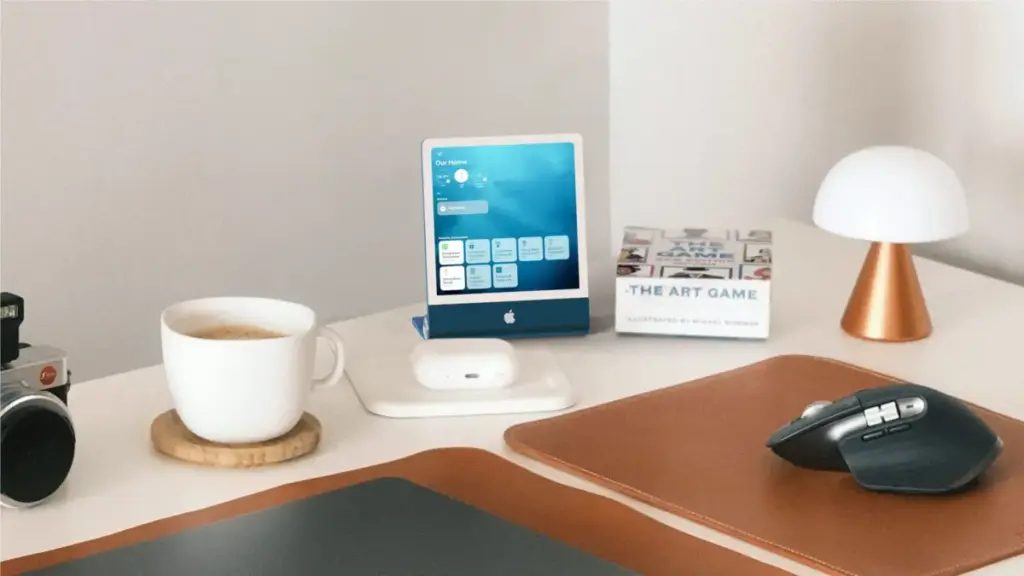
Apple is readying a major expansion of its smart home strategy centered around an all-new dedicated home hub device. Designed to serve as a centralized household command center, the incoming accessory will combine Apple Intelligence, direct HomeKit controls, media streaming, video calling, and dynamic household information management into a single compact desktop or wall-mounted display.
The launch represents one of Apple’s most significant smart home hardware moves since the introduction of the original HomePod. By pairing upgraded processing hardware with a tailored operating system, the technology giant aims to deliver a unified, voice- and touch-driven centerpiece for modern home automation.
Design and Hardware Architecture
Apple’s new home hub features a display-focused aesthetic that heavily borrows from existing hardware designs across the company’s lineup. The primary unit revolves around a square six-inch display encircled by quarter-inch black bezels. In terms of overall physical dimensions, the unit resembles two iPhones placed side by side, maintaining a thin profile comparable to a modern smartphone.
Apple has developed two distinct structural form factors to accommodate different placement scenarios throughout the home:
- Tabletop Variant: Designed for countertops, nightstands, and desks, this model pairs the six-inch display with a hemispherical speaker base reminiscent of the classic iMac G4. The screen attaches to the dome base via a polished metal arm, allowing users to tilt the display forward or backward for optimal viewing angles. The base houses speaker hole perforations for audio output and includes a high-friction rubber bottom to ensure stability on flat surfaces. Leaked details also point to prototypes featuring a robotic swiveling mechanism capable of automatically adjusting the screen’s orientation toward active users.
- Wall-Mounted Variant: Built to mount flush against walls, this configuration relies on a thin square base containing the necessary speaker and microphone arrays. Prototypes suggest Apple has engineered a MagSafe-style magnetic snap-to-wall mechanism, allowing users to dock or unmount units easily.
Both models feature a front-facing 1080p camera designed for FaceTime video calls, identity verification, and ambient household monitoring. To ensure reliable camera performance during low-light conditions or at night, Apple has incorporated a Mac-style ambient edge light around the perimeter of the screen to illuminate approaching users.
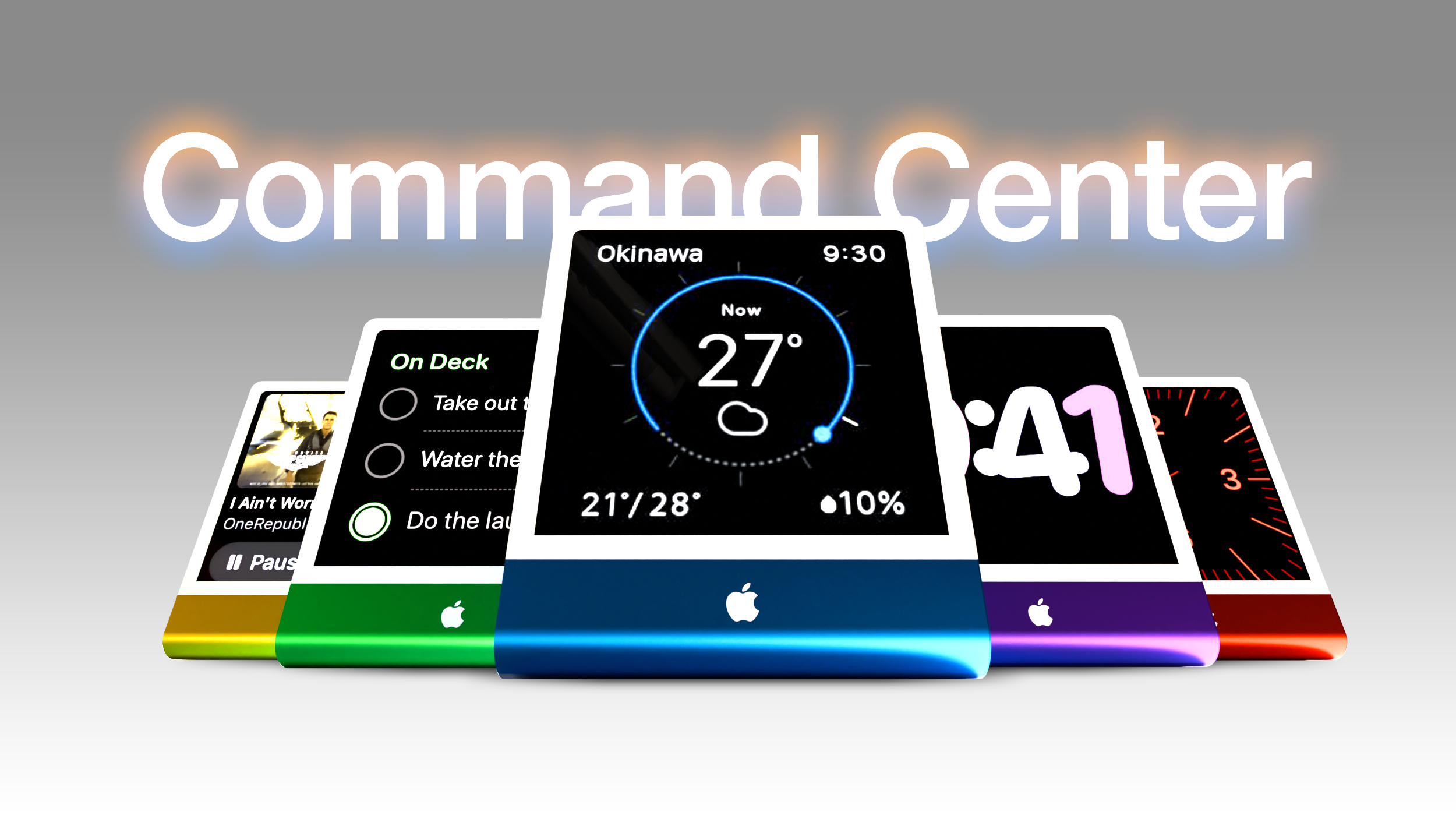
Unlike handheld mobile devices, the home hub contains no internal battery. Instead, it is designed for continuous stationary operation powered via an attached USB-C power connection. Apple envisions consumers installing multiple units across different rooms in a residence, creating an interconnected mesh of command centers.
Under the hood, the device is powered by Apple’s A18 processor or an even more advanced variant. To properly execute local on-device Apple Intelligence models, the system is backed by a minimum of 8GB of unified memory.
 macOS & Apple IT Support
IFixit Teardown Highlights Variable Aperture, Vapor Chamber Cooling, and New Repairability Challenges in iPhone 18 Pro
In-depth device teardowns offer an unfiltered window into the intricate engineering hidden...
 macOS & Apple IT Support
Apple Leaks Reveal New Hardware Pipeline as $250 Million Siri AI Settlement Portal Opens
The ecosystem surrounding Apple moves at a relentless pace, with hardware leaks,...
 macOS & Apple IT Support
Verizon to Charge $10 Monthly for Apple’s iOS 27 iPhone Handoff Feature as Carrier Support Expands
Verizon has officially confirmed its pricing structure for Apple’s newly introduced iPhone...






