
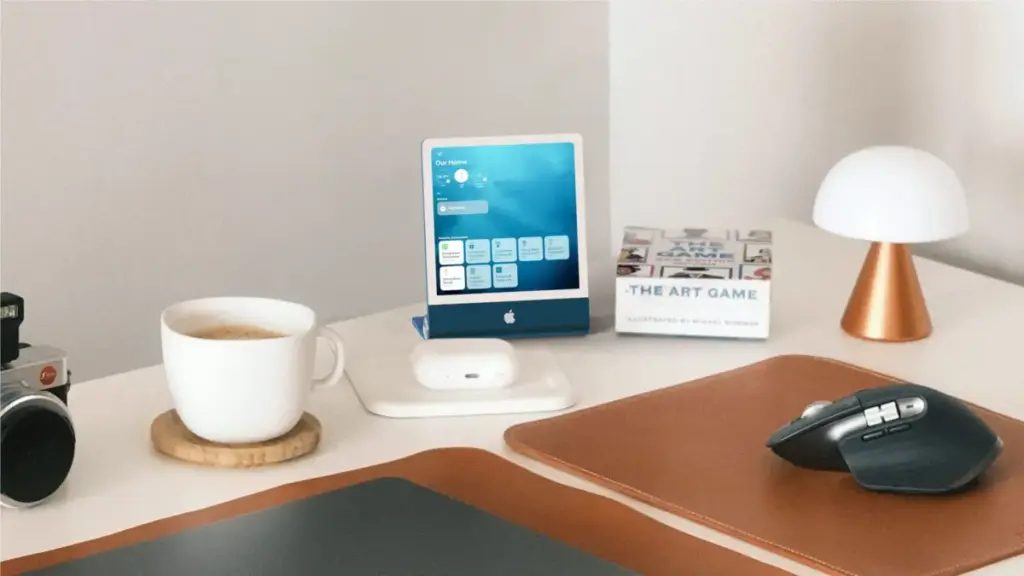
Apple is readying a major expansion of its smart home strategy centered around an all-new dedicated home hub device. Designed to serve as a centralized household command center, the incoming accessory will combine Apple Intelligence, direct HomeKit controls, media streaming, video calling, and dynamic household information management into a single compact desktop or wall-mounted display.
The launch represents one of Apple’s most significant smart home hardware moves since the introduction of the original HomePod. By pairing upgraded processing hardware with a tailored operating system, the technology giant aims to deliver a unified, voice- and touch-driven centerpiece for modern home automation.
Design and Hardware Architecture
Apple’s new home hub features a display-focused aesthetic that heavily borrows from existing hardware designs across the company’s lineup. The primary unit revolves around a square six-inch display encircled by quarter-inch black bezels. In terms of overall physical dimensions, the unit resembles two iPhones placed side by side, maintaining a thin profile comparable to a modern smartphone.
Apple has developed two distinct structural form factors to accommodate different placement scenarios throughout the home:
- Tabletop Variant: Designed for countertops, nightstands, and desks, this model pairs the six-inch display with a hemispherical speaker base reminiscent of the classic iMac G4. The screen attaches to the dome base via a polished metal arm, allowing users to tilt the display forward or backward for optimal viewing angles. The base houses speaker hole perforations for audio output and includes a high-friction rubber bottom to ensure stability on flat surfaces. Leaked details also point to prototypes featuring a robotic swiveling mechanism capable of automatically adjusting the screen’s orientation toward active users.
- Wall-Mounted Variant: Built to mount flush against walls, this configuration relies on a thin square base containing the necessary speaker and microphone arrays. Prototypes suggest Apple has engineered a MagSafe-style magnetic snap-to-wall mechanism, allowing users to dock or unmount units easily.
Both models feature a front-facing 1080p camera designed for FaceTime video calls, identity verification, and ambient household monitoring. To ensure reliable camera performance during low-light conditions or at night, Apple has incorporated a Mac-style ambient edge light around the perimeter of the screen to illuminate approaching users.
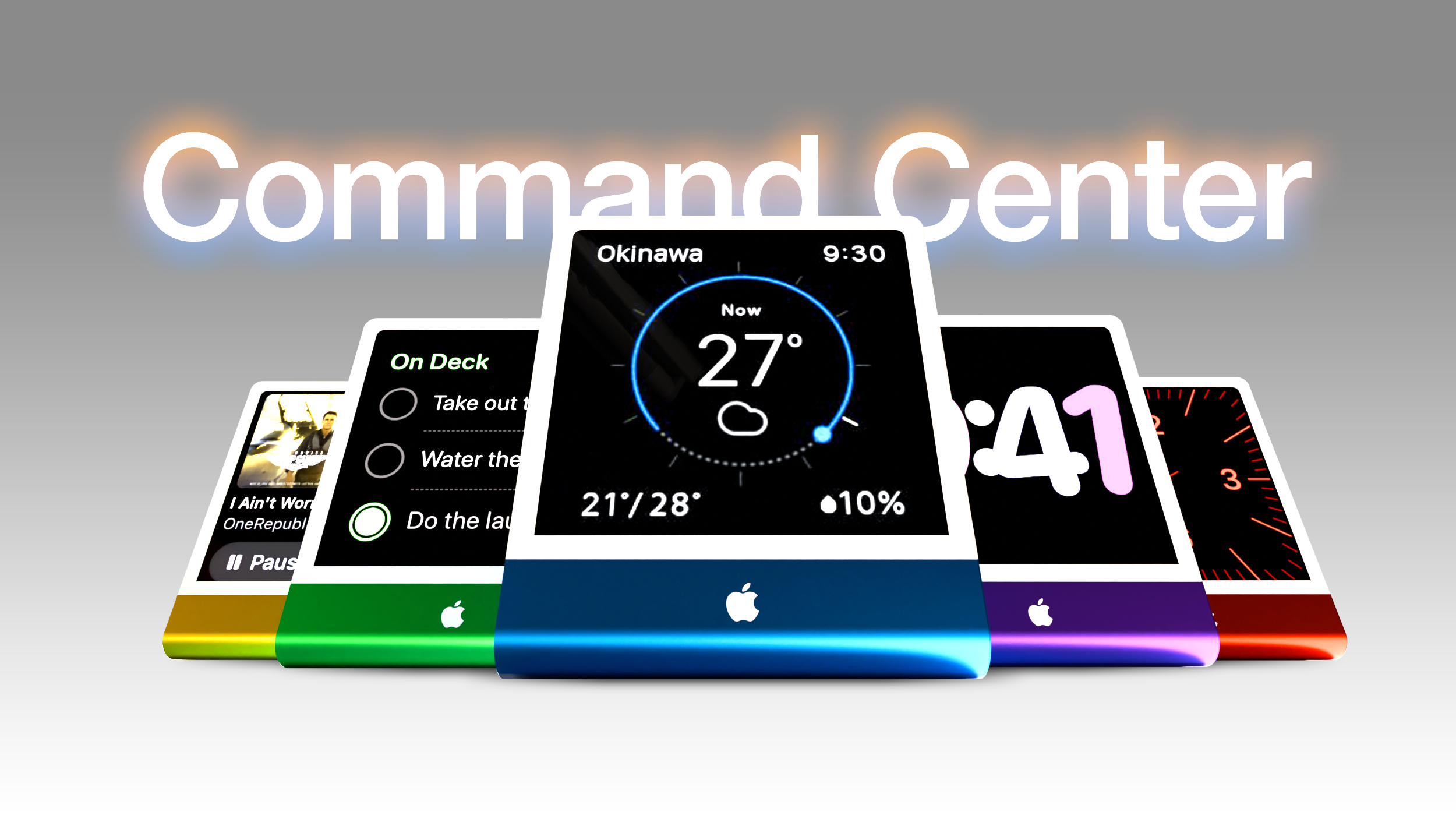
Unlike handheld mobile devices, the home hub contains no internal battery. Instead, it is designed for continuous stationary operation powered via an attached USB-C power connection. Apple envisions consumers installing multiple units across different rooms in a residence, creating an interconnected mesh of command centers.
Under the hood, the device is powered by Apple’s A18 processor or an even more advanced variant. To properly execute local on-device Apple Intelligence models, the system is backed by a minimum of 8GB of unified memory.
Contextual Sensing and Multi-User Recognition
A central element of the home hub’s feature set is its situational awareness. Equipped with advanced proximity and ambient sensors, the device dynamically alters its user interface based on a person’s distance from the display.
When no one is in immediate proximity, the screen maintains a low-friction ambient state, displaying passive information such as the current room temperature, a clock, or a photo slideshow. As a user approaches the device, the display automatically transitions to an active control panel, exposing interactive elements such as smart thermostat controls, lighting scenes, or detailed schedule overviews.
Identity recognition plays an equally vital role in how the hub operates:

- Facial and Voice Identification: Using the front-facing 1080p camera alongside voice recognition algorithms similar to those found in the HomePod, the hub identifies specific members of a household. Upon recognizing a user, the device automatically loads that individual’s personalized profile, interface layout, and private data.
- Proximity Automation and Gesture Control: The sensor array supports room-occupancy detection to trigger HomeKit automations, such as illuminating lights when someone enters a space. Beyond physical touch input, the camera system is designed to recognize hand gestures, enabling touchless controls from across a room.
- Security and Privacy: While the camera system provides identity tracking, it operates with lower fidelity than hardware-bound Face ID to balance power and thermal demands, using voice recognition as a secondary verification layer. Users can establish secondary authentication prompts via an paired iPhone for high-security actions. For guests, a dedicated visitor mode hides personal calendars, messages, and private media.
Operating System and Software Interface
Internally referred to during development under the codename "Charismatic," the software powering the accessory is expected to launch publicly as homeOS. International trademark filings in jurisdictions including Liechtenstein, the United States, Argentina, and Peru confirm Apple’s moves to secure the homeOS branding.
The operating system fuses core elements from tvOS, watchOS, and iOS, delivering a lightweight, widget-centric experience optimized for quick interactions and voice control. Initial setup is handled seamlessly by pairing the display with an iPhone.
Rather than featuring a standalone App Store at launch, homeOS comes preloaded with a curated suite of core Apple applications. The user interface draws heavy inspiration from the iPhone’s StandBy mode and watchOS:
- Idle Displays and Watch Faces: When idle, the hub functions as an ambient smart clock or digital frame, utilizing a customizable Face Gallery and photo collection views.
- Home Screen and App Layout: The home screen features Apple Watch-style circular app icons. When opened, applications utilize an iPad-inspired two-panel layout tailored for display clarity at a distance. Users can customize icon arrangements via standard tap-and-hold gestures.
- Widget Gallery and Smart Stacks: Users can select and arrange widgets via an integrated Widget Gallery that imports widget choices from an adjacent iPhone. To protect user privacy, personal widget content linked from an iPhone is only rendered on the display when the primary account holder is physically detected in the home. System widgets can also rotate dynamically throughout the day using Smart Stack logic.
- Siri AI Integration: The interface heavily integrates the visual aesthetics of the redesigned Siri AI platform, incorporating darker visual elements and fluid lighting effects. Siri acts as the primary navigational input for managing home automations, querying personal data, and initiating media playback.
Apps, Intercom, and Media Features
Despite the absence of a dedicated third-party App Store, the device includes preinstalled system applications tailored for common home utility tasks. These include FaceTime, Home, Calendar, Weather, Photos, Notes, Reminders, Music, Podcasts, Clock, and News.
The hub integrates fully into the Apple Home platform, allowing users to trigger complex HomeKit scenes alongside connected accessories. Video playback is supported directly on the device, allowing users to watch media or follow step-by-step cooking tutorials in the kitchen.
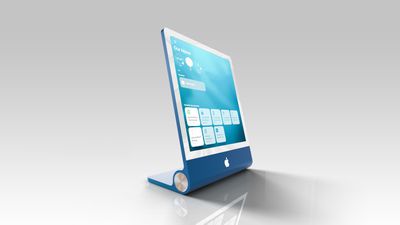
Audio performance is supported by the built-in speaker array housed in the base. The device functions as a native AirPlay receiver, allowing users to stream music and podcasts directly from iOS, iPadOS, or macOS devices. When multiple units are placed throughout a residence, they can operate as a high-definition room-to-room internal intercom system, enabling broadcast voice messaging across the household.
Strategic Context and Market Landscape
The introduction of the home hub coincides with a broader push by Apple to revitalize its smart home ecosystem, which has faced stiff competition from Amazon’s Echo Show devices and Google’s Nest Hub ecosystem. Recent developments from third-party manufacturers, such as Anker’s MindBase local AI hub, underscore an industry-wide shift toward localized intelligence and matter-compatible smart home ecosystems.
To support the launch of its new home hardware, Apple is expanding its surrounding ecosystem:
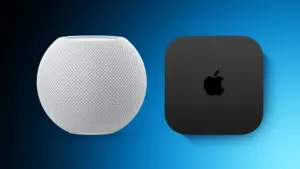
- Companion Hardware: Apple is preparing hardware refreshes for both the Apple TV 4K and HomePod mini. While retaining their existing physical designs, both devices will incorporate faster silicon to provide local processing support for Siri AI features. Additionally, Apple is developing an indoor smart home camera scheduled for a potential 2027 release, prioritizing local encryption and user privacy to compete against market alternatives from Nest and Ring.
- Retail Integration: Apple retail stores are reorganizing floor layouts to accommodate the incoming home products. Physical retail locations are updating their perimeter "Avenues"—the wall spaces traditionally reserved for accessories like AirPods and HomePods—to create dedicated interactive display zones for the smart home line.
- Pricing and Positioning: Indications suggest the smart home hub will carry a retail price point around $350. While this positions the device at a higher price than standard entry-level smart displays from competitors, Apple is betting that premium materials, tight hardware-software integration, local AI privacy guarantees, and deep ecosystem synergy will justify the premium pricing.
Launch Window
After experiencing internal development shifts while Apple finalized its next-generation Siri AI capabilities, the home hub is scheduled to debut alongside the updated Apple TV 4K and HomePod mini.
With software code in recent OS builds revealing deep integration for ambient sensing, face-based profile switching, and shared widget gallery components, Apple’s dedicated home display represents a major effort to establish a permanent, intelligent presence in the center of the modern smart home.
 macOS & Apple IT Support
Apple Unveils New Smart Home Portfolio as iPhone Duo Pre-Orders Slip into 2027 Ahead of October Media Event
Apple’s busy autumn product schedule reached a fever pitch this week as...
 macOS & Apple IT Support
Apple Retail Outlets to Offer Custom Boot-Screen Personalization for iPhone Duo Launch in the United States
Apple is preparing a unique, tailored experience for customers purchasing the new...
 macOS & Apple IT Support
Apple TV and HomePod Mini Face Extended Shipping Delays as Code Leaks and Software Betas Signal Incoming 2026 Models
Customers looking to purchase an Apple TV or a HomePod mini through...






