
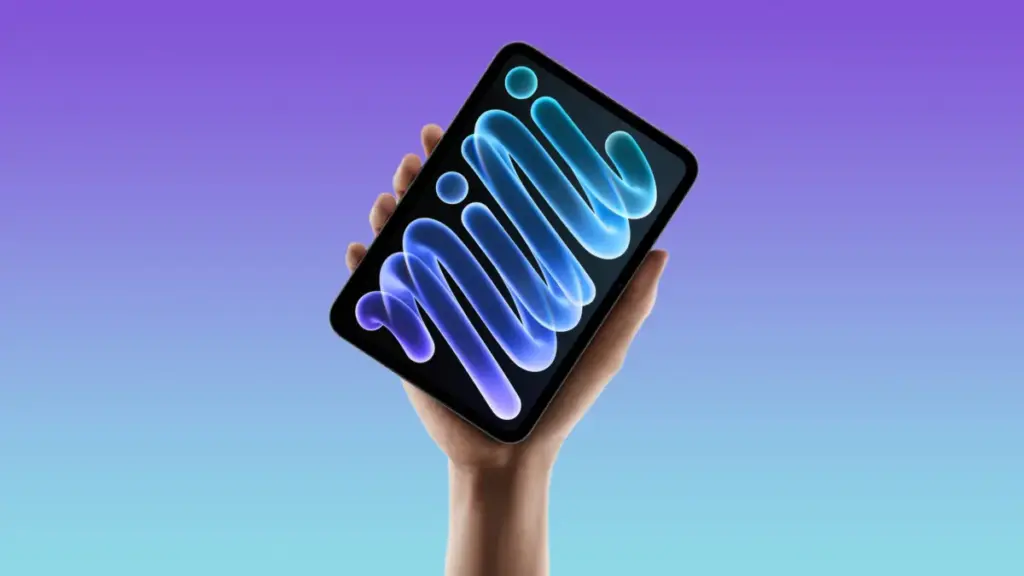
Apple has officially unveiled its long-awaited new iPad mini, featuring a landmark transition to an OLED display panel along with a host of hardware upgrades. However, the introduction of OLED technology to Apple’s smallest tablet has been accompanied by a detail that sparked immediate conversation among tech enthusiasts and prospective buyers: despite the shift away from liquid crystal display technology, the new iPad mini does not support Apple’s high-refresh-rate ProMotion feature. As a result, the device’s display remains capped at a standard 60Hz refresh rate, rather than offering the fluid 120Hz capabilities found on Apple’s high-end tablet offerings.
The absence of ProMotion has drawn significant scrutiny, as many users anticipated that a major redesign incorporating OLED technology would also bring variable refresh rates to the compact tablet family. In Apple’s broader display lineup, ProMotion technology allows a screen to dynamically scale its refresh rate based on the specific content being viewed on screen. This dynamic adjustment allows the panel to drop down as low as 10Hz when viewing static content to preserve battery power, or ramp up to a maximum of 120Hz to deliver exceptionally fluid animations, seamless user interface scrolling, and near-instantaneous stylus tracking when using an Apple Pencil. For now, however, Apple has chosen to keep ProMotion exclusivity tied strictly to the iPad Pro within its tablet portfolio, maintaining a distinct feature division between its standard consumer devices and its top-tier professional line.
Addressing the community’s reaction and clarifying the company’s design decisions, Apple’s vice president of hardware design, David Pakula, provided detailed insight into the tablet’s display architecture during a recent interview with YouTuber and podcaster Christopher Lawley. In the discussion, Pakula argued that evaluating a screen based solely on its raw refresh rate number overlooks critical performance factors, emphasizing that the new OLED display fundamentally transforms the visual experience of the iPad mini regardless of its 60Hz ceiling.
Pakula emphasized that the visual quality and smoothness of a display are shaped by multiple interacting hardware characteristics rather than a single metric. In particular, he highlighted the intrinsic hardware advantages that organic light-emitting diode technology holds over traditional liquid crystal display panels, specifically pointing to the dramatic acceleration in pixel response time.
"Display experience is about more than just a single spec," Pakula explained during the interview. "One of the things that’s really cool about OLED is it actually has this really fast pixel response time. So it’s like more than an order of magnitude faster than the pixel response time for an LCD display. And what that does is it makes everything really smooth. Motion blur is significantly reduced compared to LCD. When you pair that with the other things that I mentioned, the contrast, the brightness, and the color, this is just a killer display."
Pakula’s explanation touches on a fundamental distinction in display engineering between pixel response time and panel refresh rate. While refresh rate refers to how many complete frames a display can draw per second—measured in Hertz—pixel response time measures the speed at which individual pixels can transition from one color or state to another. On traditional LCD panels, the physical movement of liquid crystals can create a subtle lag during color state transitions, which often manifests as visible ghosting or motion blur when objects move quickly across the screen.
Because OLED pixels emit their own light directly and can change state almost instantaneously, their response times are drastically faster—often operating in fractions of a millisecond. According to Pakula, this sub-millisecond response speed dramatically reduces motion blur during fast scrolling and media playback, providing a level of visual clarity and perceived smoothness that bridges much of the visual gap typically associated with lower refresh rates on older LCD hardware.
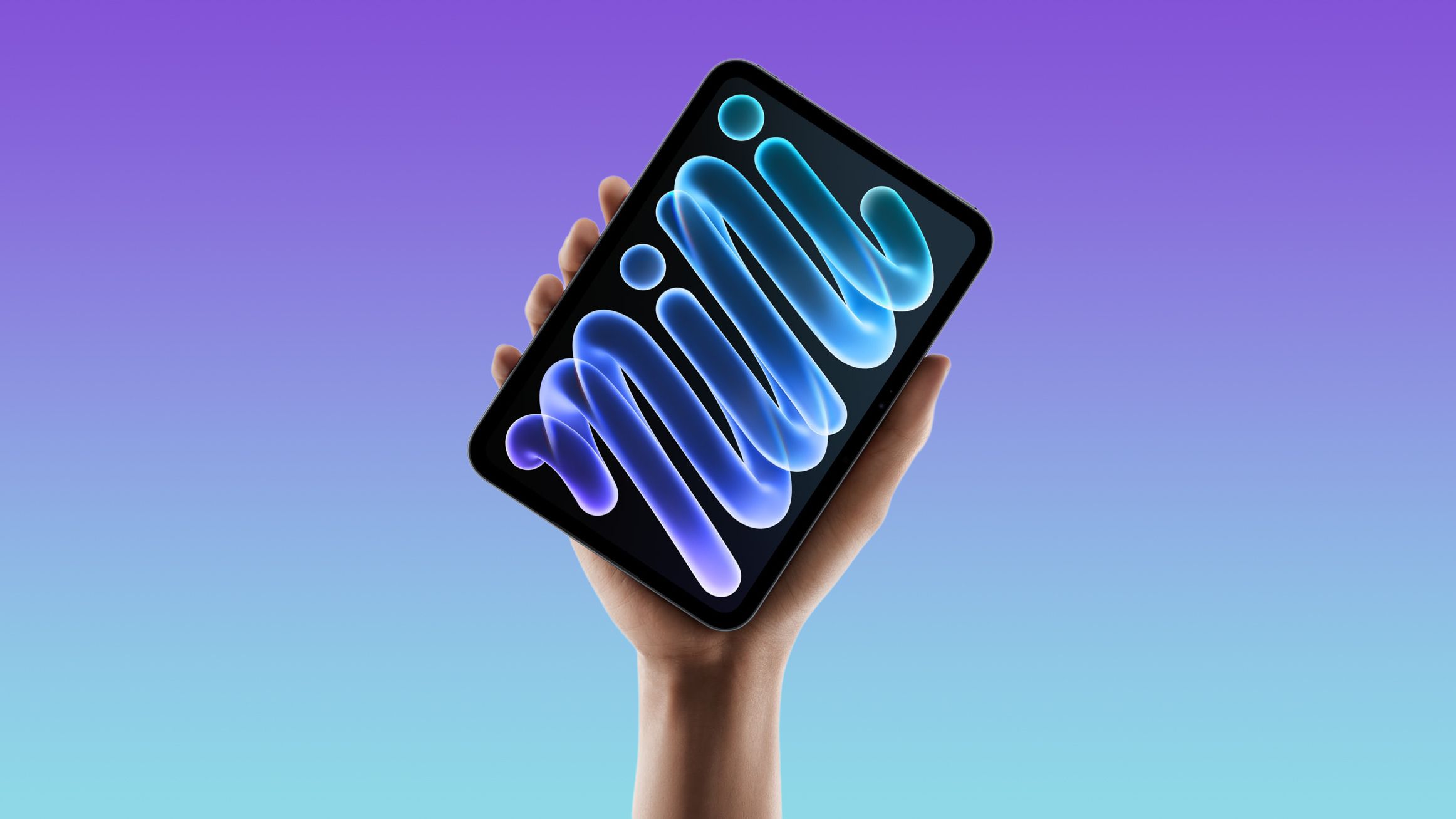
Beyond response times, Apple’s technical specifications reveal a substantial overall improvement in the performance parameters of the new iPad mini’s screen. The standard dynamic range maximum brightness has been upgraded to 600 nits, representing a noticeable step up from the 500 nits maximum output supported by the LCD panel on the previous-generation model. Furthermore, when displaying high dynamic range content, the new OLED panel is capable of reaching peak brightness levels of up to 1,200 nits, offering a far more impactful viewing experience for HDR video playback and photo editing.
The adoption of self-emissive OLED technology also brings structural changes to image quality that LCD panels cannot natively achieve. Because OLED panels eliminate the requirement for a traditional backlight, each individual pixel can be controlled independently or turned off completely. This capability allows the display to render absolute, true blacks alongside brightly illuminated highlights, generating an extraordinarily deep contrast profile. Apple’s official technical specifications list the new iPad mini as achieving a contrast ratio of 2,000,000:1. The panel maintains a sharp pixel density of 326 pixels per inch, matching the crisp resolution standards of previous models, while continuing to provide full coverage for the P3 wide color gamut to ensure accurate, vibrant color reproduction.
The display discussion comes amidst a massive generation-over-generation overhaul for Apple’s smallest tablet. Formally announced on Monday, October 26, 2026, the updated iPad mini features a slightly expanded 8.5-inch OLED display housed within a redesigned chassis that is both thinner and lighter than its predecessor. For users who frequently work in challenging lighting environments or outdoor settings, Apple is also offering a nano-texture display glass option for the first time on the iPad mini, utilizing etched glass to scatter ambient light and dramatically cut down on unwanted reflections and glare.
Under the hood, the new iPad mini is driven by Apple’s high-performance A20 Pro chip, providing a major bump in computational and graphics performance to support demanding applications and advanced on-device processing. The hardware redesign also introduces an innovative "Acoustic Display" audio setup. This technology operates by emitting sound directly through structural elements of the display frame itself, effectively eliminating the need for traditional external speaker grilles and holes cut into the aluminum enclosure.
Taking advantage of this host-chassis redesign, Apple has engineered the device to achieve an IP67 rating for water and dust resistance, granting the tablet robust protection against accidental liquid exposure and environmental debris. In terms of user interface and video calling ergonomics, the device now incorporates a landscape-oriented front-facing camera, aligning the front imaging hardware with the primary horizontal orientation used during video calls and docked tablet workflows.
On the wireless communication front, the tablet is powered by Apple’s custom-designed N1 chip. This proprietary silicon brings support for next-generation connectivity standards, including Wi-Fi 7 and Bluetooth 6, ensuring faster data transfer speeds, reduced latency, and improved energy efficiency across wireless networks and peripheral connections.
The introduction of the OLED iPad mini arrives during a busy fall launch cycle for Apple, which has seen an array of hardware announcements across multiple product categories. Alongside the new tablet, Apple’s recent product wave has included new touchscreen OLED MacBook Pro models powered by M6-generation processors, an updated M6 iMac, a dedicated smart home hub, a refreshed Apple TV 4K, and an updated HomePod mini. Media members have been invited to attend an all-day product launch experience in Los Angeles to hands-on test the latest ecosystem additions.
Customer availability for the upgraded tablet is already underway. Pre-orders for the new OLED iPad mini opened immediately following its unveiling, with baseline pricing in the United States set at $699. Official retail availability and the commencement of customer deliveries are scheduled to begin on Friday, November 6.
 macOS & Apple IT Support
Anthropic Updates Usage Policy to Ban Cruel and Abusive Treatment of Claude AI Models
Artificial intelligence safety startup Anthropic has officially updated its Acceptable Use Policy,...
 macOS & Apple IT Support
Apple Updates Free Invites App for iPhone With Full-Resolution Shared Albums, Photorealistic AI Backgrounds, and Simplified Email Verification
CUPERTINO, Calif. — Apple on Wednesday released a substantial software update for...
 macOS & Apple IT Support
Apple Preparing Major Smart Home Push With New AI-Powered Display Hub and homeOS Platform
Apple is readying a major expansion of its smart home strategy centered...







