
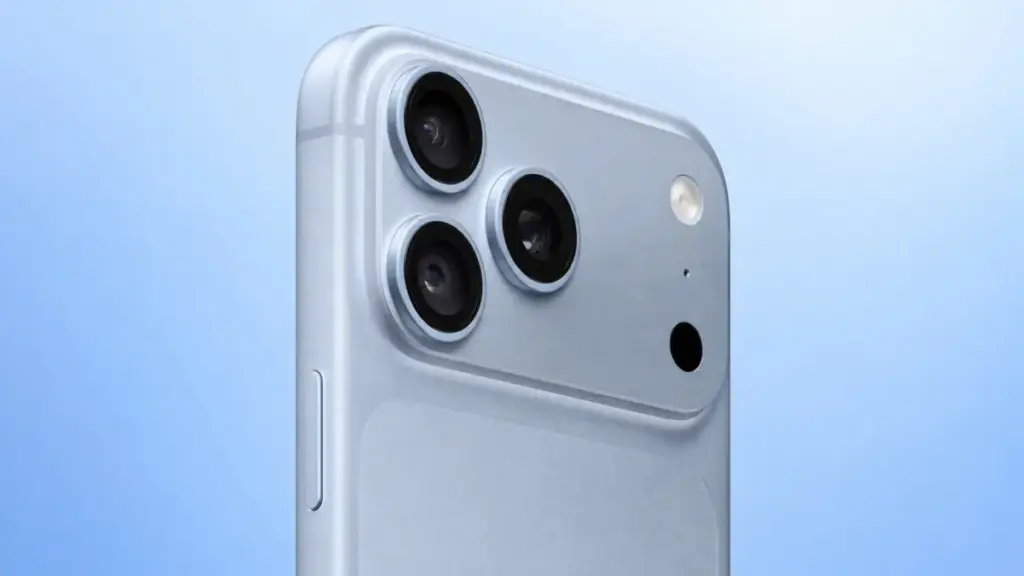
Apple has officially acknowledged a persistent technical issue impacting its latest flagship smartphone, confirming that a portion of iPhone 18 Pro Max users on the AT&T network are experiencing severe cellular service disruptions that completely disconnect their devices from mobile networks. According to official statements from the technology company, the issue manifests as a sudden and total loss of cellular connectivity, leaving impacted smartphones unable to place or receive telephone calls, transmit text messages, or connect to cellular internet data services. While Apple’s official characterization describes the outage as impacting a "small number" of subscribers, the scale of public response across online discussion channels highlights widespread concern, with thousands of affected owners reporting identical dead signal conditions on the Apple Support Community and various other online platforms following the recent release of the flagship hardware.
In a direct effort to contain the spread of the outage and protect unimpacted handsets from succumbing to the defect, Apple and AT&T have coordinated a multi-layered software release strategy. Earlier this week, Apple rolled out iOS 27.0.1, an early system update aimed at addressing general post-launch stability across its mobile operating system. Building upon that software patch, Apple and AT&T today officially released a dedicated carrier settings update specifically designed to resolve underlying network communication protocols on affected hardware. In a statement shared directly with MacRumors, Apple strongly urged all iPhone 18 Pro Max owners on AT&T to update their devices to iOS 27.0.1 immediately, emphasizing that the combination of the new operating system update and today’s carrier settings patch is designed to prevent unimpacted handsets from experiencing cellular signal drops going forward.
To apply the preventive system software update, Apple advises iPhone 18 Pro Max owners to open the Settings application on their handset, navigate to the General section, and select Software Update to download and install iOS 27.0.1 over a Wi-Fi connection. Simultaneously, the newly issued AT&T carrier settings update is scheduled to automatically download and install for subscribers over the air over the course of the next 14 days. However, users who prefer not to wait for the automatic two-week distribution rollout can manually force their device to query network servers for the patch immediately. Apple explained that subscribers can manually trigger the carrier update by opening the Settings application, tapping into General, and selecting the About submenu, which prompts the device to check for and apply any pending carrier configuration updates from AT&T.
Despite the release of these software protections, Apple disclosed a far more serious operational reality for hardware that has already been struck by the cellular bug. Crucially, the company revealed that once an iPhone 18 Pro Max operating on the AT&T network succumbs to the issue and completely loses cellular service, software updates are entirely incapable of rectifying the failure. Neither updating the operating system to iOS 27.0.1 nor applying the newly issued AT&T carrier settings profile will restore lost network connectivity or reactivate cellular capabilities on an affected phone. Consequently, Apple confirmed that any device that has actively suffered this cellular breakdown cannot be restored through software means and must instead be entirely replaced with new physical hardware.
 macOS & Apple IT Support
Apple Shell Company Filings Point to ‘HomeView’ and ‘homeOS’ Ahead of October ‘Welcome Home’ Launch
As Apple prepares for an upcoming hardware launch event, recent trademark discoveries...
 macOS & Apple IT Support
Apple Releases watchOS 27: A Comprehensive Look at New AI Features, Interface Changes, and Health Updates Across Apple Watch Generations
Apple officially launched watchOS 27 on September 14, introducing a sweeping array...
 macOS & Apple IT Support
Apple TV and HomePod Mini Face Extended Shipping Delays as Code Leaks and Software Betas Signal Incoming 2026 Models
Customers looking to purchase an Apple TV or a HomePod mini through...







