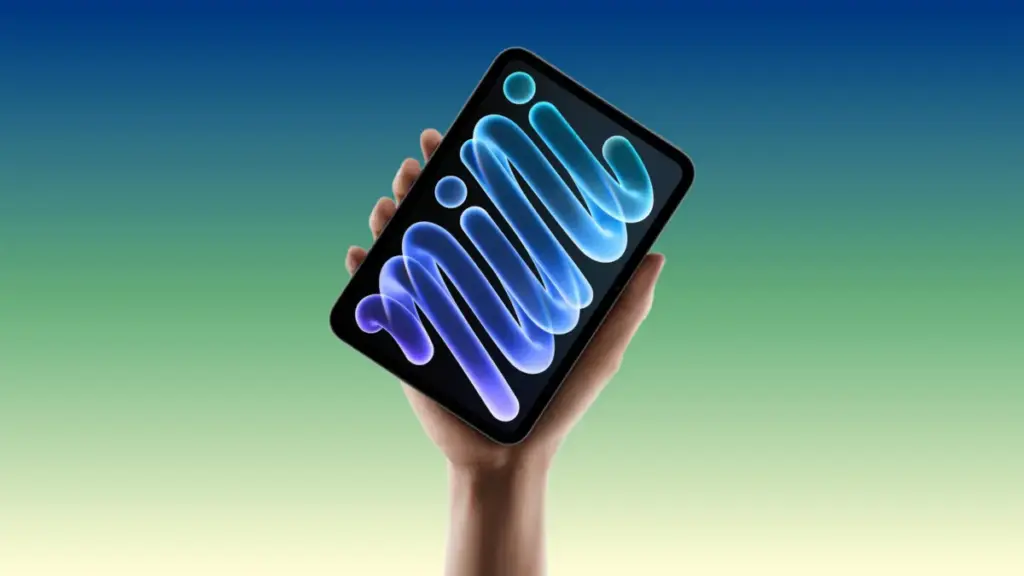
An official regulatory filing published in Europe has revealed precise hardware specifications for Apple’s eighth-generation iPad mini, offering a detailed look at the internal power system driving the new compact tablet. According to an official European Union energy label published by Apple, the newly announced iPad mini 8 is equipped with a 4,900 mAh battery cell. This figure represents a slight reduction in overall battery capacity when compared directly to the previous-generation iPad mini 7, which was built with a larger 5,034 mAh internal battery.
The regulatory documentation, made accessible through official EU energy label channels, provides clear transparency regarding hardware specifications that Apple typically omits from its standard consumer marketing materials and retail product pages. While Apple’s public product announcements routinely focus on qualitative user experience metrics and generalized battery life figures, formal documentation submitted to international regulatory bodies requires explicit mathematical declarations of energy storage capacity and overall performance parameters.
For technical metrics that measure battery volume in terms of total energy output over time, Apple’s official technical specification listings confirm the findings detailed in the European regulatory database. The tech specs show that the iPad mini 8 houses an 18.9 watt-hour (Wh) rechargeable battery cell. By comparison, the seventh-generation iPad mini featured a 19.3 watt-hour battery, confirming a minor physical decrease across both milliamperage and watt-hour ratings for the new hardware iteration.
Despite the reduced physical capacity of the internal battery, Apple’s official technical documentation indicates that the iPad mini 8 achieves battery life estimates identical to those of its predecessor. The company advertises equivalent operational duration for common tasks such as continuous web browsing and video playback. This parity indicates that significant architectural efficiency improvements introduced elsewhere in the hardware stack have successfully compensated for the smaller energy reservoir.
A principal driver of this power balance is the integration of Apple’s latest silicon architecture, the A20 Pro processor. Serving as the primary central processing unit and graphics engine for the eighth-generation tablet, the A20 Pro chip is designed to deliver higher computational throughput while operating at greater overall power efficiency. Through architectural refinements in its logic design and dynamic power-state management, the A20 Pro processor executes demanding application workloads and system processes while drawing less energy per cycle than earlier chip designs.
The power optimizations supplied by the A20 Pro silicon are fundamental in mitigating the impact of the reduced physical battery cell. By managing core voltage requirements more conservatively and routing lighter computational tasks to high-efficiency processing cores, the system minimizes unnecessary electrical power draw. This intelligent power distribution allows the iPad mini 8 to sustain traditional battery endurance benchmarks while operating with a smaller 4,900 mAh cell.
 macOS & Apple IT Support
Apple Signals Major Smart Home Push With October 13 Announcement Featuring New Smart Display, Apple TV 4K, and HomePod mini
Apple is preparing to kick off a multi-stage autumn hardware rollout, starting...
 macOS & Apple IT Support
An Era Ends Silence: Apple Abruptly Sunsets Its Global Support Community After Nearly Three Decades
For nearly thirty years, the official online message boards maintained by Apple...
 macOS & Apple IT Support
Apple Temporarily Slashes Beats 360 Cushion Kits to $10 in One-Day Halloween Sale
Apple has unexpectedly slashed the price of official replacement cushion kits for...