
An official regulatory filing published in Europe has revealed precise hardware specifications for Apple’s eighth-generation iPad mini, offering a detailed look at the internal power system driving the new compact tablet. According to an official European Union energy label published by Apple, the newly announced iPad mini 8 is equipped with a 4,900 mAh battery cell. This figure represents a slight reduction in overall battery capacity when compared directly to the previous-generation iPad mini 7, which was built with a larger 5,034 mAh internal battery.
The regulatory documentation, made accessible through official EU energy label channels, provides clear transparency regarding hardware specifications that Apple typically omits from its standard consumer marketing materials and retail product pages. While Apple’s public product announcements routinely focus on qualitative user experience metrics and generalized battery life figures, formal documentation submitted to international regulatory bodies requires explicit mathematical declarations of energy storage capacity and overall performance parameters.
For technical metrics that measure battery volume in terms of total energy output over time, Apple’s official technical specification listings confirm the findings detailed in the European regulatory database. The tech specs show that the iPad mini 8 houses an 18.9 watt-hour (Wh) rechargeable battery cell. By comparison, the seventh-generation iPad mini featured a 19.3 watt-hour battery, confirming a minor physical decrease across both milliamperage and watt-hour ratings for the new hardware iteration.
Despite the reduced physical capacity of the internal battery, Apple’s official technical documentation indicates that the iPad mini 8 achieves battery life estimates identical to those of its predecessor. The company advertises equivalent operational duration for common tasks such as continuous web browsing and video playback. This parity indicates that significant architectural efficiency improvements introduced elsewhere in the hardware stack have successfully compensated for the smaller energy reservoir.
A principal driver of this power balance is the integration of Apple’s latest silicon architecture, the A20 Pro processor. Serving as the primary central processing unit and graphics engine for the eighth-generation tablet, the A20 Pro chip is designed to deliver higher computational throughput while operating at greater overall power efficiency. Through architectural refinements in its logic design and dynamic power-state management, the A20 Pro processor executes demanding application workloads and system processes while drawing less energy per cycle than earlier chip designs.
The power optimizations supplied by the A20 Pro silicon are fundamental in mitigating the impact of the reduced physical battery cell. By managing core voltage requirements more conservatively and routing lighter computational tasks to high-efficiency processing cores, the system minimizes unnecessary electrical power draw. This intelligent power distribution allows the iPad mini 8 to sustain traditional battery endurance benchmarks while operating with a smaller 4,900 mAh cell.
Working alongside the upgraded system processor is a major evolution in screen technology. The eighth-generation iPad mini features an 8.5-inch OLED display panel, marking a substantial departure from the liquid crystal display (LCD) technology used in previous compact tablet generations. The shift to organic light-emitting diode technology provides distinct electrical power advantages, particularly when displaying dark user interface elements, dark-themed applications, or high-contrast visual media.
Unlike traditional LCD panels that require a dedicated backlighting layer behind the entire screen assembly, OLED display panels utilize self-emissive pixels that produce their own individual light output. When displaying true black content, individual subpixels on an OLED panel turn off entirely rather than remaining lit behind an optical filter. This operational characteristic reduces power consumption during dark mode navigation, video watching featuring letterboxing, and dark document reading, producing meaningful energy savings during typical usage scenarios.
The structural reduction in battery capacity corresponds directly with an extensive physical redesign of the tablet’s exterior enclosure. The iPad mini 8 features a redesigned body that is 15 percent thinner and lighter than the outgoing model. Reducing the physical volume and weight profile of an ultra-portable device inherently places tight constraints on internal space, making a modestly downsized battery cell a necessary architectural concession to achieve the thinner chassis dimensions.

To maximize the available interior layout within the slimmer aluminum housing, Apple engineers implemented several component alterations. Notably, the new model removes traditional exterior speaker holes in favor of an Acoustic Display audio system. By projecting sound directly through the front display assembly rather than channeling audio through dedicated internal chambers and exterior grilles, the tablet reclaims valuable internal space while providing system audio output.
The redesigned structural enclosure also enables improved environmental ingress protection, with the iPad mini 8 achieving an official IP67 rating for water and dust resistance. This structural sealing guards the internal electrical components, including the 18.9 watt-hour battery assembly and main logic board, against dust particles and liquid contact under standardized testing conditions, representing a notable durability upgrade for the compact tablet lineup.
Beyond structural enclosure modifications and screen panel improvements, the iPad mini 8 introduces several hardware enhancements designed for modern workflows. The 8.5-inch OLED screen is available with an optional nano-texture display finish, engineered to minimize surface glare and light reflections in bright indoor or outdoor settings. In addition, the front-facing camera system has been relocated to a landscape orientation along the longer bezel edge, providing a natural camera angle during video conference calls when the device is used in horizontal positions.
Wireless hardware capabilities have also been modernized through the inclusion of Apple’s proprietary N1 chip. This custom wireless module introduces support for Wi-Fi 7 networking standards alongside Bluetooth 6 connectivity. The upgraded wireless architecture offers faster theoretical data transfer speeds, reduced signal latency, and improved power efficiency during active network connections, reinforcing the tablet’s overall battery preservation strategy during wireless data transfers.
The disclosure of the iPad mini 8’s exact battery specifications via European regulatory filings follows Apple’s official product announcement on October 26, 2026. The debut followed weeks of industry reporting regarding Apple’s late-autumn hardware release timeline. Prior to the official unveil, news reports from outlets including Bloomberg outlined Apple’s plans to refresh its compact tablet family alongside new Mac personal computers and updated portable displays.
Those expectations were reinforced when Apple sent invitations to selected press representatives for a launch experience on Wednesday, October 28 in Los Angeles. Industry reports from Bloomberg’s Mark Gurman described the event as an all-day hands-on experience covering a broad range of newly introduced products, including touchscreen OLED MacBook Pro models, an M6 14-inch MacBook Pro, an M6 iMac, and the overhauled 8.5-inch OLED iPad mini.
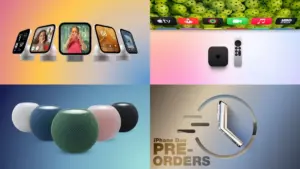
The late-October hardware unveilings followed an earlier sequence of product introductions announced by Apple on October 13, 2026. During that earlier release window, the company updated its home media and smart device ecosystem by introducing a revamped Apple TV 4K, an updated HomePod mini, and a dedicated smart home hub. The subsequent release of the iPad mini 8 completed Apple’s autumnal hardware update strategy across its portable, desktop, and smart home product lines.
With official technical specifications and regulatory entries now established, the commercial release of the eighth-generation iPad mini is proceeding according to schedule. Apple initiated customer pre-orders for the tablet immediately following its October 26 product announcement, providing options across multiple storage tiers and wireless configurations, including variants equipped with the specialized nano-texture display option.
Official retail availability and initial customer order deliveries for the new iPad mini are set to begin on Friday, November 6, 2026. In the United States, baseline pricing for the tablet starts at $699, reflecting the device’s structural redesign, A20 Pro processing hardware, custom N1 wireless chip, Acoustic Display audio implementation, and high-efficiency 8.5-inch OLED display panel.
 macOS & Apple IT Support
Apple’s First Touchscreen OLED MacBook Pro, Upgraded OLED iPad Mini, and M6 Macs Arrive as Global Rollout Begins
The next generation of Apple personal computing hardware has officially reached the...
 macOS & Apple IT Support
Apple Support Community Forums to Permanently Close Following 28-Year Legacy of Online Technical Assistance
Apple announced on Tuesday, November 10, 2026, that it will permanently shut...
 macOS & Apple IT Support
Apple Unveils New Smart Home Portfolio as iPhone Duo Pre-Orders Slip into 2027 Ahead of October Media Event
Apple’s busy autumn product schedule reached a fever pitch this week as...