The landscape of business automation is undergoing a significant shift as small teams seek more control over their data and more structure in their daily operations. Leading this movement is the aiFetchly team, which has recently introduced its flagship product: an open-source, local-first desktop AI agent designed specifically for business automation. By focusing on research, document processing, customer communication, and scheduled workflows, aiFetchly aims to bridge the gap between the chaotic manual processes typical of growing startups and the rigid, often expensive enterprise solutions that dominate the market.
For many small organizations, the primary obstacle to growth is not necessarily a lack of market interest or a shortage of incoming leads. Instead, the challenge lies in the absence of a repeatable, scalable routine. In many offices, lead management and inbox maintenance remain fragmented activities. One team member might scan the inbox in the early hours of the morning, while another spends the afternoon manually migrating company details into a spreadsheet. Follow-ups and relationship management often depend entirely on individual memory rather than a standardized system. This lack of cohesion creates a bottleneck that prevents small teams from responding with the speed and accuracy required in a competitive digital economy.
The developers behind aiFetchly argue that the solution to this fragmentation is not just more software, but a fundamental shift in how teams approach their daily tasks. The goal is to transform scattered email and lead-related chores into scheduled workflows that a lean team can execute reliably every single day.
Shifting Focus from the Inbox to the Workflow
At the heart of the aiFetchly philosophy is the idea that professionals should start with a defined workflow rather than reacting to an overflowing inbox. In a traditional setup, the inbox dictates the team’s priorities, leading to a reactive state where employees are constantly "putting out fires" rather than building value. By establishing a useful scheduled workflow, teams can reclaim their schedules.
A robust automated workflow, as envisioned by the aiFetchly team, consists of four distinct stages. It begins with the systematic collection of data from various sources, followed by the sorting and categorization of that information. Once the data is organized, the AI agent moves into the drafting phase, where it prepares responses or updates based on the gathered information. The final and most critical step is the transition of these drafts to a human team member for review.
This "human-in-the-loop" design is a cornerstone of the aiFetchly platform. The developers have intentionally designed the system so that drafts wait for manual approval before being sent to clients or partners. The underlying principle is that automation should be utilized to eliminate the drudgery of copying, pasting, and searching for information, but it should never be used to replace human judgment. By keeping the final decision in the hands of a person, businesses can ensure that their communication remains authentic and that the nuances of a professional relationship are preserved.
 Software Development & Scripting for IT
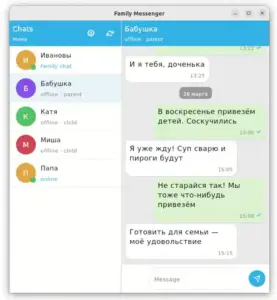
Architecting Complexity: How a Structured Multi-Prompt Strategy Enabled an AI Agent to Build a Multi-Platform Messenger
In the rapidly evolving landscape of artificial intelligence, the narrative has shifted...
 Software Development & Scripting for IT
Troubleshooting the "Silent" Failure: Why Zoho CRM Workflows Stop Triggering and How to Restore Automation Integrity
For many modern enterprises, the CRM is no longer just a digital...
 Software Development & Scripting for IT
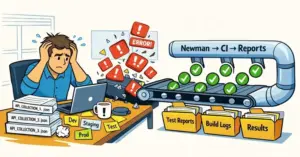
Formalizing API Quality: How Postman Collections are Evolving into Reliable CI-Driven Regression Suites
In the fast-paced landscape of modern software development, the gap between a...