
In the rapidly evolving landscape of artificial intelligence and computational neuroscience, the line between biological architecture and digital execution continues to blur in increasingly unexpected ways. Less than a month ago, the scientific community celebrated a monumental achievement when Google, in collaboration with the FlyWire consortium and researchers at Princeton University, released the first complete mapping of an adult male fruit fly’s brain and central nervous system. This "connectome," a comprehensive wiring diagram of the approximately 139,000 to 166,000 neurons and tens of millions of synapses within the Drosophila melanogaster, was intended to provide neuroscientists with a roadmap for understanding how complex behaviors emerge from biological circuitry. However, in the hands of the global software engineering community and creative enthusiasts, this biological blueprint has quickly become the foundation for a series of bizarre and fascinating digital experiments.
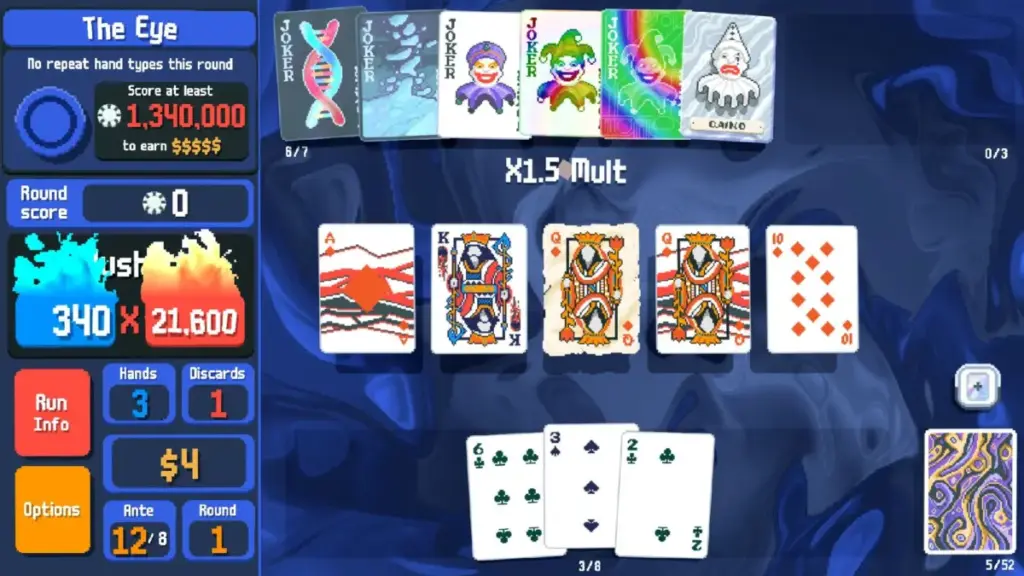
The latest and perhaps most complex of these endeavors involves the critically acclaimed poker-themed roguelike game, Balatro. A dedicated fan of the game recently announced that they had successfully trained a simulation of the fruit fly’s neural structure to play the title, utilizing an algorithm that translates the game’s mechanics into stimuli the virtual brain can process. According to the developer’s report shared on social media, the simulated insect brain is not merely clicking buttons at random; it has achieved a respectable 20 percent win rate. In the context of Balatro—a game notorious for its steep difficulty curve and the requirement for deep strategic planning—a one-in-five success rate for a virtualized insect brain represents a startling intersection of biology and game theory.
This development follows a whirlwind of activity that began almost immediately after the fruit fly’s neural data was made public. Because the data was released in a format that could be interpreted by computational models, software engineers were quick to port the structure into various simulation environments. We have already witnessed the virtual fly brain being tasked with a variety of human-centric challenges. Some engineers took the classic route of testing the model’s versatility by making it run the 1993 classic Doom, while others pushed the boundaries of navigation by teaching the digital fly to parallel park a virtual vehicle. Perhaps most infamously, one engineer transformed the simulated brain into a cryptocurrency day trader, creating a feedback loop where the virtual neurons were fed "dopamine hits" based on the success of candlestick chart readings.
The transition to Balatro, however, marks a significant step up in terms of the cognitive load being simulated. Unlike Doom, which relies on spatial awareness and reaction times, or parallel parking, which is a matter of geometric precision, Balatro requires an understanding of probability, resource management, and long-term synergy. The game tasks players with building a deck of cards and utilizing various "Joker" cards that provide unique multipliers and bonuses. To succeed, a player—or in this case, a simulated brain—must decide which cards to discard, which hands to play, and how to spend limited currency on upgrades that will only pay off several rounds later.
 Hardware Reviews & PC Building
US Video Game Hardware Sales Experience Historic Decline as PlayStation and Xbox Reach Multi-Year Lows
The United States video game industry is currently grappling with a significant...
 Hardware Reviews & PC Building
Privacy Concerns Surface for Meta’s Muse AI as Reports Suggest Unauthorized Access to Personal Messages
The rapid evolution of artificial intelligence has brought with it a wave...
 Hardware Reviews & PC Building
GlobalFoundries to produce silicon interposers for TSMC’s CoWoS in the US — Five-year agreement valued at $2…
The deal establishes a robust, U.S.-based manufacturing source for essential advanced packaging...







