
In an era where artificial intelligence has become the primary driver of global economic speculation and technological advancement, the physical hardware powering this revolution has become more valuable than precious metals. As the demand for high-end graphics processing units (GPUs) reaches a fever pitch, the logistics of transporting these components has become a high-stakes endeavor, attracting the attention of increasingly sophisticated and desperate criminal organizations. However, a recent attempt to intercept what was believed to be a fortune in AI hardware resulted in a comedic anti-climax, leaving a group of thieves with nothing but twenty tons of industrial ballast.
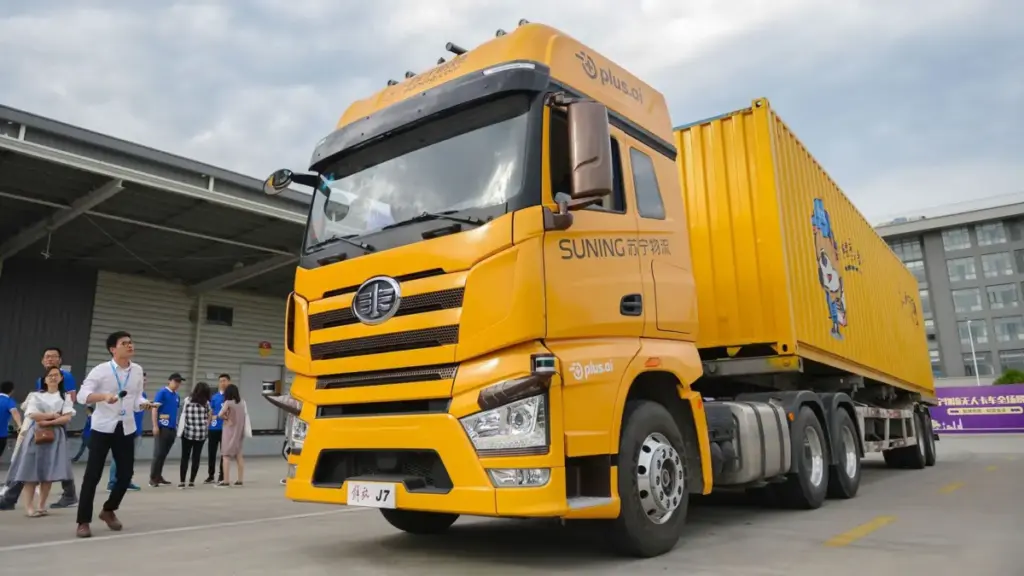
The incident involved PlusAI, a prominent startup specializing in autonomous trucking technology. As part of its ongoing developmental partnership with Nvidia, the industry leader in AI computing, PlusAI operates a fleet of trucks and trailers that frequently bear the logos of both companies. To the uninitiated observer or a criminal scout, these trailers represent a mobile gold mine. In the current market, a single trailer filled with Nvidia’s enterprise-grade H100 or Blackwell GPUs could theoretically be worth tens of millions of dollars. This perceived value likely served as the primary motivation for a recent heist that saw two of PlusAI’s trailers stolen from their staging area.
According to reports, the theft was carried out with the expectation of a massive windfall. The thieves successfully made off with the two units, relocating them to a secondary location where they could be searched and offloaded away from immediate scrutiny. Yet, upon breaching the trailers, the criminals were met not with the sleek, silver-and-black cooling shrouds of high-end silicon, but with the gritty reality of industrial logistics. Each trailer was loaded with approximately 20,000 pounds of sand.
The presence of such a mundane cargo in a vehicle branded with the world’s most valuable tech logos is not a security ruse, but a standard requirement of the autonomous vehicle testing process. For startups like PlusAI, the goal is to teach artificial intelligence how to navigate the complexities of long-haul trucking. This requires the AI systems to understand how a vehicle behaves under various load conditions. To simulate a fully loaded commercial haul, engineers use "dead weight"—often in the form of sandbags or industrial ballast—to ensure the truck’s sensors, braking systems, and acceleration algorithms are calibrated for real-world scenarios. The thieves, unaware of the nuances of autonomous vehicle R&D, had effectively hijacked forty thousand pounds of low-value sediment.
While this specific incident ended in a stroke of accidental justice, it highlights a burgeoning and dangerous trend within the tech industry. The AI data center construction boom has transformed the landscape of PC components and enterprise hardware. What were once niche products for gamers and specialized researchers are now the foundational infrastructure of the modern economy. Components such as high-capacity RAM and high-performance GPUs have seen their prices skyrocket, leading to a significant increase in both petty and organized theft.
 Hardware Reviews & PC Building
Save $250 on this award-winning Elegoo resin 3D printer with an integrated heater and 16K resolution — 39%…
The Saturn 4 Ultra is currently positioned as a flagship offering within...
 Hardware Reviews & PC Building
7-year-old Nvidia Shield TV Pro gets shocking 50% price hike driven by AI memory shortage — chipmaker axes…
The Shield TV Pro has long occupied a unique position in the...
 Hardware Reviews & PC Building
Privacy Concerns Surface for Meta’s Muse AI as Reports Suggest Unauthorized Access to Personal Messages
The rapid evolution of artificial intelligence has brought with it a wave...







