
In an era where artificial intelligence has become the primary driver of global economic speculation and technological advancement, the physical hardware powering this revolution has become more valuable than precious metals. As the demand for high-end graphics processing units (GPUs) reaches a fever pitch, the logistics of transporting these components has become a high-stakes endeavor, attracting the attention of increasingly sophisticated and desperate criminal organizations. However, a recent attempt to intercept what was believed to be a fortune in AI hardware resulted in a comedic anti-climax, leaving a group of thieves with nothing but twenty tons of industrial ballast.
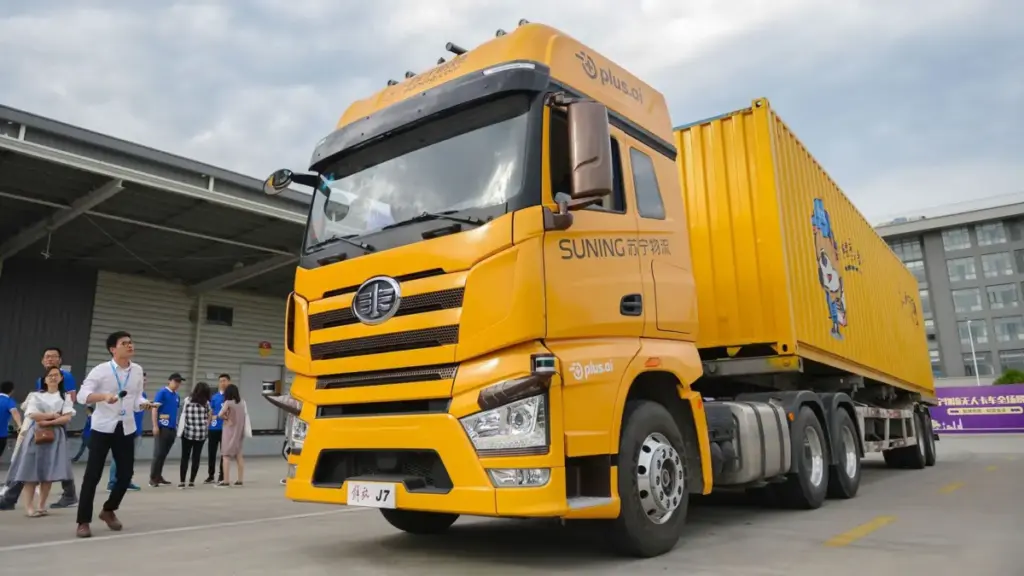
The incident involved PlusAI, a prominent startup specializing in autonomous trucking technology. As part of its ongoing developmental partnership with Nvidia, the industry leader in AI computing, PlusAI operates a fleet of trucks and trailers that frequently bear the logos of both companies. To the uninitiated observer or a criminal scout, these trailers represent a mobile gold mine. In the current market, a single trailer filled with Nvidia’s enterprise-grade H100 or Blackwell GPUs could theoretically be worth tens of millions of dollars. This perceived value likely served as the primary motivation for a recent heist that saw two of PlusAI’s trailers stolen from their staging area.
According to reports, the theft was carried out with the expectation of a massive windfall. The thieves successfully made off with the two units, relocating them to a secondary location where they could be searched and offloaded away from immediate scrutiny. Yet, upon breaching the trailers, the criminals were met not with the sleek, silver-and-black cooling shrouds of high-end silicon, but with the gritty reality of industrial logistics. Each trailer was loaded with approximately 20,000 pounds of sand.
The presence of such a mundane cargo in a vehicle branded with the world’s most valuable tech logos is not a security ruse, but a standard requirement of the autonomous vehicle testing process. For startups like PlusAI, the goal is to teach artificial intelligence how to navigate the complexities of long-haul trucking. This requires the AI systems to understand how a vehicle behaves under various load conditions. To simulate a fully loaded commercial haul, engineers use "dead weight"—often in the form of sandbags or industrial ballast—to ensure the truck’s sensors, braking systems, and acceleration algorithms are calibrated for real-world scenarios. The thieves, unaware of the nuances of autonomous vehicle R&D, had effectively hijacked forty thousand pounds of low-value sediment.
While this specific incident ended in a stroke of accidental justice, it highlights a burgeoning and dangerous trend within the tech industry. The AI data center construction boom has transformed the landscape of PC components and enterprise hardware. What were once niche products for gamers and specialized researchers are now the foundational infrastructure of the modern economy. Components such as high-capacity RAM and high-performance GPUs have seen their prices skyrocket, leading to a significant increase in both petty and organized theft.
The rise in crime is not limited to high-level cargo heists. On a smaller scale, individual PC builders and enthusiasts have reported an uptick in package thefts involving consumer-grade hardware. As DDR5 memory and flagship gaming GPUs become more expensive and harder to source, "porch piracy" has evolved from the theft of random household goods to the targeted interception of high-value electronics. For the individual consumer, the loss of a $1,500 graphics card is a significant financial blow, but for the enterprise sector, the stakes are exponentially higher.
Startups and established tech giants alike are currently in a race to build out local AI servers and massive data centers. These facilities often house millions of dollars’ worth of equipment, much of which must be transported via traditional shipping lanes. The visibility of these shipments has made them prime targets for organized crime rings that have pivoted from traditional high-value goods—like pharmaceuticals or designer clothing—to tech hardware.
The scale of these operations is staggering. In one recent incident outside of Chicago, law enforcement recovered approximately $1.3 million worth of stolen goods following a series of cargo heists. The haul included a massive quantity of copper wiring, which has seen its own price surge due to infrastructure demands, alongside nearly a million dollars in specialized data center equipment. These are not crimes of opportunity committed by individuals, but coordinated strikes against the tech supply chain.
As the value of the cargo has increased, so too has the brazenness of the tactics employed by the thieves. In California, a hub for both tech development and logistics, reports have emerged of hijackers using violent methods to secure their targets. In some instances, cargo thieves have gone as far as ramming security escorts off the road. These "crash-and-grab" style attacks involve multiple vehicles working in tandem to isolate a truck, neutralize its security detail through high-speed maneuvers or physical contact, and then commandeer the vehicle. This level of aggression underscores the desperation of criminals looking to capitalize on the AI hardware shortage.
The irony of the PlusAI incident serves as a brief moment of levity in an otherwise grim security landscape. It also highlights a fundamental misunderstanding that many outside the industry have regarding the physical nature of AI development. While the "cloud" and "artificial intelligence" are often discussed as ephemeral, digital concepts, they are anchored in a very heavy, very physical reality. For a company like PlusAI, the "AI" isn’t just the code running on a server; it is the physical interaction between that code and a forty-ton machine moving at highway speeds.
The use of sand as ballast is a critical component of ensuring that these autonomous systems are safe for public roads. An autonomous truck must be able to calculate its stopping distance with millisecond precision, accounting for the momentum of a full load. If the AI only ever practiced on an empty trailer, the results of a real-world emergency maneuver could be catastrophic. By stealing these test loads, the thieves were not just failing to find GPUs; they were interfering with safety-critical research.
For Nvidia and its partners, the incident may prompt a reevaluation of branding and visibility during transit. While having logos on the side of a trailer is excellent for brand awareness and pride in partnership, it also serves as a beacon for criminal activity. In the current climate, some logistics firms are opting for "blind" shipping—using unmarked trailers and nondescript packaging—to move high-value silicon across the country. The era of proudly displaying "Powered by Nvidia" on the side of a long-haul truck may be coming to an end, replaced by the necessity of stealth.
As the AI boom continues to accelerate, the pressure on the supply chain is unlikely to ease. The demand for GPUs shows no signs of slowing down, and as long as these components remain the most valuable "currency" in the tech world, they will remain a target. The thieves who ended up with twenty tons of sand may be the laughingstock of the criminal underworld for now, but their attempt is a symptom of a much larger, more systemic issue facing the industry.
The recovery of the stolen PlusAI trailers at a secondary location suggests that the thieves abandoned them almost immediately once the nature of the cargo was revealed. There is little black-market value in forty thousand pounds of used testing sand, especially when compared to the logistical nightmare of trying to sell it. For PlusAI, the return of the equipment is a relief, allowing them to continue their testing programs without significant delay.
Ultimately, the "sand heist" serves as a reminder of the strange intersections between high technology and basic physical labor. We live in a world where the most advanced artificial intelligence is trained using the most basic of materials. While the thieves were looking for the future of computing, they were buried in the remnants of the ancient earth. As the industry moves forward, the protection of its physical assets will likely become as complex and sophisticated as the software those assets are designed to run. For now, however, the joke remains on the criminals who thought they had struck silicon gold, only to find they had literally been left pounding sand.
 Hardware Reviews & PC Building
Amazon Prime Day 2026: Final 24 Hours of Big Deal Days Feature Massive Savings on RTX 5070 Systems, Ryzen 9800X3D, and Premium Gaming Peripherals
As the clock winds down on the 2026 iteration of Amazon’s Big...
 Hardware Reviews & PC Building
Microsoft brings Snapdragon X2 Plus to 13-inch Surface Laptop, 12-inch Surface Pro — low-end systems finally get…
The introduction of the Snapdragon X2 Plus represents a substantial leap over...
 Hardware Reviews & PC Building
Tom’s Hardware Expands Digital Reach with Launch of Official Mobile Application for Android and iOS
The landscape of technology journalism has undergone a profound transformation over the...






