
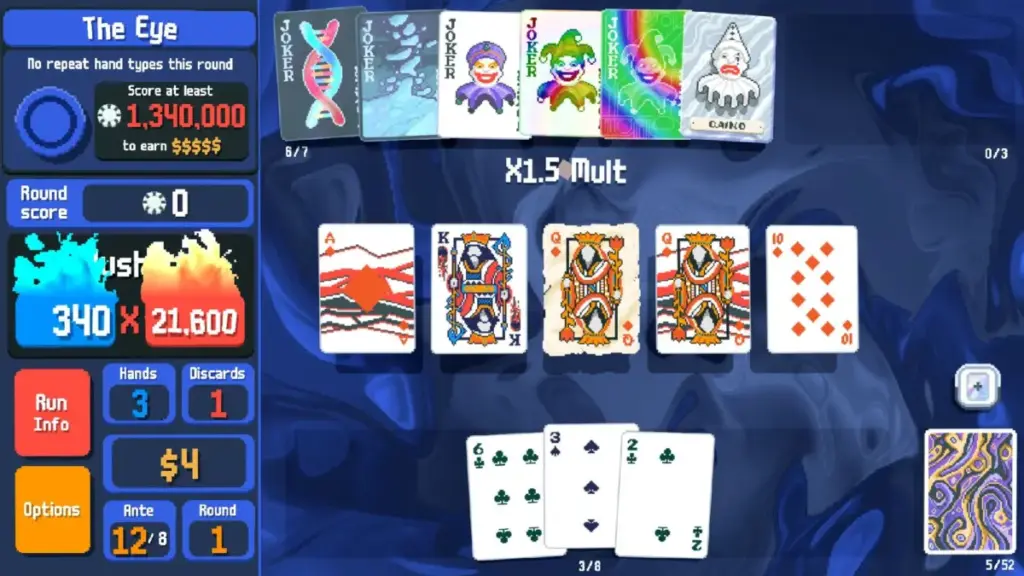
The "fruit fly as a day trader" and "fruit fly as a poker player" memes have captured the public imagination, but they also highlight a serious trend in the field of neuromorphic computing. This field seeks to design computer hardware and software that mimics the structure of the human nervous system. The fruit fly connectome serves as a perfect "middle ground" for this research—it is complex enough to perform non-trivial tasks, yet small enough to be fully simulated on modern high-end consumer hardware.
As the Balatro-playing fly continues to refine its strategy, the creator of the project has hinted at further refinements. The goal is to see if the win rate can be pushed higher by more accurately simulating the specific clusters of neurons responsible for "risk versus reward" behavior in the actual insect. If the model can be tuned to better recognize the "long-tail" benefits of certain Joker card combinations, it could potentially rival the performance of specialized game-playing AIs.
The speed at which these developments have occurred is a testament to the open-source nature of the modern scientific and tech communities. By making the connectome data available to the public, Google and its partners have turned a specialized piece of neuroscientific research into a playground for global innovation. While the original researchers may not have envisioned their work being used to beat a roguelike card game, these "stress tests" of the virtual fly brain provide valuable data on how neural structures handle information processing outside of their biological comfort zones.
For now, the fruit fly remains a fascinating outlier in the world of gaming and finance. Whether it is navigating the hellscapes of Doom, trying to turn a profit on Bitcoin, or chasing a "Straight Flush" in Balatro, the digital Drosophila is proving to be one of the most versatile "players" in the current tech landscape. As more developers get their hands on the neural map, it is likely only a matter of time before the virtual fly is tasked with even more complex simulations, further narrowing the gap between the biological world and the digital frontier. The 20 percent win rate in Balatro is not just a quirky milestone; it is a signpost indicating that we are only beginning to understand the latent potential of the architectures of life when they are translated into the language of silicon.
 Hardware Reviews & PC Building
Thieves Targeting High-Value AI Hardware Left with Tons of Sand After Hijacking Nvidia-Branded Trailers
In an era where artificial intelligence has become the primary driver of...
 Hardware Reviews & PC Building
Unofficial Grand Theft Auto V Browser Port Faces Swift Takedown Following Viral Technical Demonstration
The landscape of modern gaming is often defined by the boundaries of...
 Hardware Reviews & PC Building
Tom’s Hardware Expands Digital Reach with Launch of Official Mobile Application for Android and iOS
The landscape of technology journalism has undergone a profound transformation over the...







